Understanding Persian New Year: A Celebration of Renewal
Persian New Year, widely known as Nowruz, marks the first day of spring and the beginning of the year in the Iranian calendar. Celebrated by millions around the globe, this ancient festival is rich in cultural significance and traditions that date back over 3,000 years. Nowruz symbolizes rebirth, renewal, and the triumph of good over evil, making it a joyous occasion for many.
The Origins and Significance of Nowruz
The roots of Nowruz can be traced to Zoroastrianism, one of the world’s oldest monotheistic religions. The festival aligns with the vernal equinox, occurring around March 20 or 21 each year. This timing reflects the natural cycle of life, emphasizing the importance of nature and its rejuvenating power.
Nowruz is not solely an Iranian celebration; it’s recognized across various countries and cultures, including Afghanistan, Azerbaijan, and parts of Central Asia. Each region puts its unique spin on the festivities, incorporating local customs and traditions. The celebration is often accompanied by specific rituals that highlight the themes of renewal and hope.
Key Traditions and Customs
During Nowruz, families engage in several time-honored customs that contribute to the festive atmosphere. Here are some of the most notable traditions:
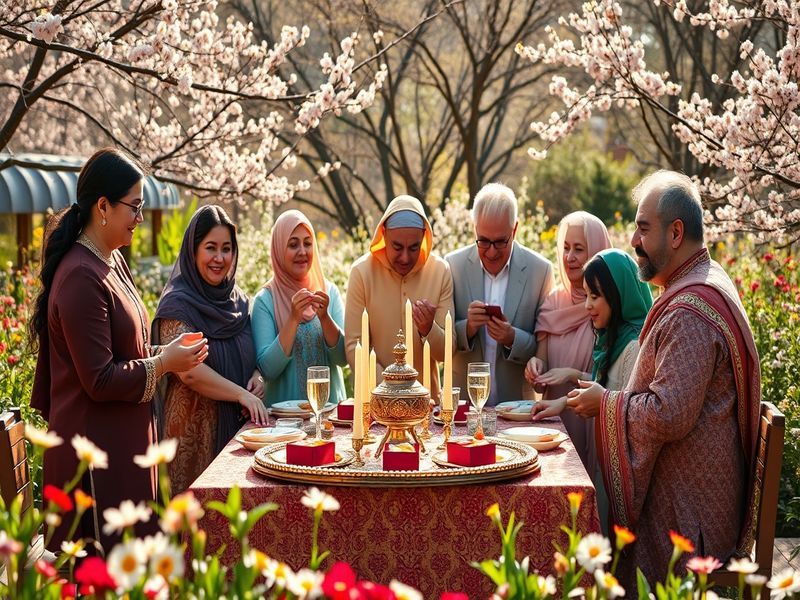
- Haft-Seen Table: Families set up a Haft-Seen table, which includes seven symbolic items starting with the Persian letter ‘S’. Each item represents a different hope for the new year, such as rebirth, health, and prosperity.
- Spring Cleaning: In preparation for the new year, people engage in a thorough cleaning of their homes, symbolizing the removal of negativity and welcoming positivity.
- Family Gatherings: Nowruz is a time for families to come together, share meals, and exchange gifts, fostering unity and love among relatives.
- Fire Jumping: On the eve of the last Wednesday before Nowruz, many participate in Chaharshanbe Suri, where they jump over bonfires to cleanse themselves of the past year’s misfortunes.
These customs not only celebrate the arrival of spring but also reinforce familial bonds and cultural identity. They serve as a reminder of the importance of community and shared heritage.
Global Observance and Cultural Impact
In recent years, Nowruz has gained recognition beyond its traditional roots. The United Nations has officially recognized the day, acknowledging its cultural significance and the spirit of peace and solidarity it embodies. Celebrations occur in diverse settings, from large public festivals in cities to intimate family gatherings.
Furthermore, the global diaspora has ensured that Nowruz is celebrated in various parts of the world, including the United States, Canada, and Europe. This has led to a blending of cultural practices, where local customs intersect with traditional Iranian practices, enriching the festival’s observance.
For example, in cities like Los Angeles, large-scale celebrations feature music, dance, and food that reflect a fusion of Persian and local cultures. These gatherings not only celebrate Nowruz but also promote cultural understanding and appreciation among diverse communities.
Conclusion
Persian New Year, or Nowruz, is much more than a simple celebration of the new year; it is a rich tapestry of cultural traditions that emphasize renewal, hope, and community. As it continues to evolve and gain recognition worldwide, Nowruz serves as a vital link between the past and the present, uniting people across different cultures in a shared celebration of life and nature. The festival’s enduring significance is a testament to the resilience of cultural heritage and the universal desire for renewal and prosperity.
To explore more cultural celebrations and their impact, visit our Culture section on Dave’s Locker.