Hail Mary Meaning in Prayer and Football Explained
The phrase “Hail Mary” carries weight in two distinct realms: spiritual devotion and athletic desperation. Originating as a Catholic prayer, its secular adaptation into sports—particularly football—has cemented it as a term synonymous with last-ditch efforts and improbable victories. This dual identity reflects broader human tendencies: the search for divine intervention and the clutching at hope in moments of crisis.
The Origins and Meaning of the Hail Mary Prayer
The Hail Mary prayer traces its roots to the 11th century, drawing from biblical verses. The first half—”Hail Mary, full of grace, the Lord is with thee; blessed art thou among women”—echoes the Angel Gabriel’s greeting to Mary in Luke 1:28. The second half, added centuries later, invokes her intercession: “Holy Mary, Mother of God, pray for us sinners, now and at the hour of our death.”
For Catholics, the prayer is a cornerstone of Marian devotion, recited in rosaries and moments of need. Its rhythm and repetition offer comfort, a structured plea for grace amid life’s uncertainties. The prayer’s simplicity belies its profundity—it’s both a salutation and a supplication, a recognition of divine presence and a request for aid.
Historically, the Hail Mary served as a unifying spiritual practice across Europe during the Middle Ages. Its spread coincided with the rise of Marian cults, particularly in France and Spain, where devotees sought protection through her intercession. Even today, the prayer remains a touchstone for millions, its words a bridge between the earthly and the divine.
The Hail Mary in Sports: A Last-Resort Strategy
The Hail Mary’s transition from prayer to play is a fascinating case of linguistic evolution. The term entered football lexicon in the 1930s but gained global recognition in 1975 during a Notre Dame vs. Michigan State game. With seconds left and Notre Dame trailing, quarterback Joe Montana launched a 50-yard desperation pass that ricocheted off receivers before being caught in the end zone for a touchdown. Sportswriters dubbed it a “Hail Mary pass,” and the name stuck.
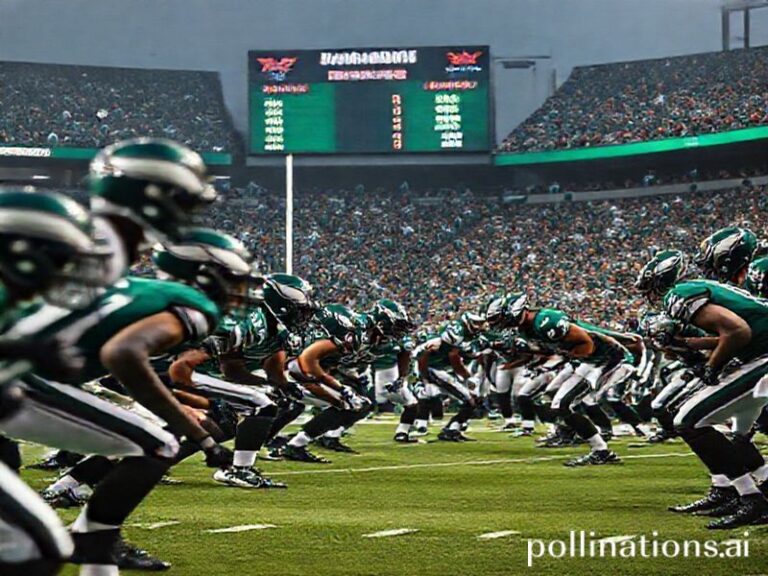
Unlike its spiritual counterpart, the football Hail Mary is a calculated gamble. Coaches deploy it when time is nearly exhausted and conventional routes have failed. The play typically involves multiple receivers sprinting toward the end zone while the quarterback heaves a high, arched ball—often with little precision required. Success hinges on a mix of athleticism, luck, and the defense’s inability to cover every possible trajectory.
The strategy’s effectiveness is debated. Statistically, the odds of completing a Hail Mary are slim—often under 10% in professional football. Yet its potential payoff is enormous: a single play can reverse a game’s momentum, defy expectations, and etch a quarterback’s legacy in history. Players and fans alike embrace the Hail Mary not for its pragmatism but for its drama, its defiance of probability.
Key Elements of a Successful Hail Mary
- Height and Arc: The quarterback must launch the ball with enough trajectory to clear defenders, often aiming for the back corner of the end zone.
- Receiver Timing: Receivers must synchronize their jumps, avoiding collisions while battling for position.
- Defensive Miscommunication: A breakdown in coverage—whether due to confusion or physical interference—often creates the opening needed for completion.
- Luck: Wind, tipped passes, and unexpected bounces play undeniable roles in the play’s outcome.
Some coaches argue that the Hail Mary is overused, a crutch for poor clock management or lackluster offensive execution. Others see it as a necessary tool in a sport where games are decided by inches and seconds. What’s undeniable is its cultural resonance—a symbol of hope against the odds, whether in prayer or play.
The Broader Implications of the Hail Mary
The Hail Mary’s dual meanings reveal something fundamental about human psychology. In moments of desperation, we reach for symbols that blend ritual and risk. The prayer offers a sense of control through supplication, while the football play embodies a refusal to accept defeat. Both hinge on the idea that a single moment—divine or athletic—can alter fate.
This phenomenon extends beyond sports and religion. Consider financial markets, where investors make “Hail Mary” bets on volatile stocks, or politics, where candidates launch last-minute appeals to undecided voters. The Hail Mary represents a universal human impulse: the willingness to try, even when the odds are stacked against you.
There’s also a critique to consider. Critics argue that over-reliance on Hail Marys—whether in prayer or play—can discourage preparation and long-term strategy. In football, a team that constantly gambles on desperation passes may neglect the fundamentals of ball control and time management. Similarly, a life lived waiting for divine intervention might sidestep personal agency and effort.
Yet the Hail Mary’s persistence suggests it fulfills a deeper need. It’s the ultimate expression of human hope, a refusal to concede to despair. Whether whispered in a church or screamed from a stadium, the words “Hail Mary” carry the weight of possibility.
Why the Hail Mary Endures
The Hail Mary’s staying power lies in its adaptability. It’s a term that transcends its origins, morphing to fit new contexts while retaining its core essence. In sports, it’s a tactical maneuver and a narrative device—a way to frame underdog stories and heroic feats. In spirituality, it’s a ritual and a comfort, a lifeline in turbulent times.
For athletes, a completed Hail Mary is a career-defining moment. For believers, the prayer is a daily reminder of grace. In both cases, the term encapsulates the intersection of hope and action, faith and effort. It’s a reminder that sometimes, the most improbable outcomes are worth pursuing.
As long as humans seek victory against long odds—or divine intervention in their lives—the Hail Mary will remain relevant. Its legacy is a testament to the power of symbols, the allure of the impossible, and the enduring human spirit.
For more on the intersection of sports and culture, explore our Trending and Sports categories.