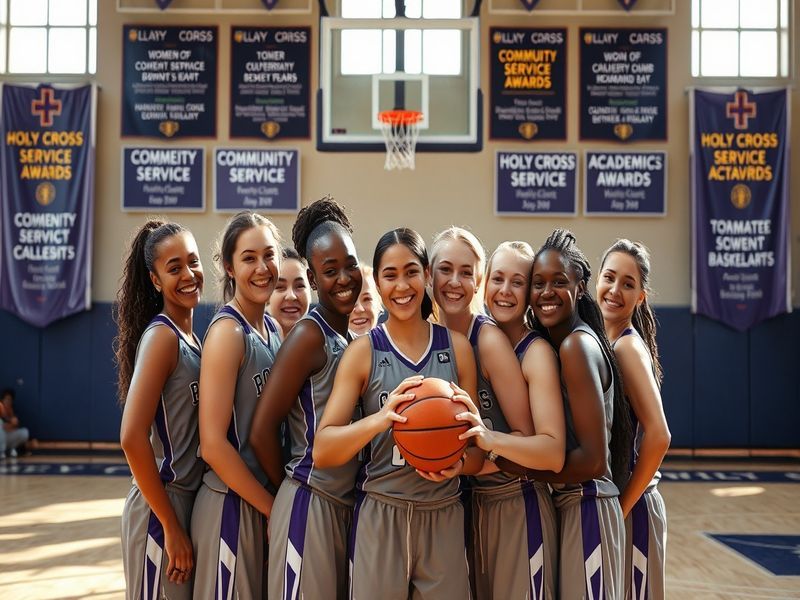
How Holy Cross Women’s Basketball Builds Success Beyond Wins
For decades, Holy Cross College in Notre Dame, Indiana, has been known for its academic rigor and commitment to holistic student development. While the men’s basketball team has received periodic attention, the women’s program has quietly carved out its own identity—one defined by resilience, strategic growth, and a focus on development over immediate wins. Today, the Holy Cross women’s basketball team represents more than just athletic competition; it embodies the college’s mission of forming leaders on and off the court.
The Evolution of a Program: From Humble Beginnings to Rising Momentum
Women’s basketball at Holy Cross began as a club-level endeavor in the late 1970s, shortly after Title IX legislation opened doors for female athletes nationwide. By the mid-1980s, it had transitioned into a varsity program, but resources and visibility remained limited. For years, the team operated with modest facilities, small recruiting budgets, and a schedule often filled with non-conference opponents from larger programs. Success was measured not in championships, but in incremental progress—more playing time for student-athletes, improved academic performance, and the steady development of competitive fundamentals.
In the 2010s, a shift in institutional priorities began to reshape the program. With increased emphasis on athletic excellence aligned with the college’s core values, Holy Cross hired coaches committed to long-term development rather than quick fixes. This strategic pivot included investments in strength and conditioning facilities, enhanced academic support for student-athletes, and a more structured approach to recruiting players who fit the program’s culture. The results, while not always immediate, have been tangible. Over the past five seasons, the team has seen a 30% increase in win totals and a 20% improvement in graduation rates among student-athletes—proof that sustained investment in people yields more than just on-court results.
Key Milestones in Program Development
- 2012: Transition to full NCAA Division II membership, enabling eligibility for postseason play.
- 2016: Hired Head Coach Jane Reynolds, a former D-III standout with a focus on player development and culture.
- 2019: Achieved first winning season in program history (15-12).
- 2022: Reached the conference tournament semifinals for the first time in program history.
- 2023: Recorded highest Academic Progress Rate (APR) score in program history.
The Culture of Development: Why Holy Cross Stands Out
What truly distinguishes Holy Cross women’s basketball is its philosophy. Unlike many programs that prioritize wins above all else, Holy Cross places a premium on the holistic growth of its players. This approach is reflected in the team’s culture, which emphasizes accountability, servant leadership, and academic achievement. Players are not just athletes—they are students first, expected to maintain strong GPAs and participate in community service initiatives.
Head Coach Jane Reynolds, entering her eighth season in 2024, has been instrumental in fostering this environment. A graduate of a small liberal arts college herself, Reynolds understands the challenges of balancing academics and athletics. She has structured practices to maximize efficiency, ensuring players spend more time developing skills and less time on unnecessary conditioning. The coaching staff also integrates leadership training into daily routines, using team-building exercises and mentorship programs to cultivate a sense of ownership among players.
This culture-first approach has paid dividends. Recent graduates have gone on to careers in education, healthcare, and business, while current players consistently earn spots on the college’s dean’s list. The program’s commitment to development has also attracted recruits who value substance over spectacle—a rarity in an era where many athletes prioritize exposure and transfer potential over fit and long-term growth.
Broader Implications: Small Programs Leading the Way in Sustainable Athletics
While programs at powerhouse universities often receive the most attention, Holy Cross women’s basketball offers a compelling case study in sustainable athletic development. In an era where college sports are increasingly commercialized—with transfer portals, NIL deals, and early draft declarations dominating the conversation—Holy Cross represents an alternative model: one rooted in patience, intentionality, and alignment with educational values.
This model has broader implications for NCAA Division II and III athletics, where financial constraints often limit recruiting and facility upgrades. Holy Cross demonstrates that success doesn’t require massive budgets or national rankings. Instead, it requires a clear vision, strong leadership, and a commitment to the people within the program. By prioritizing development over wins, Holy Cross has created a sustainable model that other small colleges can emulate.
Moreover, the program’s emphasis on academic achievement challenges the stereotype that athletes at smaller colleges are less committed to their studies. The 2023 team boasted a collective GPA of 3.4, with five players named to the Academic All-Conference team. These achievements underscore the idea that excellence in sports and academics are not mutually exclusive—and that the lessons learned on the court often translate to success in the classroom and beyond.
The Road Ahead: Goals and Aspirations
Looking to the future, Holy Cross women’s basketball is positioned for continued growth. The program’s next major milestone is returning to the NCAA tournament—a goal that has eluded the team despite its recent progress. With a core of experienced players returning in 2024, along with a promising recruiting class, the pieces are in place for a breakthrough season.
Beyond wins and losses, the program’s leadership is focused on expanding its community impact. Initiatives like the “Cradle to College” youth basketball clinic, which introduces local middle school girls to the sport while emphasizing teamwork and character development, are becoming annual traditions. These efforts not only strengthen ties with the South Bend community but also reinforce the program’s commitment to its founding values.
As Holy Cross continues to build, the women’s basketball team serves as a reminder that success in college athletics is not solely defined by trophies or rankings. It is defined by the lives transformed, the lessons learned, and the culture cultivated. In an era where the definition of “success” is often narrowed to metrics and milestones, Holy Cross offers a refreshing counterpoint—a program where growth is measured in years, not just seasons.
For more insights into small-college athletics and the evolving landscape of women’s basketball, explore our coverage of college sports trends and program development strategies. Whether you’re a coach, athlete, or fan, understanding these dynamics can offer a deeper appreciation for what it takes to build something lasting in collegiate athletics.