How Trump Changed U.S.-Israel Relations Forever
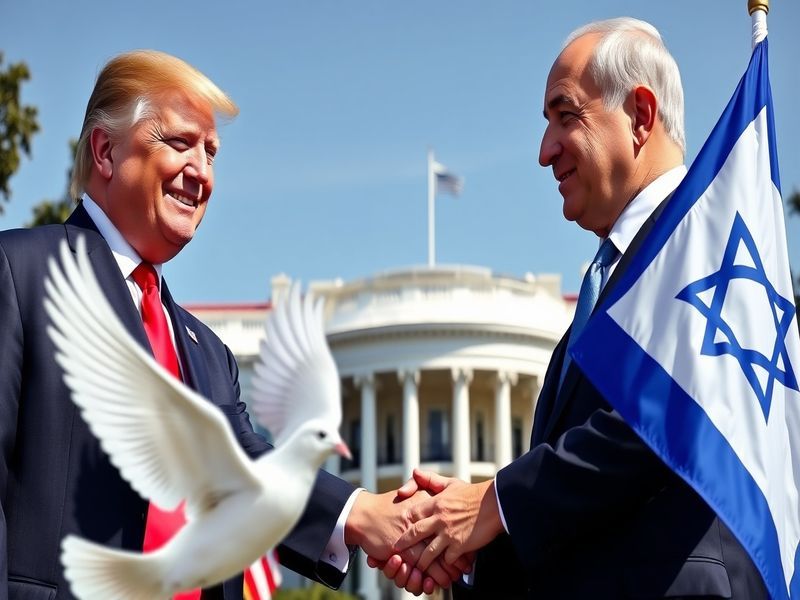
The relationship between the United States and Israel has been a cornerstone of American foreign policy for decades. Under the administration of Donald Trump, this alliance reached unprecedented levels of cooperation, policy alignment, and symbolic gestures. From the relocation of the U.S. embassy to Jerusalem to the brokering of the Abraham Accords, Trump’s tenure marked a significant shift in how Washington engaged with the Jewish state. These moves not only redefined diplomatic norms but also set the stage for future interactions between the two nations.
Relocating the U.S. Embassy to Jerusalem: A Historic Break from Tradition
One of the most consequential decisions of Trump’s presidency came in December 2017 when he formally recognized Jerusalem as the capital of Israel. This announcement reversed decades of U.S. policy that had deferred to international consensus on the status of Jerusalem, pending a negotiated settlement between Israelis and Palestinians. The decision was met with immediate praise from Israeli leaders and strong criticism from Palestinian authorities and many global stakeholders.
The relocation of the U.S. embassy from Tel Aviv to Jerusalem in May 2018 was the physical manifestation of this policy shift. It was the first time a foreign government established its diplomatic mission in the contested city since Israel’s founding in 1948. The move was celebrated by Israeli Prime Minister Benjamin Netanyahu and the country’s right-wing coalition, who viewed it as a long-overdue correction to historical injustices.
Critics argued that the decision undermined America’s role as an impartial mediator in the Israeli-Palestinian conflict. Palestinian leaders, including those in the West Bank and Gaza, condemned the move as a violation of international law and a disregard for Palestinian claims to East Jerusalem as the capital of a future state. Protests erupted in the region, and the Palestinian Authority suspended communication with the U.S. government for months afterward.
Global Reactions and Diplomatic Fallout
The international response to the embassy relocation was sharply divided. While the United States, Israel, and a handful of other countries supported the move, the majority of the global community—including key allies like France, Germany, and the United Kingdom—criticized it as provocative and counterproductive. The United Nations General Assembly overwhelmingly passed a resolution condemning the decision, reflecting widespread unease over the unilateral shift in U.S. policy.
In the Middle East, reactions were equally polarized. Gulf states like Saudi Arabia and the United Arab Emirates, while publicly opposing the move, privately acknowledged the symbolic importance of Jerusalem to Israelis. Meanwhile, Jordan, which holds custodianship over Jerusalem’s holy sites, expressed deep concern over the potential for escalated tensions in the region.
The Abraham Accords: Normalizing Relations in the Middle East
Beyond Jerusalem, Trump’s foreign policy toward Israel achieved another milestone with the Abraham Accords, a series of normalization agreements between Israel and several Arab states. Signed in 2020, these accords established diplomatic relations between Israel and the United Arab Emirates, Bahrain, Sudan, and Morocco. The agreements were hailed as a historic breakthrough, ending years of Arab refusal to engage with Israel without a resolution to the Palestinian conflict.
The accords were not merely symbolic; they included concrete economic and security cooperation initiatives. The UAE, for example, became a major trading partner for Israel, with bilateral agreements spanning technology, energy, and tourism. The agreements also paved the way for increased military and intelligence sharing, particularly in countering regional threats posed by Iran.
For Trump, the Abraham Accords represented a crowning achievement of his Middle East policy. They demonstrated that tangible progress could be made on the Israeli-Arab front without first resolving the Palestinian issue—a departure from the traditional “land for peace” framework that had guided U.S. diplomacy for decades. The accords also positioned the U.S. as a facilitator rather than a mediator, leveraging its influence to broker deals that prioritized stability and economic integration over political concessions.
The Role of Economic Incentives
A key driver behind the Abraham Accords was the promise of economic benefits. The U.S. played a central role in brokering these deals by offering incentives such as military sales, trade agreements, and diplomatic support. For instance, the UAE secured a $23 billion arms deal with the U.S., while Morocco received recognition of its sovereignty over Western Sahara in exchange for normalizing relations with Israel.
These economic carrots were not without controversy. Critics argued that they amounted to a form of “peace through bribery,” where Arab states prioritized their own interests over the Palestinian cause. Palestinian leaders condemned the accords as a betrayal, viewing them as a normalization of Israeli occupation without addressing core grievances such as settlements and blockades.
Israel-Palestine Policy: A Shift Away from the Two-State Solution
Trump’s approach to the Israeli-Palestinian conflict marked a stark departure from the two-state solution framework that had been the bedrock of U.S. policy since the Oslo Accords of the 1990s. His administration’s “Peace to Prosperity” plan, unveiled in January 2020, proposed a vision for Palestinian statehood that was conditional on Israeli security demands and fell far short of Palestinian aspirations. The plan was widely rejected by Palestinian leaders, who viewed it as heavily biased toward Israel.
In addition to the embassy move, Trump’s tenure saw other policies that further strained Palestinian-American relations. These included the cutoff of U.S. funding to the United Nations Relief and Works Agency (UNRWA), which supports Palestinian refugees, and the recognition of Israel’s sovereignty over the Golan Heights—a decision that drew international condemnation.
The administration also took a hardline stance against the Boycott, Divestment, and Sanctions (BDS) movement, which seeks to pressure Israel over its policies toward Palestinians. The U.S. Department of State labeled BDS as antisemitic, a characterization that drew sharp criticism from human rights organizations and pro-Palestinian advocacy groups.
Impact on Palestinian Leadership and Public Opinion
The cumulative effect of these policies was a deepening of Palestinian distrust toward the U.S. as an impartial mediator. Palestinian Authority President Mahmoud Abbas severed ties with the U.S., calling Trump’s policies “the slap of the century.” Public opinion in the West Bank and Gaza shifted further against America, with polls showing overwhelming disapproval of Trump’s handling of the conflict.
For Israel, however, Trump’s policies were a net positive. The government of Benjamin Netanyahu, which had long sought U.S. recognition of Jerusalem and Jewish settlements in the West Bank, found a willing partner in the White House. Trump’s appointees, including Ambassador David Friedman and Middle East envoy Jason Greenblatt, were staunch supporters of the Israeli right-wing agenda, further aligning U.S. policy with the priorities of Netanyahu’s government.
Legacy and the Future of U.S.-Israel Relations
Donald Trump’s presidency left an indelible mark on U.S.-Israel relations, reshaping the diplomatic landscape in ways that continue to resonate today. His policies—from the embassy move to the Abraham Accords—have set a new baseline for how future U.S. administrations might engage with Israel. However, the long-term implications of these decisions remain uncertain, particularly as they relate to the Israeli-Palestinian conflict.
For now, the Biden administration has largely maintained Trump’s policies on Israel, including the embassy’s location in Jerusalem and support for the Abraham Accords. Yet, there have been subtle shifts, such as the restoration of some U.S. aid to Palestinians and a renewed emphasis on reviving negotiations for a two-state solution. These adjustments reflect the complexity of balancing alliance with Israel while addressing humanitarian concerns in the Palestinian territories.
Looking ahead, the future of U.S.-Israel relations may hinge on several key factors. These include the outcome of Israel’s ongoing political instability, the trajectory of Iran’s nuclear program, and the evolving dynamics of the Middle East’s geopolitical landscape. One thing is clear: the policies of the Trump era have fundamentally altered the framework of U.S.-Israel diplomacy, and reversing them will require careful navigation by future administrations.
Lessons for Future Administrations
The Trump presidency demonstrated that bold, unilateral moves in foreign policy can yield immediate results but also carry significant risks. While the Abraham Accords brought tangible benefits to participating countries, they did little to address the underlying grievances of Palestinians. Similarly, the recognition of Jerusalem as Israel’s capital energized one side while alienating another, underscoring the challenges of forging durable peace in the region.
For future U.S. leaders, the Trump era offers valuable lessons about the limits of coercive diplomacy and the importance of inclusive, balanced approaches. Rebuilding trust with Palestinian leadership and re-engaging with the international community will be critical steps in restoring America’s role as a credible mediator.
As the U.S. continues to navigate its relationship with Israel, the legacy of the Trump administration will serve as both a guide and a cautionary tale. The policies of that era have set new precedents, but they have also deepened divisions that will require thoughtful, sustained effort to overcome.
For more insights on U.S. foreign policy, explore our Analysis section. To stay updated on global developments, visit our News page.