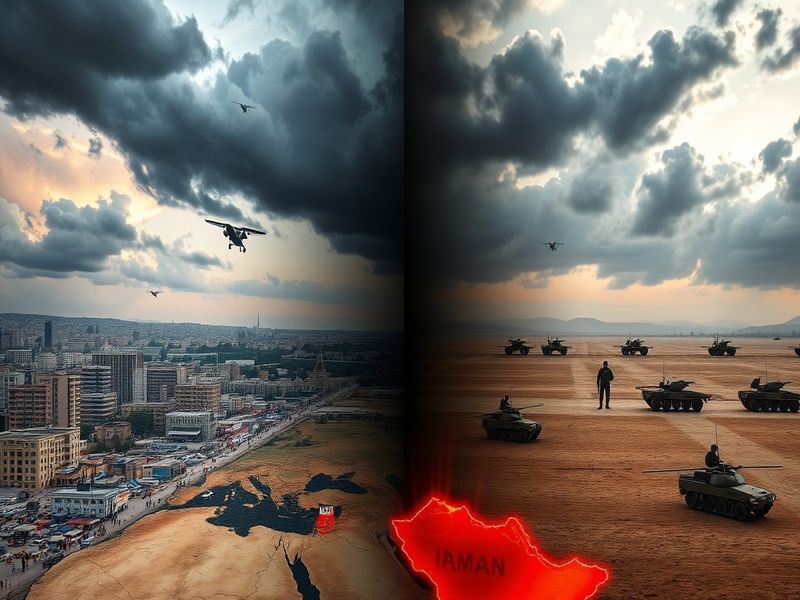
Israel-Iran Conflict: Escalation Risks and Global Implications
The shadow of conflict between Israel and Iran has stretched across decades, but recent years have seen an alarming acceleration in hostilities. Direct military confrontations, proxy wars, and covert operations have intensified, pushing the region to a precipice that could redefine global geopolitics. The stakes extend far beyond the borders of the Middle East, with implications for energy markets, international alliances, and the delicate balance of power in a multipolar world.
The Roots of Hostility: Historical Context and Recent Escalations
The Israel-Iran rivalry is deeply entrenched in historical grievances, ideological divides, and competing strategic interests. Iran’s 1979 Islamic Revolution and its subsequent support for militant groups such as Hezbollah and Hamas laid the foundation for decades of tension. Israel, meanwhile, has long viewed Iran’s nuclear ambitions and regional influence as existential threats. The 2015 nuclear deal, formally known as the Joint Comprehensive Plan of Action (JCPOA), briefly eased some of these concerns, but its collapse under the Trump administration in 2018 reignited hostilities.
Since then, a series of high-profile incidents have escalated tensions to unprecedented levels. The 2020 assassination of Iranian General Qasem Soleimani by a U.S. drone strike marked a turning point, demonstrating Israel’s willingness to act unilaterally against perceived threats. Iran responded with a barrage of ballistic missile strikes on U.S. bases in Iraq, setting a precedent for direct retaliation. The cycle of violence continued with Israel’s frequent airstrikes on Iranian military installations in Syria and Lebanon, as well as Iran’s alleged cyberattacks and sabotage operations against Israeli infrastructure.
Key Milestones in the Israel-Iran Conflict
- 1979: Iran’s Islamic Revolution establishes a theocratic regime hostile to Israel.
- 2006: Hezbollah’s war with Israel highlights Iran’s proxy warfare capabilities.
- 2010-2012: Stuxnet cyberattack disrupts Iran’s nuclear program, widely attributed to Israel and the U.S.
- 2018: U.S. withdrawal from the JCPOA and reimposition of sanctions intensify pressure on Iran.
- 2020: Assassination of Qasem Soleimani by a U.S. drone strike in Baghdad.
- 2022-2023: Series of Israeli airstrikes on Iranian targets in Syria and alleged Iranian drone attacks on Israel.
- April 2024: Direct missile and drone strikes between Israel and Iran, marking the first direct military confrontation between the two nations.
Direct Confrontations: The April 2024 Escalation
The most recent and dramatic escalation occurred in April 2024, when Israel launched a preemptive strike on Iranian nuclear facilities. Iran responded with a massive barrage of drones, cruise missiles, and ballistic missiles targeting Israeli military installations and critical infrastructure. While Israel’s Iron Dome defense system intercepted the majority of the projectiles, the attack marked the first time Iran had launched a direct military assault on Israeli soil. The strikes caused minimal damage but sent a clear message: Iran is no longer content to wage proxy wars.
Analysts suggest that Iran’s strategy has evolved from asymmetric warfare to a more conventional approach, albeit with limited scope. The April strikes were calculated to demonstrate Iran’s capability and resolve without triggering a full-scale war. However, the risk of miscalculation remains high. A single unintended escalation—a misfired missile, a misinterpreted radar blip—could spiral into a devastating conflict that draws in regional powers and global stakeholders.
Broader Implications: A Regional and Global Domino Effect
The Israel-Iran conflict is not an isolated crisis; it is a catalyst that could reshape the geopolitical landscape. The immediate region faces the gravest risks, with countries like Lebanon, Syria, and Yemen caught in the crossfire. Hezbollah, Iran’s most potent proxy, has already threatened to open a second front against Israel, potentially dragging Lebanon into another devastating war. Meanwhile, Syria’s fragile government, already weakened by years of civil war, could collapse entirely if tensions escalate further.
Beyond the Middle East, the conflict’s ripple effects are being felt worldwide. Energy markets, particularly oil and natural gas, are highly sensitive to instability in the region. Any disruption in shipping lanes through the Strait of Hormuz—a critical chokepoint for global oil supplies—could send prices soaring and trigger economic turmoil. Major powers, including the U.S., Russia, and China, are closely monitoring the situation, as their strategic interests intersect with the conflict’s outcome.
The U.S. has historically been Israel’s strongest ally, providing military aid, intelligence sharing, and diplomatic cover. However, the Biden administration faces a delicate balancing act. While it has reaffirmed its commitment to Israel’s security, it also seeks to avoid a wider war that could destabilize the region further. Russia, meanwhile, has strengthened its ties with Iran, leveraging the conflict to assert its influence in the Middle East and counter Western dominance. China, too, has adopted a pragmatic approach, maintaining economic relations with both Israel and Iran while positioning itself as a potential mediator.
Potential Scenarios Moving Forward
- De-escalation: Diplomatic efforts, possibly mediated by neutral third parties, could lead to a temporary ceasefire or a return to indirect negotiations. However, the mutual distrust between Israel and Iran makes this scenario fragile.
- Limited War: A prolonged period of low-intensity conflict, characterized by sporadic strikes and covert operations, could become the new normal. This would keep the region in a state of perpetual tension without a clear victor.
- Regional War: A full-scale conflict involving multiple actors—Israel, Iran, Hezbollah, Hamas, and potentially regional powers like Saudi Arabia or Turkey—could erupt, leading to catastrophic consequences for civilians and global stability.
- Proxy War Expansion: The conflict could spread to other theaters, with Israel and Iran funding opposing factions in Africa, Latin America, or Southeast Asia, further fracturing international alliances.
Navigating the Path Forward: Policy and Diplomacy
The international community faces a daunting challenge in preventing the Israel-Iran conflict from spiraling out of control. Diplomacy, while strained, remains the most viable tool for de-escalation. The U.S. and European Union must work to revive negotiations, possibly by offering incentives to Iran in exchange for restraint. Simultaneously, regional players like Saudi Arabia and the UAE could play a constructive role by mediating between Israel and Iran, leveraging their economic and political influence.
Israel, for its part, may need to reconsider its strategy of targeted strikes and covert operations. While these tactics have weakened Iran’s military capabilities, they have also galvanized Iranian public opinion against Israel and emboldened Iran’s leadership to take more aggressive actions. A more nuanced approach—combining deterrence with diplomatic engagement—could help break the cycle of violence.
For Iran, the path forward is equally treacherous. The regime’s survival depends on maintaining its revolutionary credentials while avoiding economic collapse and internal unrest. A return to the JCPOA, even in a modified form, could provide some relief, but the political will for such a compromise is lacking on both sides. Without a clear off-ramp, Iran may continue to escalate, gambling that Israel and its allies will ultimately blink first.
Ultimately, the Israel-Iran conflict is a symptom of deeper regional fractures—sectarian divides, ideological clashes, and the struggle for dominance in a post-American Middle East. Resolving it will require more than just diplomatic maneuvering; it will demand a fundamental rethinking of the region’s security architecture. Until then, the world must brace for the possibility of further escalation and the devastating consequences that would follow.
For those seeking deeper analysis on the geopolitical dynamics at play, explore our Politics and News sections, where we dissect the forces shaping global affairs.