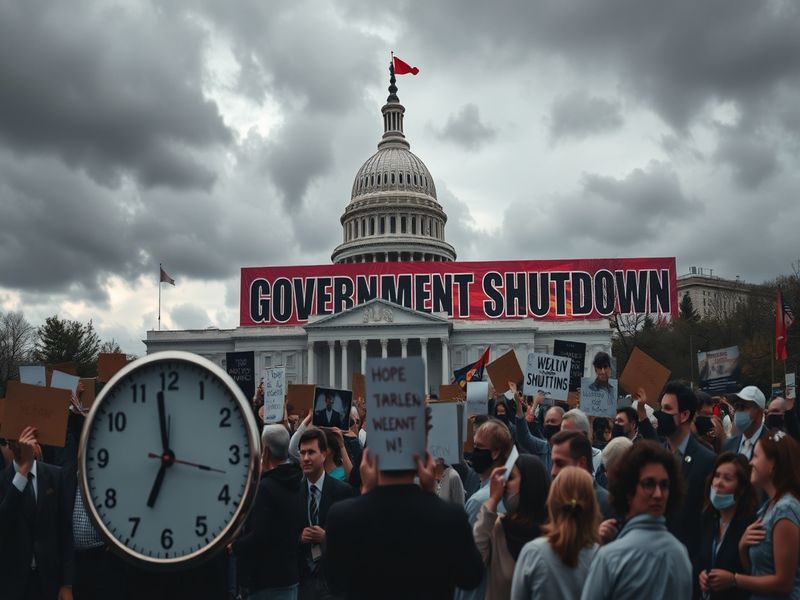
Understanding the Current Government Shutdown
The United States government is currently experiencing a shutdown, a situation that arises when Congress fails to pass appropriations bills or continuing resolutions to fund government operations. This shutdown has significant implications, not only for federal employees but also for various sectors relying on government services. To comprehend the effects of this shutdown, it is essential to explore its causes, consequences, and potential resolutions.
Causes of the Government Shutdown
Several factors contribute to the current government shutdown. The primary reason is the ongoing disagreement between political parties regarding budget allocations and spending priorities. Key issues include:
- Funding for Agencies: Disputes over how much funding various government agencies should receive.
- Policy Riders: Inclusion of controversial policy changes in budget bills, which some lawmakers refuse to accept.
- Political Divisions: Increasing polarization between parties complicates negotiations and consensus-building.
These factors have led to a stalemate, where neither side is willing to compromise. The implications of this situation extend beyond politics, affecting millions of Americans and numerous sectors.
Consequences of the Shutdown
The ramifications of a government shutdown can be profound. Federal employees face immediate repercussions, often being furloughed or required to work without pay. This situation leads to financial strain for countless families who rely on their income. Beyond the immediate workforce, the shutdown impacts:
- Public Services: Services such as national parks, museums, and federal programs may close or operate at reduced capacity.
- Economic Activity: The economy can suffer as federal contracts are put on hold, affecting businesses that rely on government work.
- Public Trust: Prolonged shutdowns can erode public confidence in government institutions and leaders.
In addition to these direct effects, there are broader implications for international relations. The U.S. government plays a critical role on the global stage, and a shutdown can hinder diplomatic efforts and negotiations, potentially affecting trade agreements and international cooperation.
Global Context and Comparisons
Government shutdowns are not unique to the United States. Various countries experience similar situations, though the mechanisms and political contexts differ. For instance, in countries like Canada and the United Kingdom, political disagreements can lead to prorogation or dissolution of parliament, resulting in elections rather than a shutdown. Understanding these different approaches can offer insights into how various political systems handle budgetary disputes.
In many nations, the public response to government shutdowns can vary widely. Citizens in some countries may rally for change, advocating for more effective governance, while in others, there may be a sense of resignation toward political processes. The cultural context plays a significant role in shaping public opinion and engagement during such crises.
Possible Resolutions
Finding a resolution to the current government shutdown requires negotiation and compromise. Here are several potential pathways forward:
- Compromise Legislation: Lawmakers may need to agree on a budget that satisfies both parties’ concerns.
- Short-Term Funding Measures: Implementing continuing resolutions can temporarily fund the government while discussions continue.
- Public Engagement: Encouraging public dialogue can pressure lawmakers to prioritize constituents’ needs over partisan politics.
Ultimately, the resolution of the shutdown will depend on the willingness of political leaders to engage in constructive dialogue and prioritize the well-being of the American public.
Conclusion
The current government shutdown presents significant challenges for the U.S. and its citizens. Understanding the causes and consequences of this situation is crucial for grasping its broader implications. As negotiations continue, the hope is that leaders can reach a compromise that minimizes disruption and restores normal government functioning.
For further insights into current events and political analysis, check out our News and Politics sections.