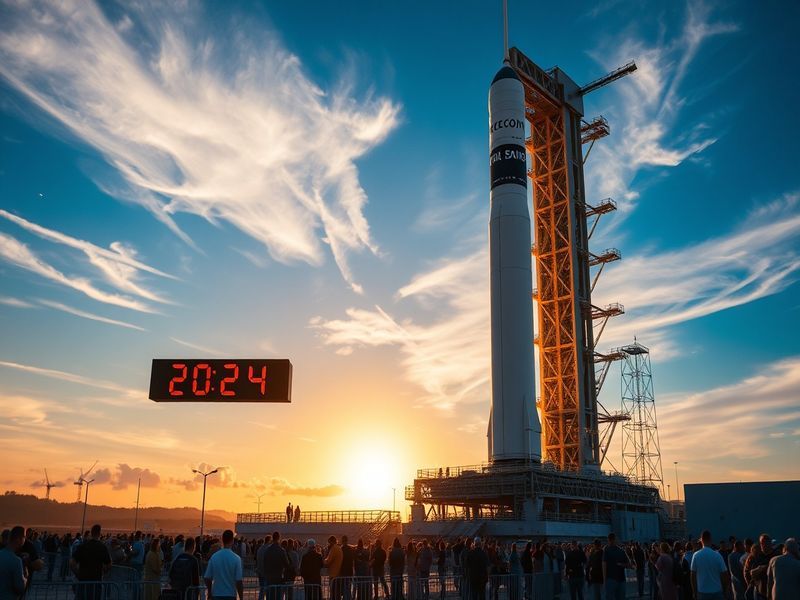
Overview of Artemis II Mission
The Artemis II mission represents a significant milestone in NASA’s efforts to return humans to the Moon. Scheduled for launch in late 2024, this mission will be a crucial step toward establishing a sustainable human presence on the lunar surface. Unlike its predecessor, Artemis I, which was an uncrewed test flight, Artemis II will carry astronauts aboard the Orion spacecraft.
With the goal of landing on the Moon by 2025 as part of the larger Artemis program, Artemis II will serve multiple purposes. It will not only test the performance of the Orion spacecraft in a crewed environment but also validate critical systems necessary for future lunar landings.
Launch Date and Preparations
The Artemis II launch is tentatively set for November 2024. This timeline is contingent upon successful completion of various preparatory stages, including testing of the Space Launch System (SLS) rocket and the Orion spacecraft. NASA has emphasized the importance of thorough testing to ensure crew safety and mission success.
As the launch date approaches, several key milestones must be achieved:
- Completion of SLS rocket assembly.
- Final tests of the Orion spacecraft.
- Training of the astronaut crew.
- Public outreach and educational initiatives to engage global audiences.
These preparations are not only technical but also involve extensive collaboration across various sectors. NASA’s partnerships with international space agencies and commercial partners play a vital role in the mission’s success.
Global Cultural Context
The Artemis program, including Artemis II, has implications that extend beyond space exploration. It represents a collective human endeavor that transcends national borders. Countries around the world are increasingly investing in space exploration, recognizing its potential to advance technology and inspire future generations.
International interest in lunar exploration is growing, with countries like China, India, and the European Union planning their own missions. The Artemis II mission could serve as a catalyst for further collaboration among nations in scientific research and technological development. This spirit of cooperation is essential in addressing the challenges of space travel and exploration.
Future Implications of Artemis II
The successful launch and operation of Artemis II will pave the way for subsequent missions, including Artemis III, which aims to land astronauts on the Moon’s South Pole. This region is believed to contain water ice, a critical resource for sustaining human presence on the Moon and potentially supporting future missions to Mars.
Moreover, the Artemis program is significant for fostering interest in STEM (Science, Technology, Engineering, and Mathematics) fields. Educational programs linked to the mission are designed to inspire young people worldwide to pursue careers in these areas. By engaging students through interactive experiences and educational resources, NASA is nurturing the next generation of innovators.
As the launch date approaches, anticipation builds not only in the United States but globally. The Artemis II mission is expected to captivate the public’s imagination, drawing attention to the possibilities of human exploration beyond Earth.
Conclusion
The Artemis II mission is set to mark an important chapter in the history of space exploration. With a tentative launch date in November 2024, it symbolizes not only a technological achievement but also a shared human aspiration. As nations come together to explore the Moon, the potential for collaboration in science and technology grows, offering a hopeful vision for future endeavors beyond our planet.
For those interested in following the developments of the Artemis program or exploring related topics, you can visit our Science and Technology sections for more insights.