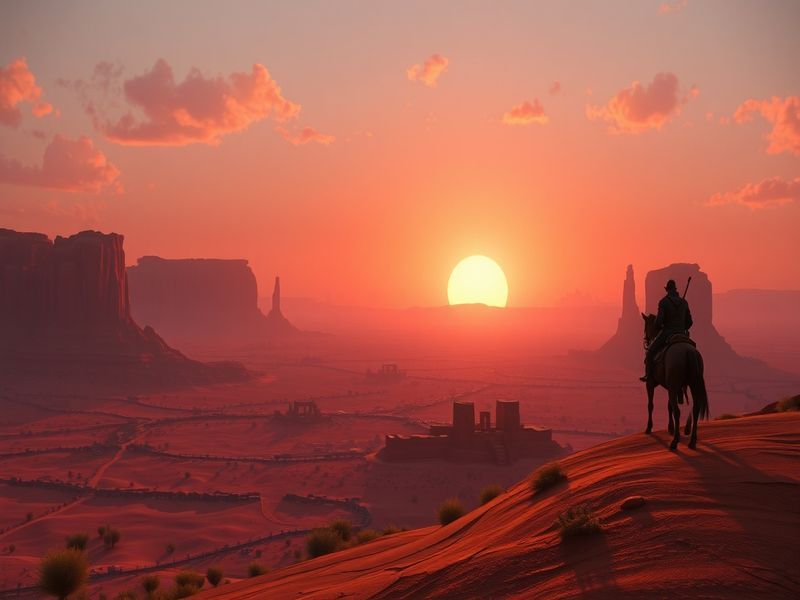
Crimson Desert Game: A Global Adventure in Open-World Gaming
The gaming industry has seen few titles that blend meticulous world-building with cultural depth quite like Crimson Desert. Developed by Pearl Abyss, the studio behind the critically acclaimed Black Desert Online, this action-adventure RPG has captivated players worldwide since its release in 2020. Set in the mythical continent of Pywel, the game weaves a sprawling narrative that draws from diverse global influences, from medieval European aesthetics to East Asian folklore.
What sets Crimson Desert apart is its ambition. Unlike many open-world games that prioritize scale over substance, this title invests heavily in storytelling, character development, and environmental detail. Players step into the boots of Macduff, a grizzled warrior navigating a land torn between warring factions, supernatural threats, and ancient mysteries. The game’s reception has been polarizing—some critics praise its ambition, while others argue its pacing and combat mechanics feel dated. Yet, it undeniably leaves a mark on the global gaming landscape.
The World of Pywel: A Melting Pot of Global Influences
Pywel, the fictional continent where Crimson Desert unfolds, is a testament to the game’s global inspirations. The architecture, weaponry, and cultural motifs blend elements from across history and geography. The kingdom of Penetor, for instance, resembles a feudal European state with its towering castles and armored knights. Meanwhile, the nomadic tribes of the southern deserts evoke the aesthetics of Middle Eastern and North African cultures, complete with flowing robes and intricate jewelry.
The game’s lore is equally rich, drawing from myths and legends worldwide. The central conflict revolves around an ancient, otherworldly threat known as the “Crimson Horde,” which has plagued Pywel for centuries. This narrative device mirrors real-world historical fears of invasion and apocalypse, resonating with players familiar with everything from Viking sagas to Japanese onryō legends. Pearl Abyss didn’t just create a setting; it crafted a world that feels alive and historically grounded, despite its fantastical elements.
Cultural Easter Eggs and Historical Parallels
One of the game’s most intriguing aspects is its subtle nods to real-world cultures. Players might recognize the influence of the Mongol Empire in the design of the nomadic factions, or the parallels between Penetor’s monarchy and medieval European feudal systems. Even the game’s magic system, which revolves around elemental spirits, draws from shamanistic traditions found in Siberia, Korea, and the Americas.
- Architecture: Penetor’s castles and cathedrals resemble Gothic and Romanesque styles, while the nomadic camps feature yurt-like structures common in Central Asian cultures.
- Weaponry: Swords and shields are reminiscent of European medieval designs, but the game also introduces unique curved blades that echo Middle Eastern scimitars.
- Folklore: The “Crimson Horde” can be seen as a metaphor for the Mongol invasions or the Black Death, blending historical trauma with fantasy storytelling.
These details aren’t just window dressing; they reflect Pearl Abyss’s commitment to creating a world that feels authentic and immersive. For players, this attention to cultural nuance elevates Crimson Desert beyond a typical open-world RPG, making it a study in how games can borrow from history and myth to craft something new.
Gameplay Mechanics: Strengths and Criticisms
Crimson Desert blends action-adventure gameplay with RPG elements, offering players a mix of combat, exploration, and narrative choices. The combat system is real-time, emphasizing dodging, blocking, and counterattacks—a system that has drawn comparisons to titles like Dark Souls and The Witcher 3. However, the game’s mechanics are not without controversy. Some players find the combat clunky or overly punishing, particularly in boss fights where timing and precision are critical.
The game’s open world is vast, with diverse biomes ranging from dense forests to arid deserts. Exploration is encouraged through side quests, hidden treasures, and environmental storytelling. Yet, the world can feel empty at times, with NPCs often repeating dialogue or serving little purpose beyond advancing the main plot. This lack of depth in side content has been a frequent point of criticism among reviewers.
A Focus on Storytelling Over Gameplay Variety
Where Crimson Desert truly shines is in its narrative design. The main story is divided into multiple chapters, each focusing on different characters and factions. This structure allows for a more cinematic experience, with cutscenes that rival those of blockbuster films. The voice acting, particularly for the protagonist Macduff, has been praised for its emotional depth and authenticity.
However, the game’s pacing can be uneven. Some players may find themselves trudging through lengthy dialogue sequences or slow-moving cutscenes, especially in the early hours. The combat, while satisfying when it works, doesn’t always feel as polished as the storytelling. This imbalance has led to mixed reviews, with some players loving the world and lore while others criticize the gameplay loop.
Global Reception and Cultural Impact
Crimson Desert has been a global phenomenon, though its reception varies by region. In South Korea, where Pearl Abyss is based, the game was met with enthusiasm for its ambitious scope and cultural references. Korean players, familiar with the studio’s previous work, appreciated the blend of familiar mechanics with fresh storytelling. Meanwhile, Western audiences have been more divided, with some praising the game’s artistic vision while others critique its technical shortcomings.
The game’s marketing also reflects its global ambitions. Pearl Abyss partnered with influencers and streamers across Europe, North America, and Asia to promote Crimson Desert, tailoring its approach to each region. In Japan, for example, the game was positioned as a samurai-inspired epic, leaning into the country’s love for historical action games. In Europe, the focus was on its medieval fantasy elements, appealing to fans of gaming franchises like The Witcher and Elden Ring.
Comparisons to Other Open-World Games
Crimson Desert often draws comparisons to other open-world RPGs, particularly The Witcher 3 and Elden Ring. Like The Witcher 3, it features a richly detailed world and a deep narrative, though its combat is more action-oriented. Compared to Elden Ring, it lacks the same level of exploration depth and player freedom, instead focusing on a more linear, story-driven experience.
Another key difference is the game’s cultural framing. While The Witcher 3 draws heavily from Slavic folklore and Elden Ring from dark fantasy, Crimson Desert attempts to create a more universal mythos, blending elements from across the globe. This approach has its strengths—it allows the game to appeal to a broader audience—but it also risks diluting its cultural identity. Some players have noted that the game’s world feels more like a pastiche of different cultures rather than a cohesive whole.
Looking Ahead: The Future of Crimson Desert
Despite its mixed reception, Crimson Desert has carved out a niche in the gaming landscape. Pearl Abyss has hinted at potential expansions or sequels, though details remain scarce. Fans are particularly eager to see how the game’s lore might evolve, especially given its cliffhanger ending. Could Macduff’s journey continue? Will the Crimson Horde return with even greater force?
The game’s legacy may ultimately lie in its ambition. In an era where many open-world games prioritize quantity over quality, Crimson Desert dares to aim for both. Its world is vast, its story is ambitious, and its cultural influences are wide-ranging. Whether it succeeds or stumbles, it represents a bold attempt to redefine what an open-world RPG can be.
For players, Crimson Desert is a game that demands patience. Its flaws are undeniable, but so are its strengths. Those who invest in its world and lore will find a game that rewards exploration and curiosity. For the rest, it may remain a beautiful but flawed experiment—a testament to the risks and rewards of ambitious game design.
As the gaming industry continues to evolve, titles like Crimson Desert remind us that games are more than just entertainment. They are vessels for storytelling, cultural exchange, and artistic expression. Whether it’s a masterpiece or a work in progress, Crimson Desert is a game that deserves to be discussed, debated, and remembered.