Crimson Desert Game Review: A Bold Evolution in Open-World RPGs
Yesterday’s launch of Crimson Desert marks more than just another entry in the increasingly crowded open-world RPG genre. Developer Pearl Abyss has crafted an experience that blends the tactile brutality of action combat with the narrative depth typically reserved for single-player masterpieces. While comparisons to The Witcher 3 or Elden Ring are inevitable, Crimson Desert carves its own identity through a fusion of survival mechanics, dynamic weather systems, and a protagonist whose motivations feel refreshingly personal.
The World of Crimson Desert: A Living, Breathing Continent
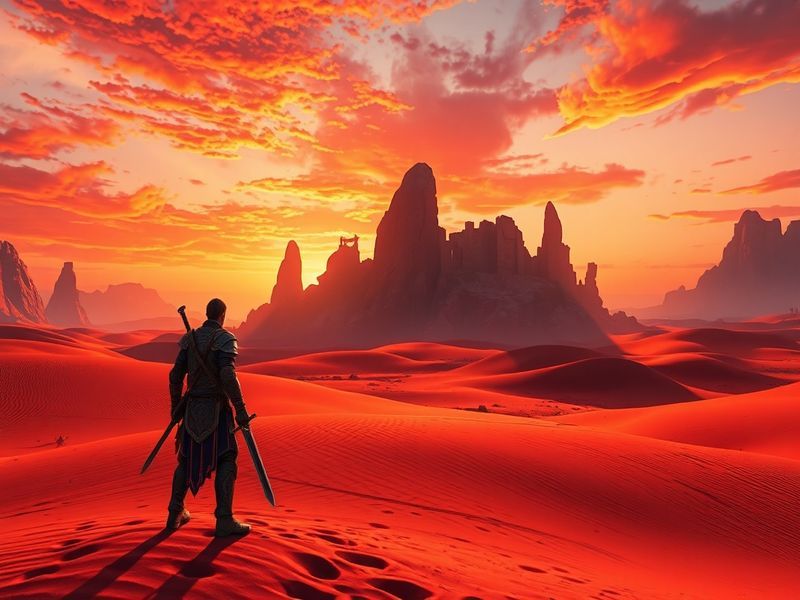
Set in the war-torn continent of Pywel, Crimson Desert drops players into a world ravaged by conflict, where the remnants of a fallen empire loom over fractured kingdoms. Unlike many open-world titles that rely on static quest markers and copy-pasted environments, Pearl Abyss has prioritized environmental storytelling. Ruins, battlefields, and abandoned settlements tell silent stories of past atrocities, inviting players to piece together the history of this world through exploration rather than exposition.
The game’s signature feature is its dynamic weather system, which isn’t just cosmetic. Sandstorms obscure vision, forcing players to navigate by sound or memory. Torrential rains turn roads into rivers, creating tactical challenges that reward adaptability. This isn’t just eye candy—it’s a core gameplay mechanic that reinforces the game’s survival-horror undertones, especially in the game’s most dangerous areas.
Key Features That Define the Experience
- Action-Combat with Depth: The game’s combat system blends melee strikes with ranged precision, demanding mastery of both. Enemies react dynamically to damage, creating a visceral feedback loop that makes every encounter feel significant.
- Survival Elements: Limited inventory space and consumable resources force players to scavenge wisely. Food spoils, weapons degrade, and health doesn’t regenerate automatically—players must manage their resources like a true survivor.
- Narrative Ambiguity: While the main quest is clear, side stories and environmental details leave room for interpretation. The protagonist, Macduff, is a man haunted by his past, and his motivations are revealed gradually through optional dialogue and hidden lore.
- No Fast Travel (Initially): Players must traverse the world on foot or horseback, reinforcing immersion. Fast travel unlocks later, but the early game’s forced journeying creates a sense of isolation and vulnerability.
Combat: Brutal, Beautiful, and Unforgiving
The combat in Crimson Desert is a departure from the weightless, button-mashing style of many modern RPGs. Every sword swing carries momentum, and attacks can be deflected or countered with precise timing. The game’s stamina system ensures that battles are tactical chess matches rather than button-mashing slugfests. Enemies are designed to punish recklessness, with armored foes requiring specific attacks to break their guard.
Magic exists, but it’s neither overpowered nor ubiquitous. Spells are rare, costly, and often situational, adding to the game’s survival tension. The magic system is tied to the world’s lore, with users drawing power from ancient relics or cursed artifacts—something that feels earned rather than handed out through leveling.
“The combat feels like a love letter to Dark Souls meets The Witcher, where every victory is hard-won and every defeat stings. The animations are fluid, the sound design is immersive, and the enemy variety ensures no two fights feel the same.”
— Early Access Review from Dave’s Locker
Broader Implications: Where Does Crimson Desert Fit in the RPG Landscape?
Crimson Desert arrives at a pivotal moment for open-world RPGs. The genre has faced criticism in recent years for bloated design, repetitive quest structures, and a lack of meaningful player agency. While titles like Elden Ring and Cyberpunk 2077 have revitalized interest in deep, immersive worlds, Crimson Desert distinguishes itself by prioritizing survival mechanics and environmental storytelling over sheer scale.
Its approach to narrative delivery is particularly noteworthy. Rather than relying on excessive dialogue or cinematic cutscenes, Crimson Desert trusts players to uncover its mysteries through observation and deduction. This design philosophy aligns with modern trends in immersive sims and soulslike games, where player curiosity is rewarded with richer experiences. It also reflects a growing fatigue with games that spoon-feed players every detail, opting instead for subtlety and suggestion.
The Future of Survival RPGs
With Crimson Desert, Pearl Abyss is positioning itself as a serious contender in the survival-RPG space, a subgenre that has seen a resurgence thanks to titles like Valheim and Darkwood. However, where those games focus on base-building and crafting, Crimson Desert emphasizes combat, exploration, and narrative ambiguity. This hybrid approach could inspire a new wave of RPGs that blend survival mechanics with deeper storytelling.
The game’s multiplayer elements, though not fully revealed, suggest an as-yet-unseen direction for the genre. If Pearl Abyss can integrate co-op survival mechanics without compromising the single-player experience, it may set a new standard for how open-world games handle shared worlds.
Who Should Play Crimson Desert?
Crimson Desert isn’t a game for everyone. Those seeking a polished, quest-driven experience with minimal challenge may find it frustrating. However, players who crave depth, consequence, and a world that feels alive will find much to love. The game’s difficulty curve is steep, but the payoff is a sense of accomplishment that’s rare in modern RPGs.
The game’s visuals are another standout. The art direction leans into a gothic, almost painterly aesthetic, with a color palette dominated by crimsons, ochres, and deep blues. The attention to detail in character models, from weathered faces to intricate armor designs, elevates the immersion. While not a graphical powerhouse on par with Starfield or Cyberpunk 2077, it excels in creating a cohesive, believable world.
Final Verdict: A Welcome Challenge in a Crowded Genre
Crimson Desert is a bold, uncompromising RPG that refuses to play by the rules of modern design. It’s punishing, yes, but fair. It’s ambiguous, but purposeful. And most importantly, it’s a game that trusts its players to engage with its world on its own terms. In an era where open-world games often prioritize quantity over quality, Crimson Desert is a refreshing reminder that depth and challenge still matter.
For fans of survival games, action RPGs, or narrative-driven experiences, Crimson Desert is a must-play. For everyone else, it may be a hard sell—but one that could redefine expectations for the genre.