Iran Conflict Explained: Tensions, Proxy Wars & Global Impact
The Middle East remains one of the most volatile regions in the world, and Iran’s role within it has become increasingly central to global discussions about security, diplomacy, and regional stability. Recent years have seen a steady escalation of tensions, driven by a mix of historical grievances, geopolitical ambitions, and external interventions. Understanding these dynamics requires looking beyond headlines to examine the deeper cultural, economic, and strategic factors at play.
The roots of modern conflict involving Iran stretch back decades. The 1979 Islamic Revolution transformed the country’s political landscape, replacing a Western-aligned monarchy with a theocratic republic that positioned itself as an adversary to both regional and global powers. This shift created lasting friction with the United States, which had long supported the pre-revolutionary regime. Sanctions, proxy conflicts, and diplomatic isolation became instruments of policy on both sides, embedding distrust into the fabric of international relations.
The Role of Proxy Wars in Shaping Regional Instability
Iran’s involvement in proxy conflicts across the Middle East has been a defining feature of its foreign policy. Through support for groups like Hezbollah in Lebanon, the Houthis in Yemen, and various militias in Iraq and Syria, Tehran has extended its influence while avoiding direct confrontation with stronger military powers. These relationships are often framed in ideological terms—defending Shi’a communities against perceived Sunni aggression—but they also serve strategic interests, such as securing supply routes and deterring regional rivals like Saudi Arabia and Israel.
The consequences of these proxy engagements are profound. In Yemen, the ongoing civil war has created one of the world’s worst humanitarian crises, with Iranian-backed Houthi forces clashing with a Saudi-led coalition. In Syria, Iranian military advisors and allied militias have played a crucial role in keeping Bashar al-Assad’s regime in power, further entrenching Iran’s presence on Israel’s northern border. These conflicts are not isolated incidents; they form a broader pattern of Iranian strategy aimed at creating a sphere of influence stretching from Baghdad to Beirut.
The international community has responded unevenly to Iran’s actions. The United Nations has repeatedly condemned violations of arms embargoes, while the European Union has sought to balance trade relations with diplomatic pressure. Meanwhile, the U.S. has pursued a policy of maximum pressure under successive administrations, reimposing sanctions after the 2015 nuclear deal was abandoned. This fragmented approach has complicated efforts to de-escalate tensions, leaving regional actors to navigate a landscape where diplomacy often takes a backseat to military posturing.
Economic Pressures and Domestic Challenges in Iran
Economic hardship has become a defining feature of life in Iran, exacerbated by international sanctions and internal mismanagement. Inflation has soared, unemployment remains stubbornly high, and the local currency, the rial, has lost much of its value against the dollar. Protests over economic conditions have erupted repeatedly, often met with harsh crackdowns by security forces. These domestic struggles shape Iran’s foreign policy, as leaders seek to rally nationalist sentiment behind anti-Western rhetoric while struggling to deliver tangible improvements to their people.
The impact of sanctions cannot be overstated. Since the U.S. withdrew from the Joint Comprehensive Plan of Action (JCPOA) in 2018, Iran has faced increasingly severe restrictions on its oil exports, banking, and trade. While Iran has found ways to circumvent some measures—such as through oil smuggling networks and limited trade with countries like China and Russia—the economic strain has been relentless. The government has responded by tightening control over domestic resources, further centralizing power and reducing transparency.
Culturally, the sanctions have also taken a toll. Artists, musicians, and intellectuals report growing difficulties accessing international platforms, funding, and collaborations. Universities face restrictions on scientific exchanges, and the film industry, once a point of national pride, struggles to participate in global festivals. These cultural isolations add another layer to the crisis, as Iran’s rich heritage becomes increasingly cut off from the world stage.
The Cultural Dimension: How Iran Projects Influence Beyond Borders
Iran’s cultural influence remains a powerful, if often overlooked, tool of soft power. Persian literature, calligraphy, and cinema have long resonated across the Muslim world and beyond. Filmmakers like Abbas Kiarostami and Asghar Farhadi have earned international acclaim, using their art to critique social norms while subtly challenging Western stereotypes of Iran as a monolithic, authoritarian state. These cultural exports serve as a counter-narrative, presenting a more nuanced image of a society rich in history and creativity.
Religious and linguistic ties also play a role in extending Iran’s reach. Persian is spoken not only in Iran but also in Afghanistan, Tajikistan, and parts of Central Asia. Shia Islam, promoted by Iran’s clerical leadership, has gained adherents in countries as diverse as Iraq, Bahrain, and Pakistan. This religious and linguistic footprint provides Iran with natural allies and channels for influence, even in the face of political opposition.
However, this soft power is not without limits. The regime’s heavy-handed control over cultural expression—through censorship, surveillance, and imprisonment of dissenting artists—often undermines its efforts to present a progressive image. When filmmakers, musicians, or writers are jailed for their work, the contrast between Iran’s cultural reputation and its repressive policies becomes stark. This duality complicates efforts to build genuine goodwill, leaving many outside observers skeptical of Tehran’s intentions.
Looking Ahead: Can Diplomacy Break the Cycle?
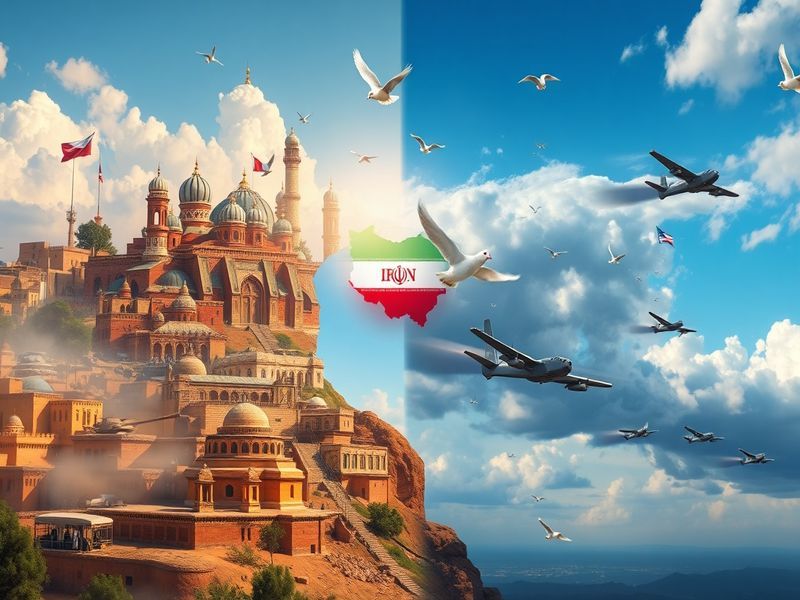
The question of whether diplomacy can resolve—or at least stabilize—the Iran conflict remains open. Recent efforts to revive the JCPOA have stalled, with both sides accusing the other of bad faith. Meanwhile, regional actors like Israel and Saudi Arabia have adopted more aggressive postures, conducting covert operations and airstrikes against Iranian targets. The risk of miscalculation is high, particularly in volatile flashpoints like the Strait of Hormuz, where Iran has threatened to disrupt global oil shipments in response to perceived provocations.
For diplomacy to succeed, a few key conditions must be met. First, there must be a willingness among all parties to compromise, something that has been in short supply in recent years. Second, regional actors need to be included in any negotiation process, as their security concerns are deeply intertwined with Iran’s actions. Finally, the international community must present a united front, avoiding the fragmentation that has allowed Iran to exploit divisions between Western powers and its allies.
Until these conditions are met, the cycle of tension, confrontation, and retaliation is likely to continue. The human cost of this stalemate is immense—millions displaced by war, economies crippled by sanctions, and societies trapped under the weight of political repression. Yet, history shows that even the most intractable conflicts can find resolution when leaders prioritize peace over power.
For now, the world watches closely. The choices made in Tehran, Washington, Riyadh, and Jerusalem over the coming months could determine whether the next chapter in the Iran conflict is one of escalation or negotiation. One thing is certain: the stakes could not be higher.
To understand how these geopolitical tensions intersect with global cultural trends, explore our Culture section. For deeper analysis on international relations and conflict resolution, visit our Politics category.