Iran-Israel Conflict: Escalation Risks and Global Impact
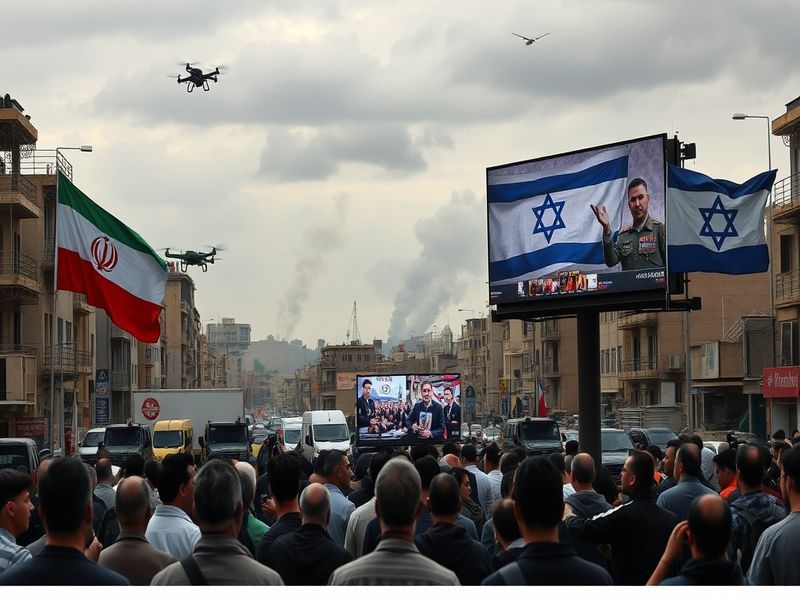
The Middle East stands on the edge of a potential escalation following recent hostilities between Iran and Israel. What began as a series of shadow conflicts and proxy battles has now escalated into direct military confrontations, raising concerns about regional stability and global security. The situation remains fluid, with both nations demonstrating their military capabilities while the international community scrambles to prevent further deterioration.
Historical Context: Decades of Hostility
The roots of the current tensions trace back to the 1979 Iranian Revolution, which established an Islamic republic in Tehran opposed to Israel’s existence. Since then, Iran has provided financial and military support to groups like Hezbollah in Lebanon and Hamas in Gaza, positioning itself as a major adversary to Israel. The two nations have engaged in a shadow war for years, characterized by cyberattacks, sabotage operations, and targeted assassinations of military and nuclear scientists.
Israel, for its part, has conducted numerous airstrikes in Syria to prevent Iranian military entrenchment near its northern border. These operations often target Iranian Revolutionary Guard Corps (IRGC) positions and their allied militias. The most significant escalation occurred in April 2024 when Iran launched a direct missile and drone attack on Israel in retaliation for an Israeli strike on an Iranian consulate in Damascus, Syria. This marked the first time Iran had ever launched a direct attack on Israeli soil.
Recent Escalations: A New Phase of Conflict
The April 2024 attack by Iran involved more than 300 drones and missiles, though Israel, with assistance from the United States, United Kingdom, and Jordan, managed to intercept the vast majority. The attack caused minimal damage but represented a symbolic shift in the conflict’s dynamics. Israel responded with a limited strike on Iranian military sites, signaling that it would retaliate proportionally but avoid all-out war.
Analysts suggest that Iran’s attack was carefully calibrated to avoid excessive Israeli retaliation, which could have triggered a broader regional conflict. However, the risk of miscalculation remains high. Both nations have demonstrated restraint thus far, but the potential for escalation persists, particularly if either side perceives weakness or feels compelled to respond more forcefully to perceived provocations.
Key Events Leading to the Current Crisis
- April 1, 2024: An Israeli airstrike on the Iranian consulate in Damascus kills several high-ranking IRGC officers, including Brigadier General Mohammad Reza Zahedi.
- April 13, 2024: Iran launches a massive missile and drone barrage at Israel, marking the first direct attack by Iran on Israeli territory.
- April 14, 2024: Israel responds with a limited strike on Iranian military installations, avoiding civilian casualties and infrastructure damage.
- April 19, 2024: Iran launches a retaliatory strike on Israeli military sites in the Golan Heights, though Israel intercepts most of the projectiles.
Military Capabilities: A Regional Arms Race
Iran’s military strategy relies heavily on asymmetric warfare, leveraging proxy forces and ballistic missile capabilities to counter Israel’s conventional military superiority. Iran’s ballistic missile arsenal is one of the largest in the region, with estimates suggesting it possesses over 3,000 short- and medium-range missiles. Additionally, Iran has invested heavily in drone technology, producing models such as the Shahed-136, which has been used in attacks on Saudi oil facilities and Ukrainian infrastructure.
Israel, meanwhile, boasts one of the most advanced militaries in the world, with a sophisticated air defense system (Iron Dome, David’s Sling, Arrow) designed to intercept ballistic missiles and rockets. The Israeli Defense Forces (IDF) also possess a formidable air force and nuclear capabilities, though it maintains a policy of nuclear ambiguity. Israel’s military doctrine emphasizes preemptive strikes and rapid mobilization, as demonstrated in its frequent operations against Iranian-backed militias in Syria and Lebanon.
Both nations have also engaged in cyber warfare, with Israel accused of launching cyberattacks on Iran’s nuclear program and Iran retaliating with cyber strikes on Israeli infrastructure. These digital conflicts add another layer of complexity to the already volatile situation.
Global Implications: A Delicate Balancing Act
The Iran-Israel conflict has far-reaching consequences beyond the Middle East. The United States, a key ally of Israel, has reiterated its commitment to Israel’s security while urging restraint on both sides. However, the U.S. faces a delicate balancing act, as it seeks to prevent a broader regional war while avoiding entanglement in a protracted conflict. The Biden administration has dispatched additional military assets to the region, including fighter jets and missile defense systems, to deter further escalation.
Europe has also weighed in, with leaders calling for de-escalation and a return to diplomatic negotiations. The European Union has imposed sanctions on Iranian officials and entities linked to the IRGC, though these measures have had limited impact on Iran’s behavior. Meanwhile, Russia and China have adopted more nuanced positions, advocating for dialogue while maintaining strategic partnerships with Iran.
The conflict has also strained relations within the Middle East. While many Arab states have historically opposed Iran’s regional ambitions, some have grown increasingly wary of Israel’s military actions and their potential to destabilize the region further. Saudi Arabia and other Gulf states have called for restraint, emphasizing the need for collective security arrangements to address shared threats.
Potential Scenarios for the Future
- Controlled Escalation: Both sides continue to engage in limited strikes and retaliatory actions, avoiding a full-scale war but maintaining a state of heightened tension.
- Diplomatic Intervention: International actors, including the United Nations and regional powers, broker a ceasefire and initiate talks to address underlying grievances.
- Regional War: A miscalculation or significant provocation leads to a broader conflict involving multiple actors, including Hezbollah in Lebanon and other Iranian-backed militias.
- Status Quo Ante: Both sides de-escalate tensions and return to a state of indirect conflict, relying on proxy forces and covert operations to pursue their objectives.
Conclusion: Navigating a Volatile Landscape
The Iran-Israel conflict represents one of the most volatile flashpoints in the world today. While both nations have thus far avoided a full-scale war, the risk of miscalculation and escalation remains ever-present. The international community must act decisively to prevent further deterioration, balancing the need for deterrence with the imperative of diplomacy.
For now, the situation remains in a precarious equilibrium, with neither side willing to back down but both cognizant of the catastrophic consequences of all-out war. The coming weeks and months will be critical in determining whether the conflict escalates into a broader regional crisis or whether cooler heads prevail and a path to de-escalation is found.
As the world watches, the stakes could not be higher. The Middle East’s fragile security architecture hangs in the balance, and the actions of Iran, Israel, and their allies will shape the region’s future for years to come.
For more insights into regional conflicts and geopolitical analysis, visit our Politics and News sections.