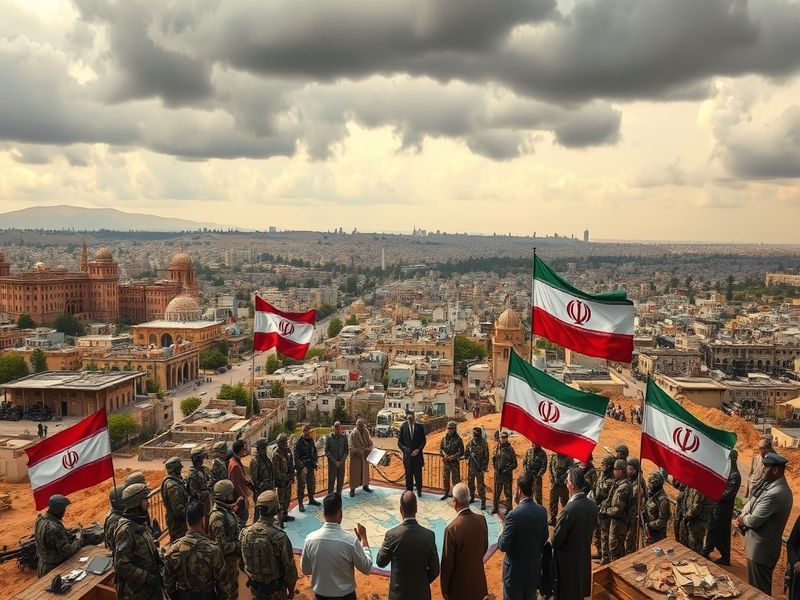
Iran War Explained: Causes, Impact, and Global Stakes
The conflict involving Iran spans decades, rooted in geopolitical rivalries, ideological clashes, and shifting alliances. What began as a dispute over regional influence has evolved into a complex web of proxy wars, nuclear negotiations, and international sanctions. Understanding this conflict requires examining its historical foundations, key players, and the humanitarian toll it continues to exact.
Historical Context: From Revolution to Regional Power
The modern conflict traces back to Iran’s 1979 Islamic Revolution, which overthrew the U.S.-backed monarchy and established a theocratic government. The revolution’s ideological opposition to Western influence laid the groundwork for decades of tension. Following the revolution, Iran’s new leadership, particularly under Ayatollah Ruhollah Khomeini, promoted an anti-Western and anti-Israel stance, further isolating the country diplomatically.
The Iran-Iraq War (1980–1988) marked a pivotal moment in the nation’s military and political development. Sparked by territorial disputes and Saddam Hussein’s desire to weaken Iran’s revolutionary government, the conflict became one of the deadliest of the 20th century. Iran’s resilience during the war, despite international isolation, cemented its identity as a regional power willing to defy global norms.
Key Milestones in Iran’s Military and Nuclear Development
Iran’s pursuit of a nuclear program began in the 1950s under the U.S.-supported Shah’s regime, but it accelerated after the revolution. Western concerns over Iran’s nuclear ambitions grew in the 2000s, leading to a series of international sanctions. The country’s development of ballistic missiles and support for militant groups across the Middle East further fueled regional tensions.
- 2006: The UN Security Council imposed sanctions after Iran refused to halt uranium enrichment.
- 2015: The Joint Comprehensive Plan of Action (JCPOA), or “Iran Nuclear Deal,” was signed, easing sanctions in exchange for restrictions on Iran’s nuclear program.
- 2018: The U.S. withdrew from the JCPOA under President Trump, reimposing sanctions and escalating tensions.
- 2020: The assassination of Iranian General Qasem Soleimani by a U.S. drone strike marked a major escalation in direct military confrontation.
The Proxy War Landscape: Iran’s Role in the Middle East
Iran’s influence extends through proxy groups in Lebanon, Yemen, Syria, and Iraq, allowing it to project power without direct military engagement. Hezbollah in Lebanon, the Houthis in Yemen, and various Shia militias in Iraq and Syria are key components of Iran’s regional strategy. These groups often operate independently but receive funding, training, and weapons from Tehran, enabling Iran to shape conflicts without direct attribution.
In Syria, Iran’s intervention on behalf of President Bashar al-Assad has been critical in preserving his regime. Iranian Revolutionary Guard Corps (IRGC) forces and allied militias have played a decisive role in key battles, often in coordination with Russian airstrikes. Meanwhile, in Yemen, the Houthi rebels’ attacks on Saudi Arabia and global shipping lanes have drawn Iran into a broader regional standoff with Gulf states.
The Israel Factor: A Persistent Flashpoint
Israel views Iran as an existential threat due to its nuclear program, ballistic missile development, and support for groups like Hezbollah and Hamas. Israel has conducted numerous airstrikes in Syria targeting Iranian positions and has been accused of assassinating Iranian scientists and military figures. The shadow war between Israel and Iran has intensified in recent years, with cyberattacks, sabotage, and covert operations becoming common tactics.
In April 2024, Israel launched a direct strike on Iran in retaliation for an unprecedented missile and drone attack from Tehran. This marked the first time Israel had directly targeted Iranian soil, signaling a potential shift toward more overt military confrontation. The incident underscored the fragility of the region’s security architecture and the risk of a broader conflict.
The Humanitarian Toll: Civilian Suffering in Conflict Zones
The human cost of the Iran conflict is staggering, with millions displaced, injured, or killed across the Middle East. In Yemen, the war has created one of the world’s worst humanitarian crises, with over 377,000 deaths and 24 million people in need of assistance. The Houthi rebellion, backed by Iran, has exacerbated food insecurity and destroyed critical infrastructure.
In Syria, the conflict has left over 500,000 dead and displaced more than half the population. Iranian-backed militias have been accused of war crimes, including targeting civilians and detaining opponents without trial. Similarly, in Iraq, Shia militias have been linked to sectarian violence and political assassinations, further destabilizing the country.
Economic Devastation and Sanctions
International sanctions, particularly those imposed by the U.S., have crippled Iran’s economy, leading to hyperinflation, unemployment, and widespread poverty. The rial, Iran’s currency, has lost significant value, making imports of food, medicine, and fuel difficult. Despite these challenges, Iran has adapted by developing a shadow fleet of oil tankers and expanding trade with countries like China and Russia.
The humanitarian impact is most acute in Iran’s healthcare system, which struggles to provide adequate care due to shortages of medicine and medical equipment. The COVID-19 pandemic further strained resources, with Iran experiencing one of the highest death tolls in the region. Meanwhile, sanctions have hindered the import of vaccines and medical supplies, leaving many vulnerable.
Global Powers and the Future of Diplomacy
The Iran conflict remains a flashpoint in global politics, with major powers adopting divergent approaches. The U.S., under both Democratic and Republican administrations, has pursued a policy of “maximum pressure,” aiming to curb Iran’s regional influence and nuclear ambitions. Europe, while critical of Iran’s human rights record and regional actions, has sought to salvage the JCPOA and maintain economic ties.
Russia and China have positioned themselves as key allies of Iran, providing diplomatic cover and economic lifelines. Moscow has leveraged its military presence in Syria to strengthen ties with Tehran, while Beijing has deepened economic cooperation through its Belt and Road Initiative. These alliances have allowed Iran to resist U.S. pressure and maintain its regional influence.
Potential Paths Forward
Diplomatic efforts to resolve the Iran conflict remain fraught with challenges. The JCPOA’s collapse has left little room for negotiation, while Iran’s continued enrichment of uranium and development of advanced centrifuges have pushed the timeline for a potential nuclear weapon closer. Meanwhile, regional tensions show no signs of abating, with Israel and Iran locked in a cycle of retaliation.
Analysts suggest that a combination of renewed diplomacy, regional de-escalation, and internal reforms within Iran may offer a path forward. However, the entrenched positions of key players—particularly the U.S., Israel, and Iran—make progress difficult. The humanitarian crisis in the Middle East continues to worsen, demanding urgent attention from the international community.
Conclusion: A Conflict with No End in Sight
The Iran conflict is a multifaceted crisis with roots in history, ideology, and geopolitics. From the 1979 revolution to the modern-day proxy wars, Iran’s role in the Middle East remains a defining challenge for regional and global stability. The humanitarian toll, economic devastation, and risk of further escalation underscore the need for concerted diplomatic efforts.
As tensions persist, the international community must prioritize dialogue over confrontation. The lessons of past conflicts suggest that military solutions rarely yield lasting peace. Instead, a focus on humanitarian aid, economic rehabilitation, and confidence-building measures may offer a glimmer of hope in an otherwise bleak landscape.
For those seeking deeper insights into the geopolitical dynamics of the Middle East, explore our Analysis and Politics sections. These resources provide comprehensive coverage of the forces shaping the region’s future.