Iran War Risks: What’s Driving the Middle East Crisis
The specter of a full-scale war involving Iran has loomed large in recent years, with tensions reaching critical levels. The conflict isn’t confined to direct military engagement between nations but encompasses proxy battles, economic warfare, and nuclear brinkmanship. Understanding the roots of these tensions requires examining decades of geopolitical maneuvering, regional power struggles, and shifting alliances.
At the heart of the crisis lies Iran’s nuclear program, which has drawn international condemnation and sanctions. The 2015 nuclear deal, formally known as the Joint Comprehensive Plan of Action (JCPOA), aimed to curb Iran’s nuclear ambitions in exchange for sanctions relief. However, the U.S. withdrawal from the agreement in 2018 under the Trump administration reignited hostilities. Iran responded by incrementally violating the deal’s terms, enriching uranium to levels far beyond what was permitted.
Meanwhile, Iran’s regional influence has expanded through its support for militant groups like Hezbollah in Lebanon, Hamas in Gaza, and the Houthi rebels in Yemen. These proxies serve as tools of asymmetric warfare, allowing Iran to project power without direct confrontation. The shadow war has intensified, with Israel and Gulf states accusing Iran of destabilizing the region through these alliances.
The Immediate Triggers of Recent Escalations
The most recent surge in tensions can be traced to a series of high-profile incidents. In April 2024, Israel launched a direct strike on Iran’s consulate in Damascus, Syria, killing several high-ranking Iranian military officers. Iran retaliated with a massive drone and missile barrage aimed at Israeli territory, marking the first direct attack by Iran on Israel in decades.
This exchange underscored the fragility of the region’s security architecture. Both sides demonstrated their willingness to cross longstanding red lines: Israel attacked a diplomatic facility, and Iran launched a direct military assault on another sovereign nation. The attacks were calibrated to avoid catastrophic escalation, but miscalculation remains a persistent risk.
Several key factors have contributed to the current volatility:
- Nuclear Ambitions: Iran’s uranium enrichment program has reached 84% purity, edging perilously close to weapons-grade levels. International inspectors have been barred from key sites, raising concerns about covert activities.
- Proxy Warfare: Groups like Hezbollah and the Houthis have escalated attacks on Israel and shipping lanes in the Red Sea, drawing retaliatory strikes from Israel and Western powers.
- Regional Alliances: Israel’s normalization deals with Arab states, such as the Abraham Accords, have isolated Iran diplomatically while strengthening its adversaries militarily.
- U.S. Involvement: The Biden administration has sought to revive nuclear negotiations but has also provided military support to Israel and Gulf allies, complicating de-escalation efforts.
The Broader Implications for Global Stability
The ramifications of a wider conflict extend far beyond the Middle East. Energy markets, already volatile due to the Ukraine war, would face severe disruptions. Iran controls critical chokepoints like the Strait of Hormuz, through which 20% of the world’s oil passes. A blockade or sustained attacks on shipping could send global oil prices skyrocketing, triggering economic turmoil.
Geopolitically, the conflict risks reshaping alliances. China and Russia have aligned with Iran, viewing the U.S. and its allies as adversaries. This axis could further destabilize global power dynamics, particularly in regions like Africa and Latin America, where Tehran has expanded its diplomatic and economic footprint. Meanwhile, European nations, desperate to avoid entanglement, have struggled to mediate between the warring parties.
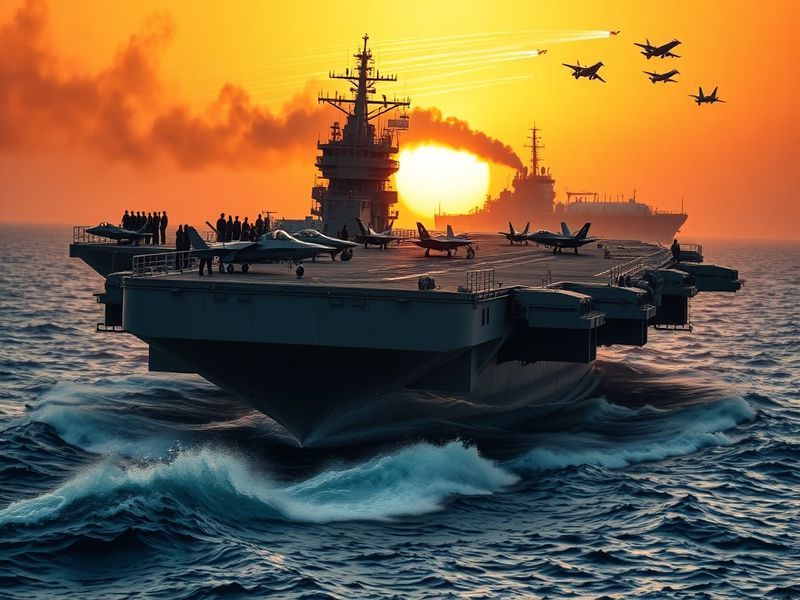
Military experts warn that a direct war between Israel and Iran could spiral into a multi-front conflict. Iran’s ballistic missile arsenal and drone capabilities pose a significant threat to Israel, while Israel’s advanced air defenses and potential nuclear deterrent could limit Iran’s options. However, the risk of miscalculation—such as a strike on a nuclear facility or a chemical weapons attack—remains dangerously high.
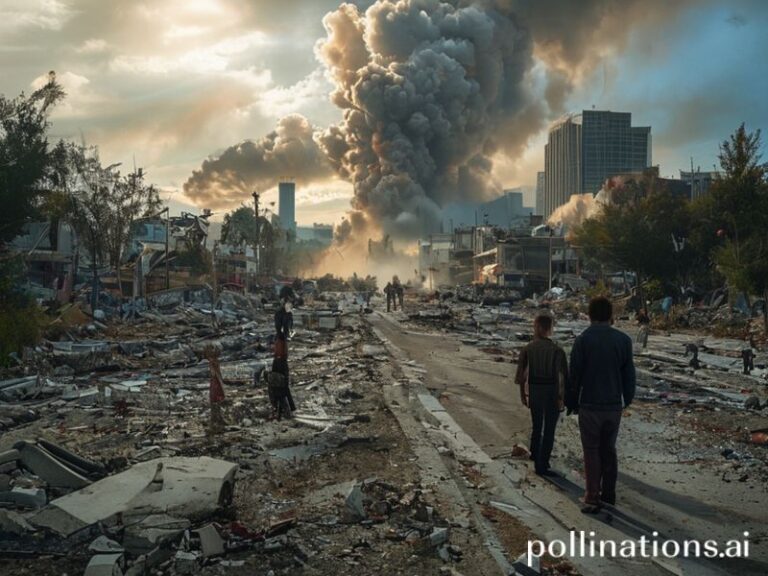
Humanitarian consequences would be catastrophic. The Middle East is already grappling with the fallout from decades of conflict, including mass displacement and economic collapse. A full-scale war would exacerbate food and water shortages, particularly in war-torn countries like Yemen and Syria. The international community’s ability to respond would be hamstrung by geopolitical divisions and logistical challenges.
Pathways to De-escalation (Or Further Conflict)
Despite the grim outlook, diplomatic avenues still exist—though they are narrowing rapidly. The most immediate priority is reviving the JCPOA, even in its weakened form. While the deal is far from perfect, it provides a framework for limiting Iran’s nuclear program. However, trust between the U.S. and Iran is at an all-time low, and domestic politics in both countries complicate negotiations.
Another potential avenue is a regional security dialogue, possibly brokered by neutral parties like Oman or Switzerland. Such talks could address Iran’s concerns about its security and Israel’s need for deterrence. However, the lack of direct communication channels between Iran and Israel makes this prospect unlikely without significant preconditions.
Military deterrence remains a double-edged sword. Israel’s doctrine of “defensive preemption” has historically prevented large-scale attacks, but it also fuels cycles of retaliation. Meanwhile, Iran’s strategy of “forward defense”—projecting power through proxies—ensures that any conflict will be prolonged and decentralized. The international community must balance deterrence with diplomacy to avoid a catastrophic outcome.
Ultimately, the path forward depends on the willingness of key players to compromise. The U.S. must recognize Iran’s legitimate security concerns, while Iran must accept limits on its nuclear and regional ambitions. Israel, too, will need to temper its military responses to avoid escalating tensions unnecessarily. The alternative—a descent into full-scale war—would have consequences far beyond the Middle East.
Key Takeaways
- Nuclear Brinkmanship: Iran’s uranium enrichment has crossed critical thresholds, raising fears of a nuclear-armed Iran. The JCPOA’s collapse has removed key constraints.
- Proxy Warfare: Iran’s support for militant groups like Hezbollah and the Houthis has turned the region into a battleground for indirect conflicts.
- Economic Risks: A wider war could disrupt global oil supplies, sending energy prices soaring and destabilizing economies worldwide.
- Diplomatic Deadlock: Mistrust and geopolitical rivalries have stalled negotiations, leaving the door open for further escalation.
- Humanitarian Crisis: The Middle East’s fragile infrastructure cannot withstand another large-scale conflict, risking mass displacement and suffering.
For those seeking deeper analysis on regional conflicts and their global impact, Dave’s Locker News section offers comprehensive coverage. Additionally, Dave’s Locker Analysis provides expert insights into the strategic dimensions of modern warfare.
As the situation evolves, the world must confront a stark reality: the cost of inaction may far outweigh the risks of engagement. Whether through diplomacy, deterrence, or a combination of both, the time to act is now—before the next spark ignites a fire that cannot be extinguished.