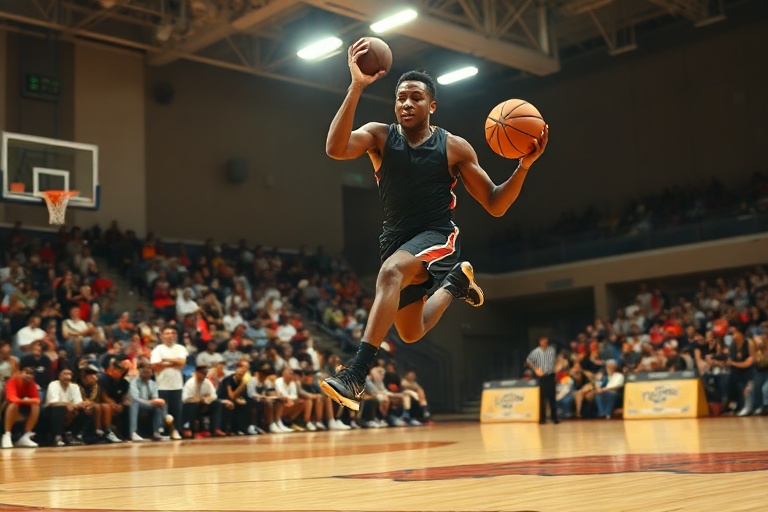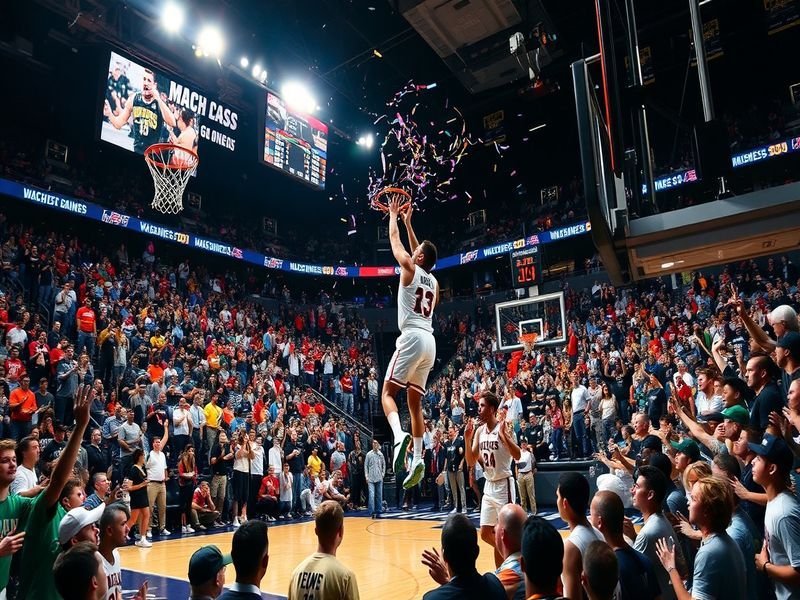
The NCAA Division I Men’s Basketball Tournament, known colloquially as March Madness, stands as one of the most compelling sporting events in the United States. With 68 teams vying for a national championship, the tournament transforms college basketball from a winter pastime into a three-week spectacle of buzzer-beaters, Cinderella stories, and unforgettable moments.
Unlike professional leagues where the best teams consistently contend, March Madness thrives on unpredictability. A mid-major school like Saint Peter’s in 2022 or Loyola Chicago in 2018 can capture the nation’s imagination by advancing deep into the tournament. This democratic potential is central to its appeal, offering underdogs a platform that professional sports rarely afford.
The Structure That Defines the Drama
The tournament’s format—68 teams, single-elimination, seven rounds—is deceptively simple yet brilliantly engineered to maximize suspense. The First Four play-in games set the stage, introducing the first moments of March Madness before the main bracket begins. These games often feature teams from lower-tier conferences, providing early opportunities for lesser-known players to shine on the national stage.
Once the bracket is set, the drama escalates. The Round of 64 eliminates half the field in a single weekend, creating an environment where one loss ends a season. This format forces coaches to make bold strategic decisions, players to elevate their performance under pressure, and fans to engage with every possession.
The tournament’s structure also fosters geographic rivalries and renewed interest in smaller conferences. Schools like Gonzaga, Butler, and Wichita State have leveraged tournament success into sustained national relevance, proving that March Madness can be a launching pad for programs beyond the traditional powerhouses.
Key Elements of the Tournament Experience
- Selection Sunday: The ceremonial reveal of the tournament field, where analysts dissect matchups and fans begin bracket challenges, is a cultural moment in itself.
- David vs. Goliath: Upsets like Norfolk State’s 2012 win over Missouri or Oral Roberts’ 2021 Sweet Sixteen run remind us that no lead is safe.
- Cinderella Stories: Teams like VCU in 2011 and Florida Gulf Coast in 2013 captured imaginations by reaching unexpected heights.
- Star-Making Moments: Players like Christian Laettner, Carmelo Anthony, and Stephen Curry used tournament performances to launch professional careers.
- Nostalgia and Ritual: The tournament’s annual return creates shared memories, from hometown watch parties to office bracket pools.
Beyond the Court: The Tournament’s Broader Influence
March Madness is more than a sporting event; it’s an economic engine and a cultural touchstone. The tournament generates over $1 billion annually in television revenue, sponsorships, and ticket sales. CBS and Turner Sports pay the NCAA nearly $800 million per year for broadcast rights, a figure that underscores the event’s financial significance.
For universities, a deep tournament run can boost applications, donations, and alumni engagement. Gonzaga’s rise from regional power to national contender coincided with its consistent tournament success, transforming Spokane into a basketball destination. Even mid-major programs benefit from exposure, with schools like Murray State and Belmont seeing spikes in visibility after tournament appearances.
The tournament also shapes coaching legacies. Mike Krzyzewski’s five national titles cemented his place in history, while Brad Stevens’ Butler teams became synonymous with the magic of March. Coaches who thrive in the tournament—like Roy Williams, Jim Boeheim, and Geno Auriemma in women’s basketball—are often immortalized in the sport’s lore.
Socially, the tournament reflects broader trends in sports media. Streaming services now offer live games, and social platforms amplify highlights within minutes. The rise of sports betting has added another layer of engagement, with fans analyzing lines and prop bets alongside traditional bracketology.
What the Future Holds for March Madness
The tournament is evolving. Expansion debates persist, with proposals ranging from 72 to 128 teams. While more inclusion could dilute the field’s prestige, it would also spread opportunity to even more programs. The NCAA has also embraced technology, introducing real-time data analytics and virtual reality experiences for fans.
Another shift is the growing parity in women’s basketball. The NCAA Division I Women’s Basketball Tournament has gained traction, with record viewership and increased investment. While still behind the men’s tournament in financial terms, the women’s event is carving out its own legacy, highlighted by stars like Caitlin Clark and Paige Bueckers.
The tournament’s relationship with amateurism remains contentious. NIL (Name, Image, Likeness) policies now allow players to profit from their likeness, raising questions about how the tournament’s commercial success aligns with the principles of college athletics. The NCAA’s recent relaxation of transfer rules and expanded recruiting windows also reflect the sport’s changing dynamics.
Yet, amid these changes, the essence of March Madness endures. The tournament remains a celebration of athleticism, strategy, and sheer willpower. It’s a reminder that in sports, as in life, the unexpected often triumphs.
A Final Look at the Tournament’s Legacy
From its humble beginnings in 1939 with just eight teams to today’s global phenomenon, the NCAA Tournament has grown into a defining American institution. It captures the spirit of competition, the thrill of unpredictability, and the power of collective fandom.
For players, it’s a chance to etch their names into history. For coaches, it’s validation of a season’s work. For fans, it’s a three-week escape into a world where anything can happen. And for the sport of college basketball, it’s the ultimate proving ground.
As the tournament continues to evolve, one thing remains certain: March Madness will always be where legends are made, and where the heart of college basketball beats strongest.
For more insights into college sports and their cultural impact, visit our Trending and Sports categories on Dave’s Locker.