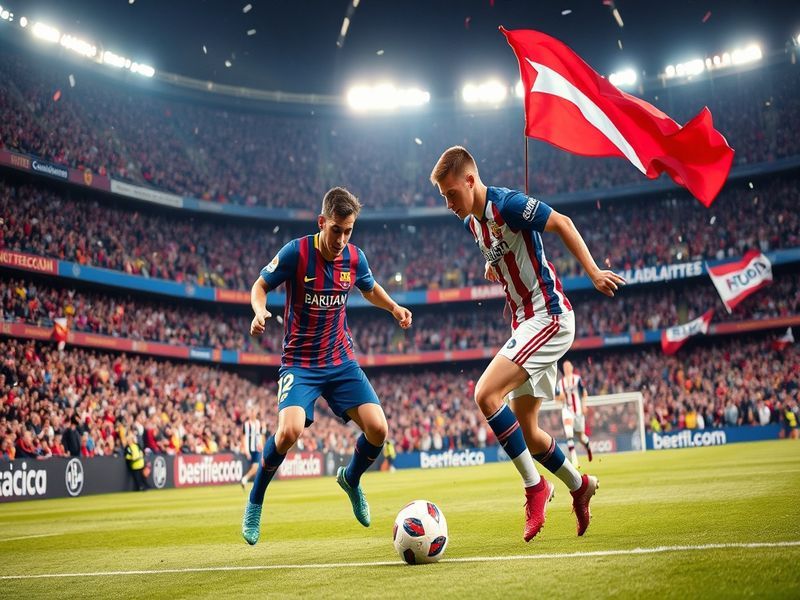
Few fixtures in La Liga capture the essence of Spanish football’s diversity as vividly as the matchup between FC Barcelona and Rayo Vallecano. While Barcelona represents the pinnacle of global footballing excellence, Rayo Vallecano embodies the grit, passion, and raw determination of a club built by and for its community. This contrast extends beyond the pitch, reflecting broader cultural and social narratives that play out in the stands, the boardrooms, and the neighborhoods of Madrid.
When these two teams meet, it’s more than a game—it’s a collision of philosophies. Barcelona, with its storied history and cosmopolitan identity, faces off against Rayo Vallecano, a club deeply rooted in Vallecas, one of Madrid’s most working-class districts. The fixture is a reminder that football, at its core, remains a democratic art form, accessible to all, regardless of budget or prestige.
The Philosophies Behind the Teams
FC Barcelona’s identity is built on a foundation of technical brilliance and institutional legacy. The club’s famous motto, “Més que un club” (“More than a club”), reflects its role not just as a sports entity, but as a cultural and political symbol. From the days of Johan Cruyff’s Dream Team to the modern era guided by Xavi Hernández, Barcelona has consistently prioritized youth development and stylish, possession-based football. This philosophy has attracted global admiration and produced legends like Lionel Messi, Andrés Iniesta, and Xavi himself.
Rayo Vallecano, by contrast, operates on a different wavelength. Founded in 1924, the club has spent much of its history in the lower divisions, surviving financial crises and maintaining a fiercely independent spirit. Its identity is forged in Vallecas, a neighborhood known for its activism, diversity, and working-class roots. The club’s anthem, “Himno de Vallecano,” is sung not with corporate sponsorships in mind, but with pride in local identity.
This contrast is visible in their approaches to football. While Barcelona’s game is often about rhythm, precision, and systemic play, Rayo’s is raw, high-energy, and unpredictable. The team from Vallecas has developed a reputation for pressing aggressively, playing with intensity, and—when necessary—defending with tactical discipline. It’s a style that resonates with fans who value effort and authenticity over polish.
A Microcosm of Spanish Football
Matches between Barcelona and Rayo Vallecano are more than sporting events; they reflect the broader landscape of Spanish football. Barcelona represents the globalized, commercially driven model, with a stadium that hosts over 90,000 fans from around the world. Rayo, meanwhile, plays at Campo de Fútbol de Vallecas, a modest 14,000-seat stadium where fans stand, sing, and chant in unison—an experience that feels like stepping into football’s past.
This contrast extends to ownership and governance. Barcelona’s financial struggles in recent years have drawn global scrutiny, highlighting the vulnerabilities of clubs that prioritize sporting success over economic sustainability. Rayo, on the other hand, has often been a model of financial prudence, surviving on community support, local sponsorships, and careful management.
In many ways, the fixture encapsulates the tension between tradition and modernity in Spanish football. Rayo Vallecano’s survival and occasional success serve as a reminder that clubs don’t need global brands or billionaire owners to thrive—they need passion, resilience, and a connection to their roots.
Key Moments in Recent History
The rivalry between these two teams may not have the historical weight of El Clásico, but it has produced memorable moments that highlight the unpredictability of football. Here are some standout instances from recent years:
- 2021-22 La Liga Season: Rayo Vallecano secured a dramatic 2-1 victory over Barcelona at the Camp Nou, with goals from Álvaro García and Sergio Guardiola. The win was celebrated as a triumph for the underdog and a rare setback for Barcelona during a difficult season.
- 2022-23 Copa del Rey: In the Round of 16, Rayo Vallecano stunned Barcelona with a 2-1 win at home, advancing on away goals after a 3-3 aggregate draw. The match was marked by Rayo’s high pressing and Barcelona’s struggles to break down a compact defense.
- 2023-24 Season: Barcelona turned the tables with a 5-0 thrashing at the Camp Nou, showcasing their attacking firepower. However, Rayo’s performance was praised for its intensity and tactical discipline, proving they could compete even when outgunned.
These matches illustrate a pattern: Rayo Vallecano may not always win, but they rarely go down without a fight. Their ability to frustrate even the most talented teams has earned them respect across La Liga.
Beyond the Pitch: Cultural and Social Dimensions
The Barcelona vs. Rayo Vallecano fixture transcends sport, touching on themes of identity, class, and community. Vallecas is not just a neighborhood—it’s a cultural hub with a strong left-wing, anti-fascist tradition. The area has long been a bastion of activism, and Rayo Vallecano’s fanbase reflects that spirit. The club’s ultras, known as “Bukaneros,” are among the most politically engaged in Spain, often using matches to voice social and political messages.
In contrast, Barcelona’s Camp Nou is a global stage, where players from diverse backgrounds perform in front of an international audience. The tension between these two worlds plays out not just on the pitch, but in the terraces, where chants, banners, and rituals reflect deeper societal divides.
This cultural clash has also influenced how the matches are perceived globally. For many neutral observers, Rayo Vallecano represents the romantic ideal of football: a club that plays with heart, defies the odds, and remains true to its origins. Barcelona, meanwhile, is often judged by its ability to live up to its own legend. When the two meet, it’s not just a game—it’s a story of ambition versus authenticity.
The Global Perspective
From an international standpoint, the Barcelona vs. Rayo Vallecano fixture offers a fascinating case study in how football clubs navigate the pressures of globalization. Barcelona’s struggles with financial sustainability and identity have been well-documented, sparking debates about the future of traditional football clubs in an era dominated by commercial interests. Rayo Vallecano, meanwhile, has become a symbol for those advocating for a more inclusive, community-driven model of football.
This contrast resonates far beyond Spain. In England, clubs like AFC Wimbledon have shown how fan-owned models can thrive. In Germany, clubs like FC St. Pauli blend football with social activism. Rayo Vallecano’s story fits into this broader global narrative—a reminder that football’s soul is not found in boardrooms or TV deals, but in the neighborhoods where it is played and loved.
For global fans, the fixture is a chance to witness two distinct visions of football collide. It’s a reminder that while some clubs chase trophies and global audiences, others are content to chase glory on their own terms.
Conclusion: Why This Match Matters
The Barcelona vs. Rayo Vallecano fixture is more than a footnote in La Liga’s calendar. It’s a celebration of football’s diversity, a testament to the sport’s ability to reflect and shape cultural identities. In a league increasingly dominated by financial powerhouses, Rayo Vallecano stands as a beacon of authenticity, while Barcelona represents the enduring allure of sporting excellence.
As football continues to evolve, matches like these serve as a crucial counterbalance to the homogeneity of the modern game. They remind us that football is not just about winning—it’s about belonging, about struggle, and about the communities that give the sport its soul.
For fans, whether they’re cheering from Vallecas or watching from halfway around the world, the Barcelona vs. Rayo Vallecano fixture offers something rare: a glimpse into the heart of football itself.
To explore more about the culture and history of Spanish football, visit our Sports section, where we dive deeper into the stories that shape the game.