Crimson Desert Game Review: A New Era for Open-World RPGs?
Crimson Desert, developed by Pearl Abyss and directed by Kim Dae-il, marks a significant evolution in the open-world action RPG genre. Set in a visually striking desert landscape, the game blends mythological storytelling with fluid combat mechanics. Its release has generated considerable anticipation, positioning it as a potential competitor to established franchises like action RPGs and open-world titles.
The World of Crimson Desert: A Mythic Sandbox
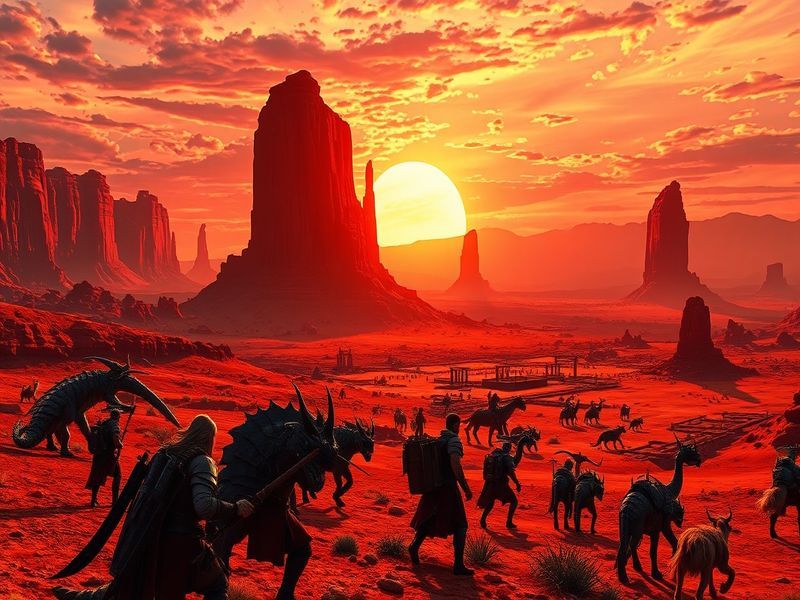
At the core of Crimson Desert is its meticulously crafted world, a sprawling desert realm steeped in lore and danger. The game’s setting draws inspiration from Middle Eastern and North African cultures, enriched with fantastical elements that feel both familiar and fresh. Players navigate this environment through the perspective of a mercenary named Macduff, whose journey unfolds against a backdrop of political intrigue and supernatural threats.
The game’s world design prioritizes verticality, with towering ruins, shifting dunes, and hidden oases creating a sense of discovery. Unlike linear open-world games, Crimson Desert encourages exploration through dynamic quests and environmental storytelling. For instance, ruins often contain puzzles that tie into the game’s larger narrative, rewarding players who take the time to investigate.
The visual fidelity of Crimson Desert is another standout feature. The game employs a proprietary engine to deliver detailed character models, lifelike animations, and a day-night cycle that subtly influences gameplay. Sandstorms, for example, can obscure vision and force players to adapt their strategies, adding an extra layer of challenge.
Key Features of Crimson Desert’s World
- Dynamic Weather Systems: Sandstorms and sand whirls affect visibility and combat.
- Environmental Puzzles: Ruins and ancient structures contain interactive challenges tied to the main story.
- Day-Night Cycle: Certain enemies and quests are more active during specific times.
- Open-Ended Exploration: Players can tackle main story missions or pursue side quests at their own pace.
Combat and Gameplay: A Blend of Precision and Power
Crimson Desert’s combat system is a fusion of action and RPG mechanics, emphasizing player skill and customization. The game introduces a stamina-based combat system, where blocking, dodging, and counterattacks are essential for survival. Unlike many action RPGs that rely on auto-attacks, Crimson Desert rewards precision and timing, making battles feel more engaging and tactical.
Players can switch between different weapons, including swords, spears, and bows, each with unique movesets and attributes. The game also features a skill tree that allows for deep character customization. For example, investing in strength-based skills enhances melee attacks, while agility-focused upgrades improve dodging and evasion.
The game’s boss encounters are particularly noteworthy. These battles are designed to test the player’s mastery of the combat system, often requiring memorization of attack patterns and quick reflexes. Some bosses are tied to the game’s lore, serving as pivotal moments in the story.
Combat Mechanics Overview
- Stamina Management: Players must balance offense and defense to avoid exhaustion.
- Weapon Variety: Different weapons offer unique combat styles and strengths.
- Skill Customization: A deep skill tree allows players to tailor their playstyle.
- Boss Battles: Large-scale encounters that challenge players’ combat skills and adaptability.
Storytelling and Characters: A Mythic Narrative
Crimson Desert’s story is deeply intertwined with its world, drawing from mythological themes and political intrigue. The game’s narrative follows Macduff, a mercenary seeking vengeance against the forces that destroyed his homeland. Along the way, he encounters a diverse cast of characters, each with their own motivations and secrets.
The game’s storytelling is non-linear in places, allowing players to uncover lore through exploration and side quests. This approach rewards curiosity and makes the world feel more alive. For example, players might stumble upon a hidden village with its own struggles, adding depth to the game’s world.
The voice acting and dialogue are also noteworthy. The characters’ personalities shine through, making interactions feel more immersive. While the story is ambitious, some players might find certain plot twists predictable, though the game’s world-building compensates for this.
Broader Implications and the Future of Open-World RPGs
Crimson Desert arrives at a time when open-world RPGs are under increasing scrutiny for their repetitive design and bloated content. Many players and critics have called for more meaningful exploration and tighter narratives. Crimson Desert addresses some of these concerns by prioritizing verticality, dynamic environments, and player-driven storytelling.
The game’s success could influence future open-world titles, encouraging developers to focus on depth over scope. Its emphasis on skill-based combat and environmental storytelling sets a new benchmark for the genre. However, Crimson Desert is not without its challenges. The game’s ambitious design might lead to performance issues on lower-end hardware, and its story, while engaging, may not appeal to all players.
For fans of action RPGs, Crimson Desert offers a compelling alternative to established franchises. Its blend of mythological storytelling, fluid combat, and dynamic world design makes it a standout title in the genre. As the game continues to evolve with updates and potential DLC, it will be interesting to see how it shapes the future of open-world gaming.
Why Crimson Desert Matters for the Genre
- Innovative Combat: A stamina-based system that rewards skill and adaptability.
- Dynamic Environments: Weather and time-of-day mechanics that impact gameplay.
- Player-Driven Storytelling: Encourages exploration and discovery over linear quests.
- Mythological Depth: A rich lore that blends fantasy and cultural influences.
Crimson Desert is more than just another open-world RPG. It’s a bold experiment in blending action, exploration, and storytelling. Whether it becomes a genre-defining title remains to be seen, but its ambition and execution make it a game worth watching.