March Madness: The Global Impact of College Basketball’s Biggest Event
The college basketball tournament, often referred to as March Madness, transcends its reputation as a mere sporting event. It has evolved into a cultural touchstone that bridges athletics, education, and entertainment on a global scale. While the action on the court captivates millions, the tournament’s influence extends far beyond buzzer-beaters and Cinderella stories. From its humble beginnings in the 1930s to its current status as a multi-billion-dollar spectacle, March Madness reflects broader societal trends, economic shifts, and even technological advancements.
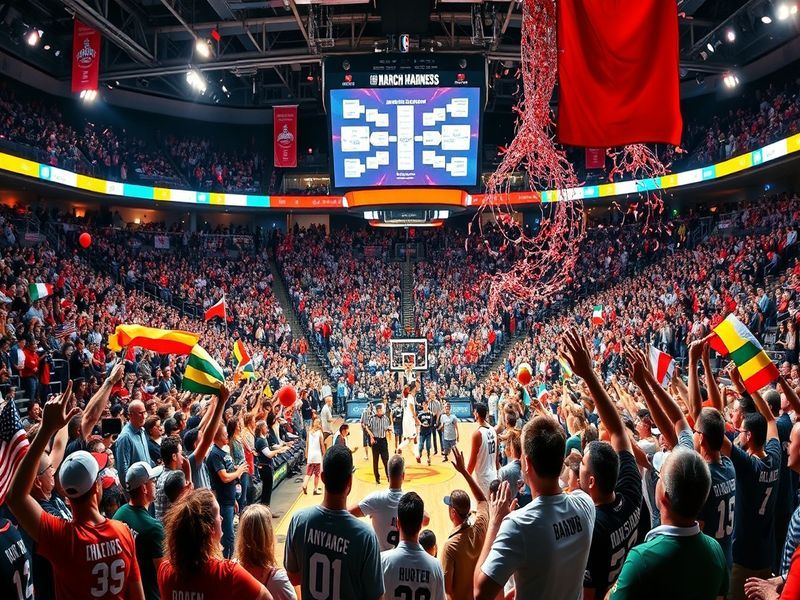
What began as an eight-team invitational in 1939 has burgeoned into a 68-team extravaganza that commands attention from coast to coast—and increasingly, from around the world. The tournament’s growth mirrors the rise of college sports as a major industry, one that now rivals professional leagues in revenue, fan engagement, and media coverage. Yet, its appeal isn’t confined to the United States. International fans, from Tokyo to Toronto, tune in to watch the drama unfold, often discovering the unique blend of amateur athleticism and high-stakes competition that defines NCAA basketball.
The Evolution of March Madness: From Humble Beginnings to Global Stage
The NCAA Division I Men’s Basketball Tournament was not always the colossal event it is today. In its early years, it was a modest affair, with regional play and limited media coverage. The introduction of television broadcasts in the 1960s marked a turning point, transforming the tournament into a national spectacle. By the 1980s, the NCAA had expanded the field to 64 teams, and the term “March Madness” entered the lexicon, thanks to broadcaster Brent Musburger’s enthusiastic use of the phrase.
The tournament’s global reach expanded further with the advent of digital streaming and social media. Fans in Europe and Asia now follow their favorite teams and players with the same fervor as American audiences. The NCAA has capitalized on this international interest by hosting preseason games abroad and recruiting talent from overseas. Programs like Gonzaga and Duke have become household names in countries where basketball was once overshadowed by soccer or cricket. This globalization has not only diversified the talent pool but also enriched the cultural tapestry of college basketball.
- 1939: First NCAA tournament with 8 teams.
- 1951: Field expanded to 16 teams.
- 1985: 64-team format introduced.
- 2011: First tournament played outside the U.S. (San Juan, Puerto Rico).
- 2020: Tournament canceled due to COVID-19, marking the first absence in 81 years.
The Economic Engine: How March Madness Drives Industry and Innovation
March Madness is no longer just a sporting event—it’s an economic powerhouse. The NCAA generates over $1 billion annually from tournament-related revenue, with broadcasting rights alone accounting for a significant portion. CBS and Turner Sports pay a combined $8.8 billion for the rights to broadcast the tournament through 2032, a figure that underscores the event’s commercial value. This revenue fuels not only the NCAA but also the schools and conferences that participate, funding athletic programs and academic initiatives.
Beyond television, the tournament has become a marketing juggernaut. Brands spend hundreds of millions on advertisements, with companies like Nike, Coca-Cola, and AT&T leveraging the event to connect with consumers. Office pools and bracket challenges have turned the tournament into a year-round conversation piece, driving social media engagement and digital advertising. The NCAA’s partnership with sports betting platforms has further monetized the event, though this has also sparked debates about integrity and regulation.
The economic ripple effects extend to local economies. Host cities experience a surge in tourism, hotel bookings, and restaurant traffic during tournament week. For example, when Indianapolis hosted the Final Four in 2021, the city saw an estimated $100 million in economic impact. This financial boon has led to fierce competition among cities vying for the right to host games, with some municipalities offering substantial incentives to secure the event.
The Cultural Impact: More Than Just a Game
March Madness is deeply embedded in American culture, but its influence stretches far beyond the United States. In countries like Canada, the Philippines, and Germany, the tournament has cultivated a dedicated following. International players, such as Germany’s Franz Wagner or Canada’s Andrew Nembhard, have become stars in the NCAA and ambassadors for the sport globally. Their success stories inspire young athletes worldwide, proving that the path to professional basketball can begin in college gyms thousands of miles from home.
The tournament also serves as a platform for social change. Players and coaches use their visibility to address issues like racial inequality, mental health, and education reform. During the 2020 tournament, which was played amid the COVID-19 pandemic, teams and the NCAA highlighted social justice initiatives, using their platforms to amplify messages of unity and progress. This blend of sports and activism reflects the broader role that college basketball plays in society.
Moreover, March Madness has become a cultural touchstone for communities. For many fans, filling out a bracket is a tradition as cherished as Thanksgiving dinner or the Super Bowl. The tournament’s unpredictability—where a No. 16 seed has beaten a No. 1 seed multiple times—mirrors the underdog narratives that resonate in literature, film, and music. It’s a reminder that in sports, as in life, anything is possible.
Looking Ahead: The Future of College Basketball’s Premier Event
The college basketball tournament stands at a crossroads. As the NCAA grapples with debates over amateurism, player compensation, and conference realignment, the tournament’s future is intertwined with these larger questions. The recent implementation of the NIL (Name, Image, Likeness) policy has already begun to reshape the landscape, giving players more control over their careers and earnings. How this will affect team dynamics and tournament outcomes remains to be seen, but it’s clear that the NCAA’s traditional model is evolving.
Technological advancements are also poised to transform the tournament experience. Virtual reality broadcasts, augmented reality stats, and AI-driven analytics are enhancing how fans engage with the games. Social media platforms continue to democratize access, allowing fans to follow every dribble, dunk, and three-pointer in real time. The NCAA’s embrace of these innovations ensures that March Madness remains relevant in an increasingly digital world.
Despite these changes, the tournament’s core appeal endures: the thrill of competition, the unpredictability of the games, and the sense of community it fosters. Whether you’re a die-hard fan filling out a bracket or a casual observer watching from abroad, the college basketball tournament offers something for everyone. It’s a celebration of athleticism, education, and the human spirit—one that shows no signs of slowing down.
For those looking to dive deeper into the world of college sports, Dave’s Locker’s Sports section offers a wealth of analysis, player profiles, and historical insights. Whether you’re tracking the next Cinderella story or debating the best tournament upsets, the conversation is just getting started.