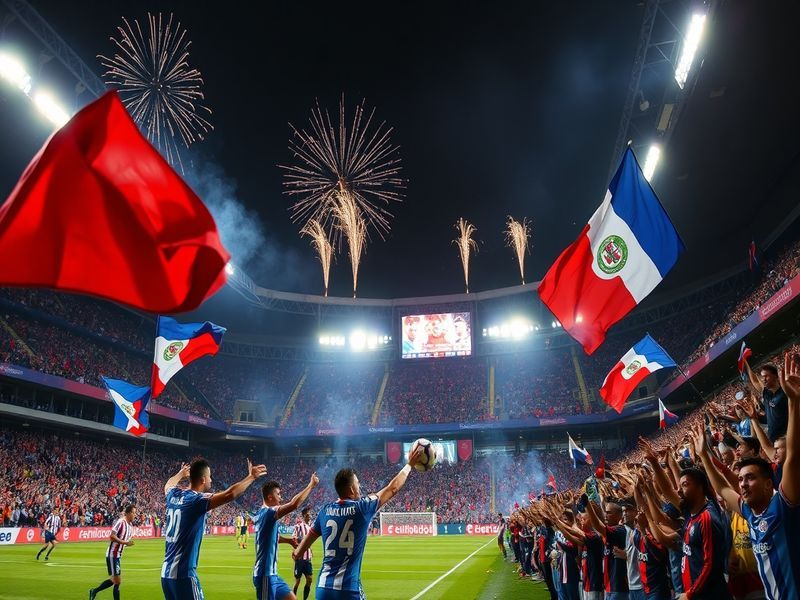
Football in Mexico transcends sport. It’s a cultural institution, a social equalizer, and often a reflection of regional identity. Two clubs embody this spirit in distinct ways: Club de Fútbol Pachuca, the oldest professional team in the country, and Deportivo Toluca, with its rich history of success. Their rivalry, while not as nationally televised as others, carries deep significance for their respective fanbases and regions.
The contrast between Pachuca and Toluca goes beyond the pitch. It’s a story of geography, history, and footballing philosophy. Pachuca, based in the high-altitude mining city of Pachuca de Soto in Hidalgo, has long been a cradle of talent and innovation. Toluca, from the sprawling metropolitan region of Toluca in the State of Mexico, has built a reputation as a consistent title contender. Together, they form a compelling narrative in Liga MX.
The Roots: How Two Clubs Shaped Mexican Football
Founded in 1901, Club de Fútbol Pachuca holds a unique place in Mexican football history. It is the oldest professional football club in the country, predating the Mexican league system itself. The club’s origins are tied to British miners who brought the game to the region during the late 19th century. This international influence is still visible today in Pachuca’s identity and style of play.
Toluca, established in 1917, emerged from a different context. Located just 60 kilometers west of Mexico City, Toluca quickly became a football powerhouse in central Mexico. While not as historically rooted as Pachuca, Toluca built its legacy through sustained excellence in the league, especially during the late 20th and early 21st centuries. The club has won more league titles than any other team in the 21st century, a testament to its consistency.
Both clubs have served as launching pads for international careers. Pachuca’s youth academy, known as La Hoya, has produced stars like Javier “Chicharito” Hernández and Hirving Lozano. Toluca, meanwhile, has nurtured talents such as José Saturnino Cardozo and Sinha. This role as a talent factory has elevated both clubs beyond regional importance, giving them national and even global reach.
On the Pitch: Playing Styles and Rivalry Dynamics
The matchup between Pachuca and Toluca offers a fascinating tactical contrast. Pachuca, under managers like Enrique Meza and Paulo Bento, has often played with a fluid, attacking 4-2-3-1 formation. The team is known for pressing high up the pitch and relying on quick transitions, a style influenced by European coaching trends but adapted to Mexican conditions. Their home, Estadio Hidalgo, is situated at 2,400 meters above sea level, a factor that has historically given them a home advantage due to altitude.
Toluca, on the other hand, has traditionally favored a more structured, possession-based approach under coaches like José Cardozo and Hernán Cristante. The team emphasizes ball retention, positional play, and clinical finishing. Toluca’s Estadio Nemesio Díez, though not as high in altitude, is known for its intense atmosphere, especially on big match days when over 30,000 fans pack the stands.
When these two styles collide, the result is often unpredictable. Pachuca’s high-energy pressing can disrupt Toluca’s rhythm, while Toluca’s patience and precision can frustrate Pachuca’s direct style. The rivalry has produced memorable matches, including dramatic comebacks and last-minute goals. Their head-to-head record shows a balanced competition, with neither side dominating outright.
Key Matches in Pachuca vs. Toluca History
- Clausura 2006 Final: Toluca defeated Pachuca 2–1 on aggregate to win the title, with goals from Vicente Sánchez and José Cardozo sealing the victory in front of a packed Estadio Nemesio Díez.
- Apertura 2016: A thrilling 3–2 win for Pachuca at home, featuring a late winner from Franco Jara in a match that saw both teams trade goals in a high-scoring encounter.
- Guardianes 2020:
A goalless draw in the league, but one that highlighted the tactical battle between then-coaches Paulo Bento and Hernán Cristante.
Beyond the Game: Fan Culture and Regional Pride
Football in Mexico is deeply tied to community and identity. The fans of Club de Fútbol Pachuca, known as Los Tuzos (The Gophers), reflect the industrious spirit of their city. The nickname comes from the mining tradition of Pachuca, where workers were called “tuzos” due to their resemblance to the small burrowing animal. The team’s colors—blue and white—are a nod to their British heritage, a rare touch of international flair in Mexican football.
Toluca’s supporters, La Bombonera, are equally passionate. The name refers both to the stadium’s nickname and the sweetness of victory they hope to taste. Toluca’s fanbase is one of the most loyal in the league, with a strong working-class identity. The club’s success in the early 2000s cemented its place as a symbol of perseverance and regional pride.
While neither club has the global fanbase of Chivas or América, their matches carry immense local significance. A win for Pachuca is celebrated as a triumph for Hidalgo, a state often overlooked in national narratives. A Toluca victory, meanwhile, reinforces the identity of the State of Mexico as a footballing powerhouse. These regional narratives add depth to the rivalry, making it more than just a contest between two teams.
The Global Stage: How Both Clubs Connect to the World
Pachuca and Toluca have both made their mark beyond Mexico’s borders. Pachuca’s most famous international achievement came in 2007, when they won the CONCACAF Champions’ Cup and represented the region at the FIFA Club World Cup. Though they finished fourth, their participation put Mexican football on the global map. The club has also been a pioneer in youth development, with its academy attracting attention from European scouts.
Toluca, while less decorated in international competitions, has consistently been a strong performer in CONCACAF tournaments. The club’s participation in the CONCACAF Champions League has allowed it to compete against teams from the United States, Costa Rica, and Canada, further integrating Mexican football into the wider North American sporting landscape. Toluca’s style of play has also drawn comparisons to European clubs, particularly those with a focus on structure and efficiency.
Both clubs have benefited from partnerships with international brands and academies. Pachuca has collaborated with clubs like Portugal’s Sporting CP, while Toluca has worked with clubs in Spain and Argentina. These connections have helped Mexican football gain credibility and visibility on the world stage, particularly in an era when the sport is increasingly globalized.
Why This Rivalry Matters in Modern Mexican Football
In an era where Liga MX is dominated by a few wealthy clubs with large fanbases, Pachuca and Toluca represent a different model of football. They thrive not through massive budgets or global superstars, but through smart management, strong academies, and deep community roots. Their success challenges the narrative that only big-city teams with corporate backing can win titles.
Moreover, their rivalry highlights the diversity of Mexican football. While clubs like América and Chivas dominate headlines, Pachuca and Toluca offer a quieter, more authentic version of the game. Their matches are less about spectacle and more about pride, tradition, and the love of the sport.
Looking Ahead: The Future of the Pachuca vs. Toluca Rivalry
As Liga MX continues to evolve, the Pachuca vs. Toluca rivalry remains one of its most underrated gems. The clubs’ contrasting identities—one rooted in history and innovation, the other in consistency and structure—ensure that their matches are always compelling. With both teams investing in youth development and modernizing their facilities, the future of this rivalry looks bright.
For fans, the hope is that these two clubs can continue to represent the best of Mexican football: not just as competitors, but as custodians of a tradition that values skill, passion, and community. Whether in a league final, a Copa MX clash, or a simple mid-season fixture, Pachuca and Toluca remind us that football is more than just points and trophies—it’s a reflection of who we are.
In a league often defined by its biggest names, it’s the smaller stories that endure. And in that sense, the tale of Pachuca and Toluca is one worth telling.