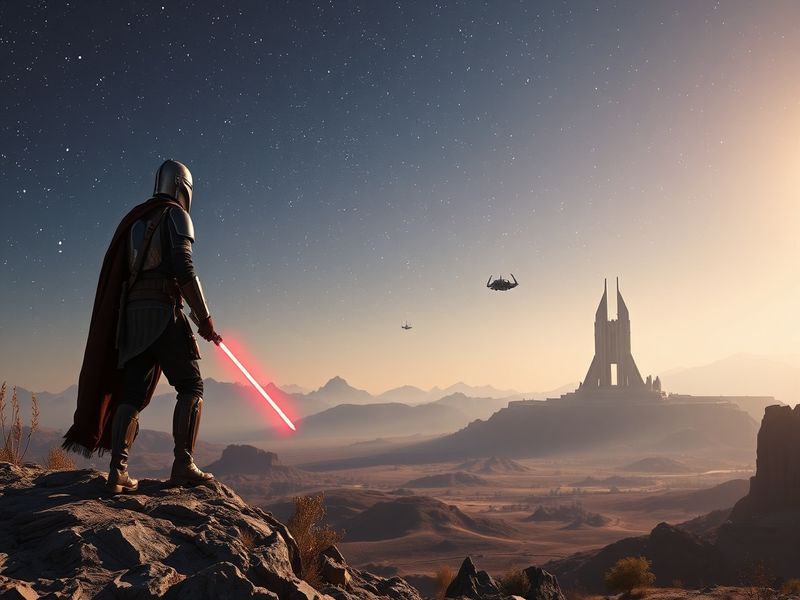
The Mandalorian: How Star Wars Redefined Modern TV
The Mandalorian arrived on Disney+ in November 2019 as the first live-action television series set in the Star Wars universe. Created by Jon Favreau, the show introduced audiences to a gritty, western-inspired corner of the galaxy while delivering a character-driven narrative that felt both familiar and fresh. With its unique blend of practical effects, stunning visuals, and compelling storytelling, The Mandalorian quickly became a cultural touchstone for modern television.
The Rise of a New Star Wars Era
Star Wars had dominated film culture for decades, but its transition to television presented both opportunities and challenges. The Mandalorian arrived at a time when streaming services were reshaping entertainment, and Disney needed a flagship title to launch Disney+. The show’s success proved that Star Wars could thrive beyond the big screen, opening the door for more live-action series like The Book of Boba Fett and Ahsoka.
Jon Favreau’s vision for The Mandalorian emphasized character over spectacle. Unlike the sprawling sagas of the films, the series focused on smaller, self-contained stories that explored the galaxy’s outer rim. This approach allowed for deeper world-building while maintaining accessibility for casual viewers.
Breaking New Ground with Technology
The Mandalorian became synonymous with innovation in filmmaking. Industrial Light & Magic (ILM) developed the StageCraft virtual production system, which used massive LED screens to create immersive digital environments in real time. This technology reduced the need for green screens and allowed actors to perform in photorealistic settings.
The result was a visual experience that felt both futuristic and tactile. Scenes like the desert planet of Tatooine or the neon-lit streets of Nevarro were rendered with a depth and realism rarely seen in television. The show’s cinematography, led by Greig Fraser, further elevated its cinematic quality, earning multiple Emmy nominations.
The Cultural Impact of Baby Yoda
No discussion of The Mandalorian would be complete without mentioning Grogu, the adorable alien child affectionately nicknamed “Baby Yoda” by fans. Officially named Grogu, the character became an instant icon, appearing in memes, merchandise, and even influencing Disney’s marketing strategies.
Grogu’s appeal lay in his expressive eyes, gentle demeanor, and mysterious connection to the Force. The character’s sudden popularity demonstrated the power of social media in modern fandom. Clips of Grogu went viral almost instantly, with fans creating countless edits and parodies.
The phenomenon also highlighted Disney’s merchandising savvy. Grogu’s likeness appeared on everything from plush toys to high-end collectibles, proving that Star Wars could extend its reach into new demographics beyond traditional fans.
Behind the Scenes: Filmmaking and Influences
The Mandalorian’s aesthetic drew heavily from classic Westerns, samurai films, and 1970s and 80s space operas. Favreau cited Sergio Leone’s spaghetti westerns and Akira Kurosawa’s samurai epics as key inspirations for the show’s tone and visual style.
This blend of influences created a unique atmosphere—one that felt both nostalgic and original. The show’s costume design, particularly the Mandalorian armor, paid homage to Boba Fett while adding new layers of detail. The result was a character whose presence felt both iconic and fresh.
The Role of Practical Effects
Despite its heavy use of digital technology, The Mandalorian remained committed to practical effects. The show’s creators insisted on using real props, miniatures, and animatronics whenever possible. This approach gave the production a tangible quality that enhanced its immersion.
For example, the character of Kuiil was brought to life using a combination of puppetry and CGI refinement. The result was a performance that felt authentic, proving that even in the digital age, physical craftsmanship still matters.
The Legacy and Future of The Mandalorian
The Mandalorian’s success extended beyond its initial season. The show spawned multiple spin-offs, including The Book of Boba Fett and Ahsoka, as well as a highly anticipated second season. Each new installment expanded the lore while maintaining the core themes of adventure, family, and redemption.
The series also played a crucial role in Disney’s streaming strategy. The Mandalorian became one of Disney+’s most-watched shows, helping the platform compete with established services like Netflix and Amazon Prime. Its success paved the way for other big-budget genre series, including Marvel and Star Wars projects.
The Evolution of Star Wars Storytelling
The Mandalorian proved that Star Wars could thrive in a serialized format. Unlike the episodic nature of The Clone Wars or the anthology style of Star Wars: Visions, The Mandalorian balanced long-term arcs with standalone episodes. This structure allowed for both character development and narrative flexibility.
The show’s influence extended to the films as well. Characters like Din Djarin and Grogu became fan favorites, with many speculating about their future roles in the larger Star Wars saga. The Mandalorian also introduced new factions and planets, enriching the franchise’s expanded universe.
What’s Next for the Galaxy Far, Far Away?
With multiple spin-offs in development and new seasons of The Mandalorian on the horizon, the future of the series looks bright. Favreau and Dave Filoni, the show’s executive producer, have hinted at deeper connections between the various Star Wars projects, suggesting a cohesive narrative across television and film.
Fans can also look forward to more technological innovations. The success of StageCraft has inspired other productions to adopt virtual production techniques, potentially revolutionizing the way films and TV shows are made.
Conclusion
The Mandalorian stands as a landmark in modern television. Its blend of innovation, storytelling, and cultural impact has redefined what a Star Wars series can be. By focusing on character and craftsmanship, the show proved that genre entertainment could be both commercially successful and artistically ambitious.
As the Star Wars universe continues to expand, The Mandalorian remains a touchstone—a reminder that even in a galaxy filled with heroes and villains, the most compelling stories are often the simplest ones. Whether it’s the bond between a lone bounty hunter and a foundling child or the thrill of exploring uncharted worlds, the series has cemented its place in pop culture history.