Fuyao Glass America Fire Exposes Supply Chain Vulnerabilities
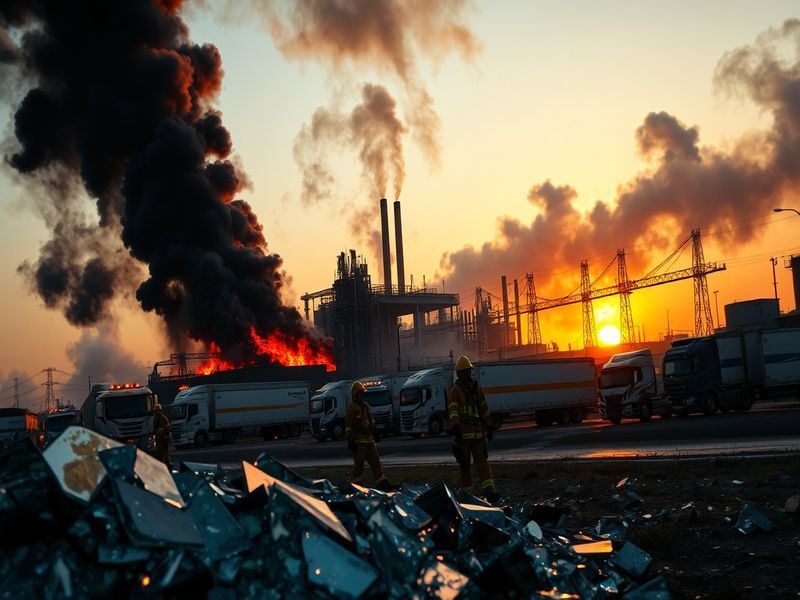
On a quiet Tuesday morning in August 2023, the Fuyao Glass America plant in Moraine, Ohio, became the epicenter of a crisis that rippled across global manufacturing networks. A fire broke out in the facility’s production line, sending plumes of smoke into the sky and halting operations for nearly a week. While no fatalities were reported, the incident exposed vulnerabilities in industrial safety protocols and raised concerns about the resilience of multinational supply chains.
The fire occurred just months after the company celebrated its fifth anniversary in the United States—a landmark that underscored Fuyao’s growing role as a key supplier of automotive glass to major American automakers. As investigators sifted through charred debris, the incident became more than a local emergency; it symbolized the challenges faced by foreign-owned manufacturers operating in a regulatory environment shaped by distant corporate headquarters.
The Incident: How It Unfolded
At approximately 8:47 a.m. local time, a fire alarm sounded at the Fuyao Glass America facility, alerting workers to evacuate. Within minutes, local fire departments responded to the scene, battling flames that originated near a tempering furnace—a critical piece of equipment used to strengthen glass panels for vehicles.
Firefighters from the Moraine Fire Department and surrounding jurisdictions worked for over six hours to contain the blaze. The intense heat and thick smoke forced authorities to establish a temporary evacuation zone, disrupting traffic on Interstate 75 and displacing nearby businesses.
- Cause: Investigators later attributed the fire to an electrical malfunction in the furnace’s control panel.
- Impact: The plant’s production line was completely shut down for five days.
- Response: Fuyao activated its emergency protocol, coordinating with local officials and corporate headquarters in China.
The incident occurred during a period of heightened scrutiny over industrial safety in the United States, particularly in states with large manufacturing sectors. Ohio, home to major automotive assembly plants, has seen increased state oversight following a series of workplace accidents in recent years.
Fuyao’s American Journey: A Story of Globalization
Fuyao Glass Industry Group Co., Ltd., headquartered in Fuqing, China, began its U.S. expansion in 2016 with the acquisition of the shuttered GM plant in Moraine. The move was part of a broader strategy to localize production and reduce reliance on overseas shipments—a decision influenced by rising trade tensions and rising transportation costs.
By 2023, Fuyao had invested over $1 billion in its Ohio facility, employing nearly 2,000 workers. The company became a critical supplier to General Motors, Ford, and Stellantis, positioning itself as a cornerstone of the American automotive supply chain.
However, the fire highlighted tensions between global corporate governance and local operational realities. While Fuyao’s parent company in China operates under different regulatory and cultural norms, its U.S. subsidiary must comply with American safety and environmental laws. This duality has occasionally led to friction, as seen in labor disputes and unionization efforts at the Moraine plant.
The incident also reflected broader geopolitical currents. As U.S.-China relations remain strained, foreign-owned companies face heightened scrutiny over intellectual property, data security, and operational transparency. Fuyao’s fire became a case study in how such incidents are perceived through a lens of national security and economic competition.
Broader Implications: Safety, Supply Chains, and Supply Chain Resilience
The fire at Fuyao Glass America was not an isolated event. In recent years, industrial fires in the United States have increased by 12%, according to the National Fire Protection Association. Many of these incidents are linked to aging infrastructure, inadequate maintenance, and cost-cutting measures in high-pressure production environments.
For companies like Fuyao, the stakes are especially high. A single disruption can ripple across an entire industry. Automotive manufacturers operate on just-in-time production models, meaning even a brief halt in glass supply can trigger assembly line stoppages hundreds of miles away.
In response, many manufacturers are investing in fire suppression systems, real-time monitoring, and redundant supply chains. Some are also reevaluating their reliance on single-source suppliers, particularly those located in geopolitically sensitive regions.
Experts suggest that the future of industrial safety lies in predictive technologies—AI-driven systems that detect anomalies before they escalate into full-blown crises. While such innovations are still in their infancy, the Fuyao fire underscored the urgency of adopting them.
Lessons Learned: What Comes Next
In the weeks following the fire, Fuyao Glass America underwent a comprehensive safety audit, implemented stricter maintenance schedules, and launched a company-wide training program focused on electrical safety and emergency response.
Local officials praised the company’s transparency during the crisis, noting that Fuyao’s quick communication with emergency responders and regulatory agencies helped prevent further escalation. Still, the incident served as a reminder of the fragility of industrial ecosystems.
For workers at the Moraine plant, the fire was a wake-up call. Many described feeling a mix of relief and anxiety—relief that no lives were lost, but anxiety about the long-term impact on jobs and community stability. The plant remains a vital economic engine in the region, supporting families and local businesses.
Looking ahead, Fuyao’s experience offers lessons not only for manufacturers but for policymakers, labor advocates, and investors. It highlights the need for balanced regulation, robust safety standards, and equitable labor practices—especially in industries where global and local interests intersect.
As the company resumes full production, one question lingers: How can foreign-owned manufacturers like Fuyao balance the demands of global efficiency with the realities of local safety and compliance? The answer may well define the future of American manufacturing in an era of interconnected yet increasingly volatile supply chains.