Fuyao Glass America Fire Raises Safety and Supply Chain Concerns
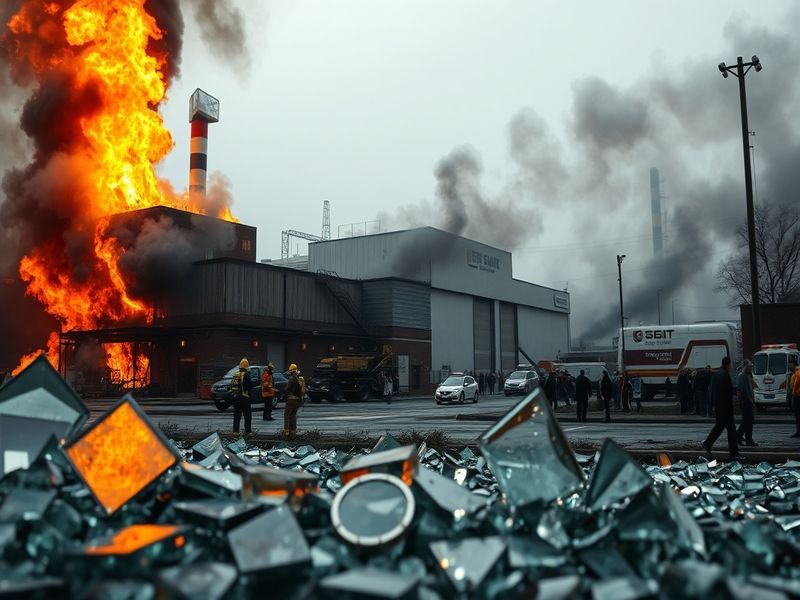
In the quiet industrial town of Moraine, Ohio, a fire at Fuyao Glass America’s manufacturing plant on February 14, 2024, sent shockwaves through the global automotive glass industry. The blaze, which burned for over six hours, injured two workers and halted production at one of the largest glass suppliers for major automakers like General Motors and Ford. While investigations continue, the incident has reignited debates about workplace safety standards in foreign-owned factories operating in the United States.
Fuyao Glass America, a subsidiary of China’s Fuyao Group, is a critical link in the supply chain for automotive glass. The company employs thousands in Ohio and Missouri, producing windshields and windows for vehicles sold worldwide. The fire’s timing—during a period of strained U.S.-China trade relations—has added a layer of geopolitical tension to the conversation about foreign investment in American manufacturing.
The Incident and Immediate Aftermath
The fire broke out around 9:30 AM in the plant’s furnace area, a high-temperature zone where raw materials are melted and shaped into glass sheets. Local fire officials attributed the blaze to a “mechanical failure,” though the exact cause remains under investigation by the Bureau of Alcohol, Tobacco, Firearms and Explosives (ATF) and Ohio’s Bureau of Workers’ Compensation. Witnesses described thick black smoke billowing from the facility, visible for miles around.
Emergency responders from multiple counties were called to the scene, with over 100 firefighters battling the flames. The plant’s sprinkler system and firewalls contained the damage, but not before significant disruptions to production. Fuyao America temporarily shut down operations, citing “safety protocols” and an “abundance of caution.” The company released a statement expressing gratitude to first responders and emphasizing its commitment to worker safety.
Yet, the incident has raised eyebrows. OSHA records show that Fuyao Glass America has faced at least 15 safety violations since 2018, including citations for machine guarding and respiratory protection. While none of these violations resulted in severe injuries, the frequency of citations paints a picture of a facility where safety protocols may be routinely overlooked.
Global Context: Foreign-Owned Factories and U.S. Labor Standards
Fuyao’s story is not unique. As globalization reshapes manufacturing, foreign companies increasingly establish operations in the U.S. to bypass tariffs, access local markets, and tap into skilled labor pools. The Fuyao Glass America plant, opened in 2016 with a $1.1 billion investment, was hailed as a symbol of revitalized American manufacturing. Yet, its labor practices have long been scrutinized.
A 2017 New York Times investigation revealed a culture of intimidation and unsafe conditions at the plant, including workers being discouraged from reporting injuries. The article cited former employees who described a punitive environment where safety concerns were dismissed. Fuyao denied these claims, calling them “misleading” and “unfair.”
This fire forces a reckoning with the broader implications of foreign direct investment (FDI) in U.S. manufacturing. While such investments can boost local economies and create jobs, they also bring challenges in harmonizing workplace standards. The U.S. has robust labor laws, but enforcement varies by state and industry. In Ohio, where Fuyao operates, OSHA’s budget has been slashed by nearly 40% since 2010, leaving fewer inspectors to monitor compliance.
Comparative Labor Standards: A Global Divide
Fuyao’s parent company, Fuyao Group, is headquartered in Fujian, China, where labor laws are less stringent than in the U.S. Chinese factories often prioritize efficiency and output over worker safety, a legacy of the country’s rapid industrialization. While China has made strides in improving workplace conditions—particularly in large cities—rural and industrial regions still lag behind.
In contrast, the U.S. Occupational Safety and Health Administration (OSHA) enforces strict regulations, with penalties for violations that can reach tens of thousands of dollars. However, the system relies on workers reporting hazards, which can be difficult in environments where retaliation is a risk. The Fuyao fire underscores the need for stronger oversight and cultural shifts in how foreign-owned factories adapt to U.S. labor norms.
Economic Ripples: Supply Chain Disruptions and Industry Impact
The fire’s ripple effects extended far beyond Moraine. Fuyao Glass America supplies glass for vehicles produced in 14 U.S. states, including Michigan, Kentucky, and Alabama. Automakers like GM and Ford rely on just-in-time delivery systems, meaning even a short shutdown can cause production delays. Industry analysts estimated that the fire could delay vehicle shipments by up to two weeks, costing the companies millions in lost sales.
For local economies, the impact is more immediate. The Moraine plant employs over 2,000 workers, many of whom live in the Dayton area. Temporary layoffs and reduced shifts have already strained household budgets. The fire also raised questions about the plant’s long-term viability. If Fuyao faces fines or penalties from the ATF or OSHA, the financial burden could accelerate plans to relocate production to Mexico or China, where costs are lower.
This scenario highlights a paradox of globalization: while foreign investment can revitalize struggling regions, it also creates dependencies that are vulnerable to geopolitical and economic shifts. The Fuyao fire serves as a case study in how quickly a local incident can spiral into a regional crisis.
Lessons Learned and the Path Forward
As investigations into the fire continue, several key questions remain unanswered. Was the blaze preventable? Did Fuyao’s safety culture contribute to the incident? And how can U.S. regulators ensure that foreign-owned factories adhere to American labor standards without stifling investment?
One potential solution lies in stronger international cooperation. The U.S. and China could collaborate on joint safety inspections for Chinese-owned factories operating in the U.S., blending the rigor of American standards with the efficiency of Chinese production models. Alternatively, U.S. lawmakers could push for legislation requiring foreign companies to meet specific safety benchmarks before operating on American soil.
For workers, the fire is a stark reminder of the importance of speaking up. OSHA’s Whistleblower Protection Program allows employees to report hazards without fear of retaliation, but awareness of these rights remains low. Labor advocates argue that more needs to be done to educate workers about their protections and encourage a culture of transparency.
Fuyao Glass America has pledged to reopen the plant and resume operations “as soon as possible.” Yet, the fire has left a mark—not just on the facility’s walls, but on the broader conversation about safety, investment, and accountability in global manufacturing. The incident is a call to action for regulators, automakers, and workers alike to rethink how we balance economic growth with human welfare.
Key Takeaways
- Fuyao Glass America’s fire in February 2024 injured two workers and disrupted production for major automakers.
- OSHA records show 15 safety violations at the plant since 2018, raising concerns about workplace safety.
- Foreign-owned factories in the U.S. often face scrutiny over labor standards, especially when adapting to American regulations.
- The fire highlights the fragility of supply chains and the economic impact of industrial incidents on local communities.
- Stronger international cooperation and worker education could help prevent future incidents.
What’s Next for Fuyao and the Industry?
The coming months will be critical for Fuyao Glass America. Investigators must determine the fire’s cause, and regulators will assess whether penalties are warranted. Meanwhile, automakers will scramble to secure alternative glass suppliers to avoid production delays. For workers, the focus will remain on safety reforms and ensuring that their voices are heard.
As globalization continues to reshape manufacturing, incidents like the Fuyao fire serve as cautionary tales. They remind us that behind every supply chain and economic statistic are real people—workers whose lives and livelihoods depend on the decisions made by corporations and governments. The challenge now is to build a system where profit and safety are not mutually exclusive.