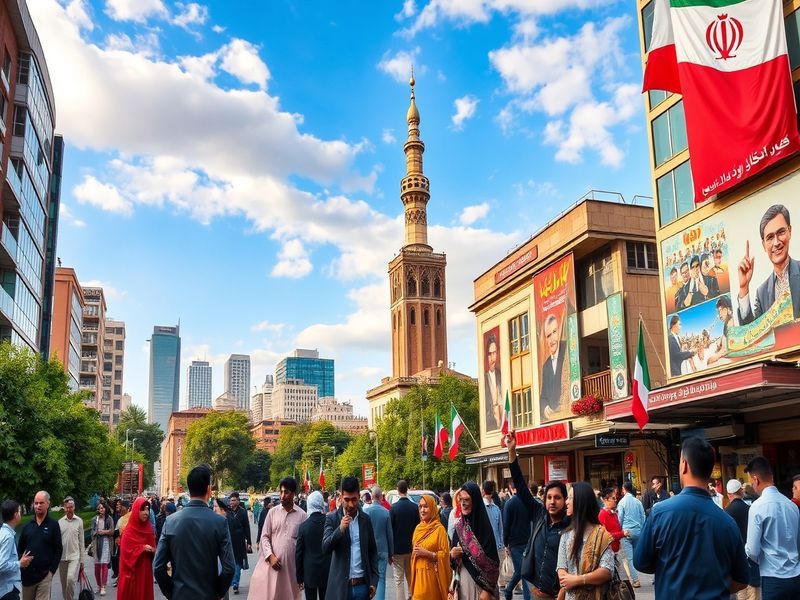
Iran: History, Politics, and Global Influence Explained
The Islamic Republic of Iran stands as one of the most complex and influential countries in the Middle East. Its 85 million citizens live within a system that blends ancient traditions with modern geopolitical ambitions. From its Persian roots to its current role in global affairs, Iran’s story is one of resilience, revolution, and relentless reinvention. Understanding this nation requires more than a surface glance—it demands an exploration of its history, its political structure, and its relationships with the wider world.
The Historical Foundations of Modern Iran
Iran’s history stretches back over 5,000 years, making it one of the world’s oldest continuous civilizations. The land now known as Iran was once the heart of the Achaemenid Empire under Cyrus the Great, a dynasty that established early principles of human rights and governance. Centuries later, the Safavid Empire in the 16th century solidified Shi’a Islam as the dominant religious force in the region, a legacy that continues to shape Iran today.
The 20th century brought dramatic transformation. The 1953 coup, orchestrated by Western powers, reinstated the Pahlavi monarchy under Mohammad Reza Shah. This era saw rapid modernization but also deepening inequality, fueling discontent. The 1979 Islamic Revolution, led by Ayatollah Ruhollah Khomeini, toppled the monarchy and established a theocratic republic. This revolution didn’t just change Iran—it redefined the balance of power in the Middle East and set the stage for decades of geopolitical tension.
Key Historical Milestones
- 550 BCE: Cyrus the Great founds the Achaemenid Empire, creating one of history’s first centralized governments.
- 633–654 CE: Arab-Muslim conquest spreads Islam across Persia; later, the Safavid Dynasty (1501–1736) establishes Shi’a Islam as the state religion.
- 1953: CIA-backed coup overthrows Prime Minister Mohammad Mossadegh, reinstating the monarchy under the Shah.
- 1979: Islamic Revolution topples the monarchy; Ayatollah Khomeini establishes the Islamic Republic.
- 2000s–Present: Nuclear negotiations, regional conflicts, and ongoing economic challenges define Iran’s modern identity.
Iran’s Political System: Theocracy and Power Structures
Iran’s government is a unique hybrid of theocratic and republican elements. At its core is the Supreme Leader, a position that holds ultimate authority over military, judiciary, and foreign policy. This role, currently held by Ayatollah Ali Khamenei since 1989, ensures that religious principles guide state decisions. Below the Supreme Leader is the President, who serves as the head of government but operates within strict constitutional limits.
The Guardian Council, composed of clerics and jurists, vets all laws and candidates for elected office, ensuring they align with Islamic principles. This system creates a paradox: while Iran holds regular presidential and parliamentary elections, the scope of who can run—and what policies can pass—is tightly controlled. The result is a political landscape where reformist factions often clash with hardline conservatives, especially on issues like foreign policy, economic liberalization, and social freedoms.
The Revolutionary Guard Corps (IRGC) further complicates this structure. A powerful military and economic force, the IRGC answers directly to the Supreme Leader and plays a critical role in both domestic repression and regional military operations. Its influence extends into industries like construction, energy, and telecommunications, making it one of Iran’s most powerful institutions.
Iran’s Role in Global Geopolitics
Iran’s foreign policy is shaped by its revolutionary ideology, regional ambitions, and adversarial relationships with Western powers. The 2015 Joint Comprehensive Plan of Action (JCPOA), or Iran Nuclear Deal, was a brief moment of détente, easing sanctions in exchange for limits on nuclear development. However, the U.S. withdrawal in 2018 under the Trump administration and Iran’s subsequent resumption of uranium enrichment have returned tensions to pre-2015 levels.
Regionally, Iran’s influence is most visible in Syria, Iraq, Lebanon, and Yemen. Through proxy groups like Hezbollah in Lebanon and the Houthis in Yemen, Iran extends its reach without direct military confrontation. This strategy serves two purposes: it counters Saudi influence and secures strategic footholds, but it also embroils Iran in costly conflicts and fuels accusations of destabilizing behavior.
Economically, Iran remains a paradox. Despite vast oil reserves—the fourth-largest in the world—the country struggles under the weight of U.S. sanctions. Inflation hovers around 50%, and youth unemployment exceeds 25%. Yet Iran’s domestic industries, from pharmaceuticals to aerospace, have shown remarkable resilience, often developing homegrown solutions to circumvent sanctions.
Iran’s Global Relationships: Allies and Adversaries
- Russia: A strategic partner in Syria and a key arms supplier, Russia’s relationship with Iran has deepened amid Western sanctions.
- China: Iran’s largest trading partner, China’s $400 billion investment deal in 2021 signaled a long-term partnership despite U.S. pressure.
- Saudi Arabia: Decades of rivalry, exacerbated by sectarian tensions and proxy wars, define this tense relationship.
- European Union: The EU has attempted to salvage the JCPOA but faces challenges balancing trade interests with U.S. demands.
- United States: A history of hostility since the 1979 hostage crisis, complicated by nuclear negotiations, cyber warfare, and regional conflicts.
Society and Culture: A Vibrant Yet Constrained Nation
Iran’s society is a tapestry of contradictions. On one hand, it boasts one of the most educated populations in the Middle East, with a literacy rate of over 85% and a strong tradition of scientific and artistic achievement. Iranian cinema, literature, and music have gained international acclaim, from the poetic works of Forough Farrokhzad to the films of Abbas Kiarostami. The country’s youth—over 60% are under 30—are highly connected, with one of the world’s most active internet populations despite government censorship.
On the other hand, social freedoms are tightly restricted. Women face legal and societal barriers, though many have become vocal advocates for change. The morality police enforce dress codes, and protests are often met with violent crackdowns. The 2022 death of Mahsa Amini, a Kurdish woman arrested for “improper hijab,” sparked nationwide protests and drew global attention to Iran’s human rights record. The government’s response—mass arrests, internet blackouts, and executions—highlighted the tension between reformist aspirations and authoritarian control.
Despite these challenges, Iran’s cultural output remains a source of pride. From classical Persian poetry to underground music scenes, creativity flourishes in unexpected spaces. The annual Fajr International Film Festival showcases the resilience of Iranian cinema, while festivals like Nowruz—the Persian New Year—celebrate heritage with millions participating worldwide.
Conclusion: Iran’s Future in a Fragmented World
Iran’s trajectory is uncertain, shaped by internal dynamics and external pressures. Domestically, the government faces mounting pressure from a disillusioned youth and a struggling economy. Externally, it must navigate a shifting global order where old alliances are fraying and new power centers are emerging. The outcome of Iran’s nuclear negotiations, its role in regional conflicts, and the pace of social change will determine not just its own future, but the stability of the broader Middle East.
One thing is clear: Iran cannot be ignored. Its history, its people, and its geopolitical ambitions ensure it will remain a critical player on the world stage. Whether through diplomacy, conflict, or cultural exchange, Iran’s story is far from over—and the world will continue to watch closely.
For those seeking deeper insights, explore related coverage on Analysis and Politics at Dave’s Locker.