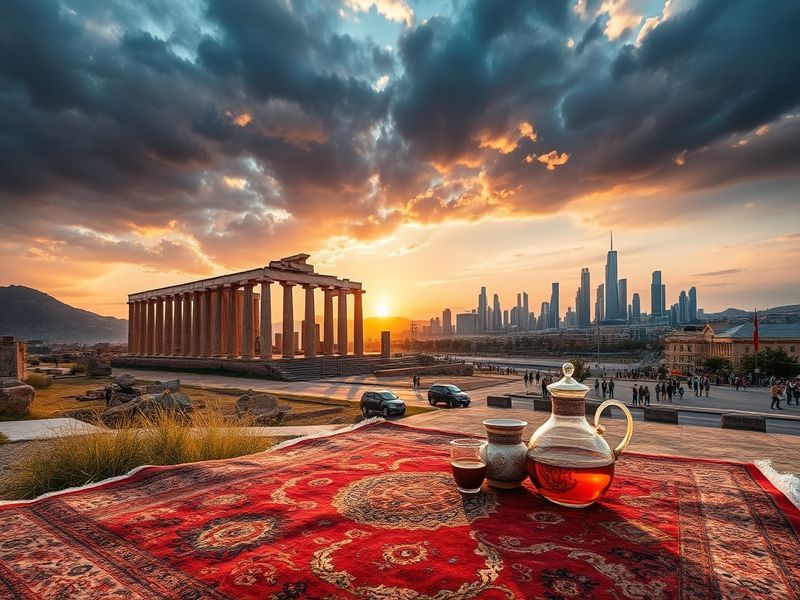
Iran’s Legacy: History, Culture, and Modern Challenges Explored
Iran stands as one of the world’s most enduring civilizations, with a history stretching back over 5,000 years. Often overshadowed by modern geopolitical narratives, the country’s cultural, scientific, and artistic contributions have shaped global civilization in ways that remain underappreciated in Western discourse. From the architectural splendor of Persepolis to the poetic mastery of Rumi, Iran’s legacy is woven into the fabric of human progress.
The Islamic Republic of Iran, as it is officially known today, emerged from a tumultuous 20th century marked by foreign intervention, revolution, and ideological transformation. To understand modern Iran, one must look beyond headlines about nuclear negotiations or regional conflicts and instead examine the deeper cultural and historical currents that continue to define its national identity.
The Historical Foundations of Iranian Civilization
Iran’s history begins with the Elamite civilization, predating even ancient Egypt. By the 6th century BCE, the Achaemenid Empire—founded by Cyrus the Great—rose to become the largest empire the world had yet seen, stretching from the Balkans to the Indus Valley. This empire introduced concepts of human rights, administrative efficiency, and religious tolerance that influenced governance for centuries.
The Sassanian Empire (224–651 CE) further solidified Iran’s cultural footprint, particularly in art, architecture, and philosophy. Zoroastrianism, one of the world’s oldest monotheistic religions, originated in ancient Iran and introduced ideas about cosmic dualism and ethical living that later influenced Judaism, Christianity, and Islam.
Following the Islamic conquest in the 7th century, Iran embraced and adapted Islam, blending it with pre-existing Persian traditions. The result was a unique cultural synthesis evident in the poetry of Ferdowsi, Hafez, and Rumi, whose works remain pillars of world literature. Even the Persian language, with its rich vocabulary and poetic structure, serves as a testament to this enduring legacy.
Key Historical Milestones in Iran
- 550 BCE: Cyrus the Great establishes the Achaemenid Empire, creating the first human rights charter (Cyrus Cylinder).
- 633–654 CE: Islamic conquest of Persia; gradual conversion to Islam over centuries.
- 1501–1736: Safavid Dynasty establishes Twelver Shi’a Islam as the state religion, shaping Iran’s religious identity.
- 1979: Islamic Revolution overthrows the Pahlavi monarchy, establishing the Islamic Republic under Ayatollah Khomeini.
- 2000s–Present: Nuclear program, international sanctions, and regional proxy conflicts define modern geopolitical challenges.
Cultural Identity: A Blend of Tradition and Modernity
Iran’s cultural identity is a paradox of continuity and change. Despite decades of political isolation, Iranian society remains deeply connected to its artistic and intellectual heritage. Persian carpets, miniature paintings, and classical music continue to thrive, while contemporary artists—both within Iran and in the diaspora—redefine cultural expression for new generations.
The 1979 revolution brought strict Islamic governance, yet Iranian society has demonstrated remarkable resilience in preserving cultural practices. Women, in particular, have navigated complex social norms, often finding ways to assert their presence in public life despite legal restrictions. The 2022 death of Mahsa Amini, while in police custody for “improper hijab,” sparked global protests and highlighted ongoing tensions between state ideology and individual freedoms.
Iran’s film industry, led by directors like Abbas Kiarostami and Asghar Farhadi, has gained international acclaim. Farhadi’s films, such as A Separation (2011) and The Salesman (2016), explore moral dilemmas and social fractures with a subtlety that transcends cultural boundaries. These works offer Western audiences a rare, unfiltered glimpse into daily life in Iran—one far removed from political stereotypes.
Geopolitical Influence and Regional Role
Iran’s strategic location at the crossroads of Central Asia, the Middle East, and South Asia has made it a key player in regional power dynamics. The country’s foreign policy is driven by a combination of ideological commitment (supporting Shi’a groups in Iraq, Lebanon, and Yemen) and pragmatic survival in a hostile international environment.
The nuclear deal (JCPOA), signed in 2015 but abandoned by the U.S. in 2018, remains a flashpoint. While Iran insists its nuclear program is peaceful, Western powers and regional rivals like Saudi Arabia and Israel view it with suspicion. The recent normalization agreements between Israel and Arab states (Abraham Accords) have further isolated Iran diplomatically, pushing it to strengthen ties with Russia, China, and non-state actors like Hezbollah.
Iran’s influence extends beyond the Middle East. In Syria, its support for Bashar al-Assad has been crucial in keeping the regime in power. In Iraq, it plays a dual role—as a stabilizing force against ISIS and a controversial actor accused of meddling in domestic politics. Meanwhile, its ballistic missile program and drone exports have raised alarms in Washington and European capitals.
The Human Dimension: Society, Economy, and Daily Life
Despite international sanctions and economic mismanagement, Iran’s population of over 85 million people continues to adapt. The country boasts a literacy rate of over 95% and a young, educated workforce. However, youth unemployment hovers around 25%, and inflation has eroded purchasing power, pushing many professionals to seek opportunities abroad.
Iran’s economy, heavily reliant on oil exports, has struggled under sanctions. Yet, the government has invested in domestic industries, including automotive manufacturing, pharmaceuticals, and technology. The rise of a tech-savvy middle class, particularly in cities like Tehran and Isfahan, has led to a burgeoning startup ecosystem, with apps and digital services catering to local needs.
Social life in Iran is a study in contradictions. While the morality police enforce strict dress codes for women, underground parties and cultural gatherings thrive in private spaces. The internet, though heavily censored, remains a lifeline for many Iranians seeking connection with the outside world. Platforms like Instagram and Telegram are widely used, despite government attempts to restrict access.
Women’s rights remain a contentious issue. While the law mandates gender segregation in some public spaces and limits women’s roles in certain professions, Iranian women have made significant strides in education and the workforce. Female scientists, engineers, and doctors are common, yet their contributions are often constrained by legal and social barriers.
Challenges Facing Modern Iran
- Economic Strain: Hyperinflation, currency devaluation, and unemployment drive emigration and social unrest.
- Political Repression: Restrictions on free speech, press freedom, and political dissent persist under authoritarian governance.
- Environmental Crisis: Droughts, water mismanagement, and air pollution threaten public health and agricultural stability.
- Brain Drain: Skilled professionals, including doctors and engineers, increasingly leave for better opportunities abroad.
- Regional Isolation: Tensions with Gulf states, Israel, and Western powers limit diplomatic and economic engagement.
Conclusion: Beyond the Headlines
Iran is far more than a geopolitical flashpoint or a subject of international sanctions. It is a civilization with a profound sense of its own history, a society navigating modernity under immense pressure, and a nation whose people continue to shape its future despite systemic challenges. Understanding Iran requires moving beyond simplistic narratives of conflict and instead engaging with its cultural depth, intellectual traditions, and the everyday lives of its citizens.
The path forward for Iran will likely remain fraught with obstacles. Economic recovery, political reform, and social progress are not guaranteed. Yet, the resilience of its people—whether in the arts, sciences, or civil society—suggests that Iran’s story is far from over. For those willing to look beyond the stereotypes, Iran offers a compelling case study in the endurance of culture, identity, and human agency in the face of adversity.
As the world watches Iran’s next chapter unfold, one thing is clear: the country’s influence, both within its borders and beyond, will continue to shape the region’s future in ways that demand closer attention and deeper understanding.
For further reading on global cultures and their intersections with politics, visit Dave’s Locker’s Culture and News sections.