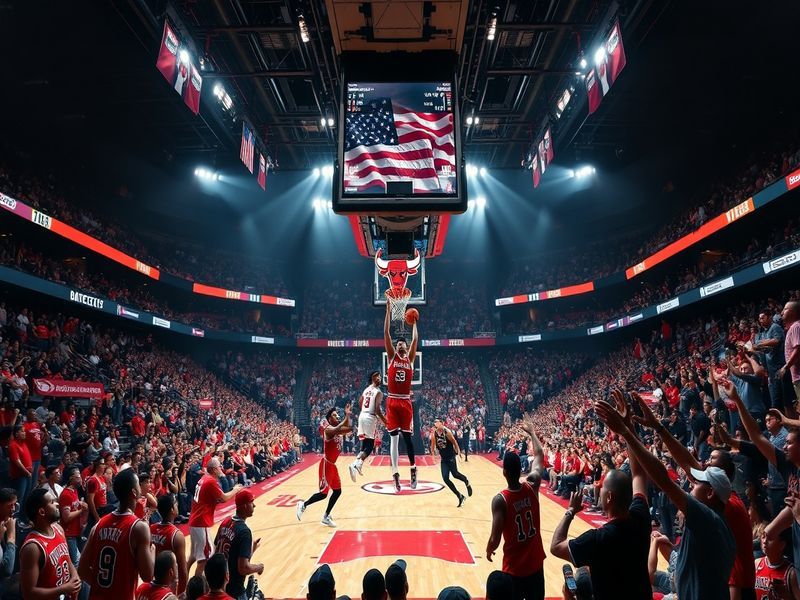
From Houston to Chicago: Two Teams with Distinct Legacies
The Houston Rockets and Chicago Bulls represent more than just NBA franchises—they embody contrasting philosophies of basketball, economic influence, and cultural identity. Founded in 1967, the Bulls became a global symbol of excellence in the 1990s under Michael Jordan, while the Rockets, established in 1961, have evolved from a small-market team to a hub for innovation and international talent. Their rivalry extends beyond wins and losses, reflecting broader trends in sports, media, and urban development.
The Rockets’ identity has shifted dramatically over decades. Initially a struggling expansion team, they found success in the 1980s with Moses Malone and later Hakeem Olajuwon, winning back-to-back championships in 1994 and 1995. The Bulls, meanwhile, became synonymous with dominance during the Jordan era, securing six titles between 1991 and 1998. These eras defined each franchise’s fanbase and global perception, shaping their roles in basketball history.
The Economic Impact of Rockets and Bulls
Both teams contribute significantly to their local economies, but in different ways. The Rockets, playing in Houston—a city known for energy, healthcare, and space exploration—benefit from corporate partnerships with energy giants like Chevron and tech firms such as Hewlett Packard Enterprise. Their home, the Toyota Center, hosts not only basketball games but major concerts and conventions, generating millions in tourism revenue.
The Bulls, based in Chicago, operate in a city with a diverse economic base, including finance, manufacturing, and global trade. United Center, their venue, is a year-round entertainment hub, hosting NHL’s Blackhawks and major events like the Democratic National Convention in 2024. According to a 2023 study by the University of Illinois, the Bulls alone contribute over $400 million annually to Chicago’s economy through ticket sales, hospitality, and sponsorships.
While both teams drive economic activity, Houston’s Rockets benefit from a younger, tech-driven economy, whereas Chicago’s Bulls leverage the city’s historic corporate infrastructure. Their financial strategies also differ—Houston emphasizes digital engagement and international expansion, while Chicago focuses on premium experiences and legacy branding.
Cultural Influence Beyond the Hardwood
The Rockets and Bulls have transcended sports to influence global culture in distinct ways. The Bulls, under Jordan, became a global brand synonymous with competitiveness and style. Jordan’s “Jumpman” logo is one of the most recognizable in the world, appearing on everything from sneakers to video games. The team’s red, black, and white color scheme is instantly associated with dominance and excellence.
The Rockets, particularly in the post-Yao Ming era, have cultivated a different kind of cultural footprint. Yao, drafted in 2002, became a bridge between the NBA and China, helping the league expand into the world’s most populous market. The Rockets’ embrace of analytics and three-point shooting under Mike D’Antoni reflected a modern basketball philosophy that influenced teams worldwide. Their logo, featuring a red and white rocket, evokes motion and progress, aligning with Houston’s identity as a city of innovation.
Both teams have also made strides in social justice initiatives. The Bulls were early adopters of activism, with players like Derrick Rose and Joakim Noah speaking out on racial inequality. The Rockets, led by James Harden and later Russell Westbrook, have supported education and youth programs in Houston’s underserved communities. Their efforts reflect a broader trend in professional sports, where teams are expected to engage with social issues beyond competition.
Global Reach: How Rockets and Bulls Expand Their Brands
The Rockets and Bulls have pursued international growth, but with different strategies. The Rockets have been particularly aggressive in China, playing preseason games there since 2004 and maintaining a strong digital presence. Yao Ming’s influence remains pivotal; the NBA’s games in China draw millions of viewers, and the Rockets’ Chinese social media accounts have millions of followers. Their partnership with Tencent, the Chinese tech giant, ensures live broadcasts and behind-the-scenes content reach millions.
The Bulls, while less dominant in China, have leveraged their historical legacy to expand in Europe and Latin America. Their 2019 European tour, featuring games in London and Paris, highlighted their global appeal. The team’s partnership with the NBA’s international academies has also helped develop talent from regions like Africa and Australia, further diversifying the league’s talent pool.
Both teams are active on social media, but their approaches differ. The Rockets prioritize data-driven content, sharing player stats and advanced metrics. The Bulls focus on storytelling, highlighting their championship legacy and player journeys. These strategies reflect their broader brand identities—innovation vs. tradition.
On-Court Philosophies: Two Paths to Success
The Rockets and Bulls have embodied different basketball philosophies throughout their histories. The Bulls were the quintessential team-first organization, built around Jordan’s unmatched skill but supported by role players like Scottie Pippen and Phil Jackson’s triangle offense. Their success was rooted in discipline, defense, and clutch performances.
The Rockets, meanwhile, have often been at the forefront of offensive innovation. Under D’Antoni, they popularized the “Seven Seconds or Less” offense, prioritizing speed and three-point shooting. This approach influenced the entire NBA, leading to the league’s current emphasis on spacing and analytics. Their reliance on stars like James Harden and Russell Westbrook reflects a more individualistic, perimeter-driven style.
These contrasting philosophies extend to player development. The Bulls have historically drafted and developed role players who fit their system, while the Rockets have often traded for established stars or drafted high-upside prospects to fit their scheme. This difference highlights their organizational priorities—structure vs. flexibility.
The Fan Experience: What Sets Them Apart
Attending a Rockets game at Toyota Center is an experience shaped by Houston’s energy and diversity. The arena’s design incorporates futuristic elements, reflecting the city’s ties to NASA and innovation. Fans are treated to a high-energy environment, with DJs and interactive fan engagement replacing traditional halftime shows. The Rockets’ mascot, Clutch the Bear, embodies the team’s playful yet competitive spirit.
A Bulls game at United Center is a different kind of spectacle. The arena’s architecture pays homage to Chicago’s industrial past, with exposed steel beams and a massive scoreboard. The atmosphere is electric, with fans chanting “Bulls Hit” during defensive stands. The team’s organist, who has played for over 30 years, adds a nostalgic touch, blending modern energy with historical tradition.
Both fan experiences reflect their cities’ personalities—Houston’s futuristic optimism vs. Chicago’s gritty, blue-collar resilience. These differences make each game a unique cultural event, not just a sporting contest.
The Future of Rockets and Bulls
The Rockets are entering a new era with young stars like Jalen Green and Alperen Sengun leading the way. Their focus on international scouting and analytics positions them to remain competitive in a league that increasingly values versatility. The team’s recent partnerships with global brands like Nike and Red Bull signal their intent to expand beyond traditional markets.
The Bulls, meanwhile, are rebuilding around veterans like DeMar DeRozan and emerging talents like Ayo Dosunmu. Their challenge is balancing immediate competitiveness with long-term sustainability. The franchise’s rich history provides a strong foundation, but the team must adapt to a league where youth and athleticism are increasingly prioritized.
Both teams face the challenge of maintaining fan engagement in an era of streaming and social media. The Rockets have embraced esports and digital content, while the Bulls have invested in immersive fan experiences, such as AR-enhanced halftime shows. Their ability to innovate will determine their relevance in the coming decades.
Conclusion: More Than Just a Rivalry
The Rockets vs. Bulls rivalry is more than a clash of teams—it’s a reflection of broader cultural and economic trends. Houston and Chicago, two of America’s most dynamic cities, have shaped these franchises into symbols of innovation, tradition, and global ambition. While the Bulls represent the enduring legacy of teamwork and excellence, the Rockets embody the future of basketball—analytics, international growth, and adaptability.
As the NBA continues to evolve, both teams will play pivotal roles in defining the league’s direction. Whether through on-court success, cultural influence, or economic impact, the Rockets and Bulls remain essential to the fabric of professional basketball. Fans around the world will continue to watch, not just for the games, but for the stories these teams represent.
For those looking to dive deeper into the world of basketball, explore our Sports section for more insights, or check out our analysis of Technology in sports for a look at how analytics are changing the game.