Syracuse vs UConn: College Basketball’s Historic Rivalry Explained
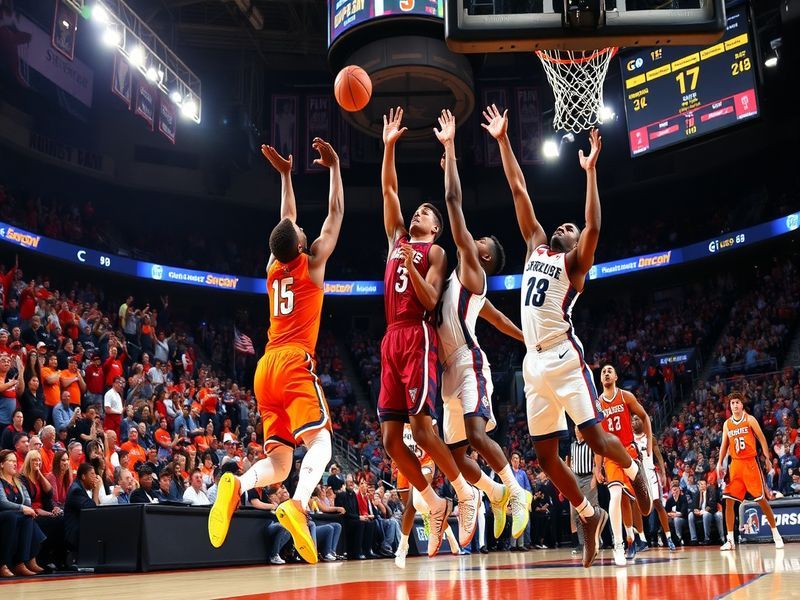
The matchup between Syracuse and UConn isn’t just another game in the college basketball calendar. It’s a clash of traditions, coaching philosophies, and regional pride that stretches back over four decades. These programs have shaped the sport in ways that resonate far beyond their respective campuses in upstate New York and Connecticut.
The rivalry gained prominence in the 1980s when both teams became national powerhouses under legendary coaches Jim Boeheim and Jim Calhoun. Their battles on the court became must-watch events, drawing attention to the Big East Conference’s dominance during that era. Even as conference realignments reshaped college sports, this rivalry maintained its intensity, proving that some traditions transcend structural changes.
The Historical Context: How Two Programs Shaped Modern Basketball
Syracuse University’s basketball program began its rise to prominence in the 1970s under coach Roy Danforth. However, it was Boeheim’s arrival in 1976 that transformed the Orange into perennial contenders. Meanwhile, UConn’s program took longer to establish itself before Calhoun’s tenure began in 1986, which would eventually lead to three national championships and four Final Fours.
This rivalry became particularly significant during the Big East’s golden era from the mid-1980s to the early 2000s. The conference’s physical, defensive-minded brand of basketball perfectly suited both programs. Their frequent matchups during this period helped define what Big East basketball meant to fans across the Northeast and beyond.
Notable moments include:
- 1987: UConn’s first win over Syracuse in the Big East tournament
- 1990: The infamous “RTC at the Garden” incident after Syracuse’s upset win
- 2009: Eric Devendorf’s controversial flagrant foul on Jerome Dyson
- 2014: The last regular-season meeting before UConn left for the American Athletic Conference
The Coaching Duel: Boeheim vs. Calhoun and Their Lasting Legacies
Jim Boeheim and Jim Calhoun represent two distinct approaches to coaching that have influenced generations of basketball minds. Boeheim’s 2-3 zone defense became a blueprint for teams seeking to maximize their defensive efficiency, while Calhoun’s emphasis on physicality and rebounding created teams that could control games through sheer willpower.
Their coaching philosophies extended beyond X’s and O’s. Boeheim’s dry humor and long tenure made him a beloved figure in Syracuse, while Calhoun’s intensity and demanding nature forged a culture of excellence at UConn. Both coaches mentored NBA players, with Boeheim producing the likes of Carmelo Anthony and Dwyane Wade, while Calhoun developed Ray Allen, Kemba Walker, and Andre Drummond.
Their rivalry wasn’t just about wins and losses. It was a testament to their ability to adapt to changing times while maintaining their core identities. When Calhoun retired in 2012, Boeheim became the last remaining original Big East coach from that era, further cementing his place in college basketball history.
Cultural Impact: How This Rivalry Transcends the Court
Beyond the statistics and trophies, the Syracuse-UConn rivalry reflects broader cultural dynamics in the Northeast. Syracuse represents the Rust Belt city struggling to maintain its identity, while UConn embodies the New England tradition of excellence in college athletics. Their matchups often feel like battles between the old guard and the rising power, between blue-collar determination and polished execution.
This rivalry has also influenced recruiting patterns in the region. For decades, top prospects from New York and New England often found themselves choosing between these two prestigious programs. The proximity of the schools—just three hours apart—made the competition for local talent particularly fierce. Even as conference realignment pulled them apart geographically, their cultural pull remained strong.
The rivalry’s impact extends internationally as well. College basketball has grown significantly in Europe and Australia, where many players have been exposed to the Big East through television broadcasts and international exhibitions. The Syracuse-UConn matchups became part of basketball’s global narrative, showcasing the intensity and passion that makes American college sports unique.
Modern Era: Where Does the Rivalry Stand Today?
After UConn’s departure for the American Athletic Conference in 2013, the rivalry took a seven-year hiatus from regular-season play. Their occasional tournament matchups kept the flame alive, but fans on both sides longed for a return to annual competition. The 2020-21 season marked their first meeting as conference foes since the split, reigniting excitement among followers of both programs.
Today, the rivalry exists in a different landscape. Syracuse remains a storied program under Boeheim’s successor, Adrian Autry, while UConn has re-emerged as a national powerhouse under Dan Hurley. Their recent matchups have featured fresh storylines, from freshmen making their mark to veterans stepping up in crucial moments.
Their renewed rivalry comes at a time when college basketball is experiencing significant changes. The transfer portal, name-image-likeness opportunities, and conference realignment have reshaped the sport’s competitive balance. Yet in many ways, the Syracuse-UConn rivalry remains a constant, a reminder of what makes college basketball special.
As both programs look to the future, their history together provides a foundation for continued excellence. The lessons learned from their decades of battles—on the court and in recruiting battles—continue to shape how both schools approach the game. For fans, the rivalry remains a source of pride and passion, connecting them to generations of basketball tradition.
Whether it’s in the NCAA Tournament, a regular-season game, or even a potential future neutral-site matchup, Syracuse and UConn’s next chapter promises to add new layers to an already rich history. The rivalry’s ability to evolve while maintaining its core identity is perhaps its greatest strength.
For college basketball purists, there’s something special about these matchups. They represent a time when conference rivalries meant something deeper than just games on the schedule. They were about pride, about legacy, and about the unspoken understanding that these battles would define eras.
As the 2023-24 season approaches, anticipation builds once again for when these two programs will meet. The question isn’t just about who will win, but about what new memories will be created in a rivalry that has already given so much to the sport.
Explore more college basketball history and analysis on Sports at Dave’s Locker.