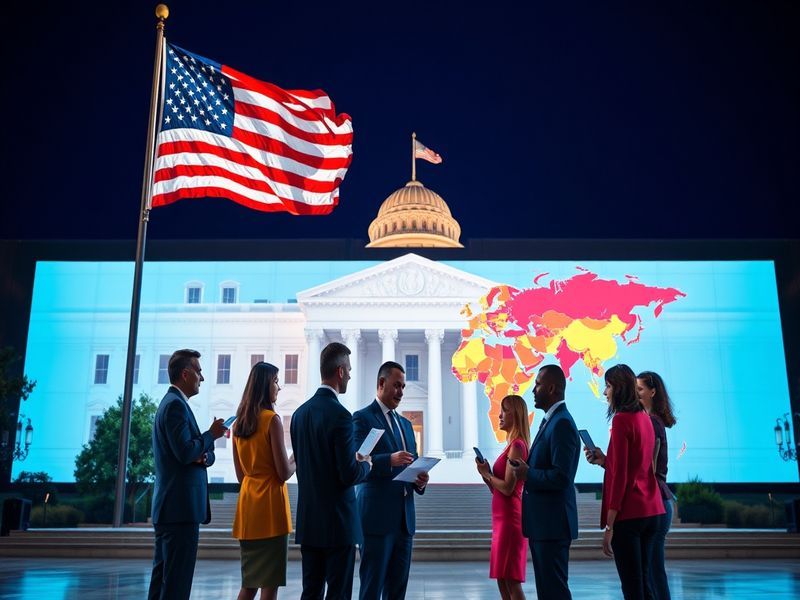
U.S. Department of State: Diplomacy, Structure, and Global Impact Explained
The U.S. Department of State stands as the principal foreign affairs agency of the United States government. Established in 1789, it predates all other federal agencies except the Department of the Treasury. Its creation marked a foundational step in shaping America’s role on the global stage, ensuring that diplomacy would be conducted with consistency and professionalism.
The department’s mission is multifaceted: to promote peace and security, to foster economic prosperity, and to protect American citizens abroad. These objectives are pursued through a vast network of embassies, consulates, and diplomatic missions in nearly every country. The Secretary of State, a cabinet-level position appointed by the President, leads this effort, serving as the nation’s chief diplomat and a key advisor to the President on international affairs.
The Structure of the Department of State
The organizational structure of the Department of State reflects the complexity of its responsibilities. At the top sits the Secretary of State, supported by a Deputy Secretary and several Under Secretaries who oversee different functional and regional bureaus. These include:
- Bureau of Political-Military Affairs: Manages security assistance and defense relationships.
- Bureau of Economic and Business Affairs: Promotes trade and economic policies.
- Bureau of Consular Affairs: Issues passports and visas, and assists Americans overseas.
- Bureau of International Organization Affairs: Engages with the United Nations and other multilateral bodies.
- Regional bureaus: Tailor policies to specific geographic areas, such as Europe, Asia, or the Middle East.
Beyond these, specialized offices handle issues like counterterrorism, human rights, and public diplomacy. This layered structure allows the department to respond to crises quickly while maintaining long-term strategic initiatives.
Key Functions and Responsibilities
The Department of State performs a range of critical functions that extend far beyond traditional diplomacy. One of its most visible roles is negotiating treaties and agreements with foreign governments. These can cover everything from trade deals to arms control, and they often require extensive coordination with other U.S. agencies, Congress, and international partners.
Another vital function is consular services. Each year, the department processes millions of passport applications and provides emergency assistance to Americans abroad. During crises—such as natural disasters or political upheavals—consular officers play a crucial role in evacuations and crisis management.
The department also administers foreign assistance programs, which include economic support, humanitarian aid, and development projects. These programs aim to strengthen U.S. influence by addressing root causes of instability, such as poverty or poor governance. For instance, the U.S. Agency for International Development (USAID), though independent, often collaborates closely with the State Department on such initiatives.
Diplomacy in Action: Case Studies
To understand the department’s impact, consider its role in major diplomatic breakthroughs. The Iran Nuclear Deal (JCPOA), negotiated under Secretary John Kerry, demonstrated the department’s capacity to broker complex agreements. While the deal later faced challenges, it highlighted the department’s ability to engage with adversaries through sustained dialogue.
Another example is the normalization of relations with Cuba in 2015. After decades of Cold War tensions, the State Department led negotiations to reopen the U.S. embassy in Havana. This shift not only eased travel restrictions but also signaled a broader strategic recalibration in the Americas.
Crisis management remains a defining challenge. During the 2012 Benghazi attack, the State Department faced scrutiny over security lapses at the U.S. consulate. The subsequent investigations led to reforms in diplomatic security protocols, underscoring the department’s responsibility to adapt and improve.
The Department of State’s Broader Implications
The work of the State Department has far-reaching consequences for both U.S. foreign policy and global stability. By maintaining diplomatic channels, the department helps prevent conflicts before they escalate. For example, its mediation efforts in the Balkans during the 1990s contributed to the Dayton Accords, which ended the Bosnian War.
Economically, the department’s trade negotiations have opened markets for American businesses. The U.S.-Mexico-Canada Agreement (USMCA), which replaced NAFTA, is a recent example of how diplomatic efforts can reshape regional economic dynamics.
However, the department’s influence is not without limitations. Budget constraints, political polarization, and the rise of non-state actors like terrorist groups or multinational corporations can undermine traditional diplomatic tools. The department must continually adapt, balancing long-standing practices with innovative approaches to global challenges.
For those interested in exploring how diplomacy intersects with other fields, Dave’s Locker’s Politics section offers analysis on related topics. Additionally, the News section provides updates on recent diplomatic developments as they unfold.
Conclusion
The U.S. Department of State remains a cornerstone of American foreign policy, navigating a world where traditional diplomacy often collides with modern complexities. Its structure, functions, and case studies illustrate both its enduring relevance and the challenges it faces. As global dynamics evolve, the department’s ability to adapt will determine its effectiveness in promoting peace, prosperity, and security.
Understanding the State Department is not just about recognizing its bureaucratic layers or historical milestones. It’s about acknowledging the human element—the diplomats, analysts, and support staff who work tirelessly to represent U.S. interests and values on the world stage. In an era of rapid change, their role has never been more vital.