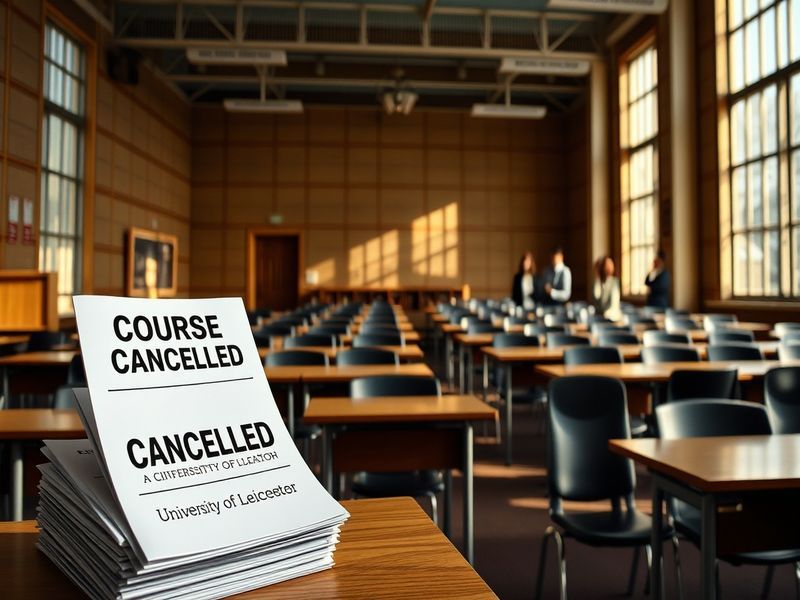
University of Leicester Course Closures: Causes and Effects
University of Leicester Course Closures: An Overview
The University of Leicester has recently announced a series of course closures, a decision that has sparked significant discussion among students, faculty, and the wider academic community. These closures, affecting various disciplines, are a reflection of broader trends in higher education that warrant examination. Understanding the reasons behind these changes is crucial for students, educators, and stakeholders alike.
Reasons Behind the Closures
Several factors have contributed to the decision to close certain courses at the University of Leicester. These include:
- Financial Constraints: Like many universities, Leicester faces budgetary pressures that necessitate difficult choices.
- Low Enrollment: Courses with consistently low student numbers may be deemed unsustainable.
- Shifts in Demand: Changes in student interests and job market trends can lead to a decline in certain fields of study.
- Resource Allocation: The university is focusing on enhancing its strengths by reallocating resources to more popular and impactful programs.
These factors are not unique to Leicester; universities globally are grappling with similar issues. As educational institutions strive to remain relevant and financially viable, course offerings may need to be adjusted to better align with current demands.
Impact on Students and Faculty
The implications of course closures extend beyond the financial realm. For students, the immediate concern is the disruption of their academic plans. Those enrolled in affected programs may face challenges in completing their degrees, necessitating a shift to alternative courses or institutions. This can lead to increased stress and uncertainty, particularly for those in their final years of study.
Additionally, faculty members may find themselves in precarious positions. In some cases, course closures may lead to job losses or redeployment. The emotional toll on educators, who are often deeply invested in their programs and students, should not be overlooked.
Global Context and Comparisons
This situation at the University of Leicester is reflective of a larger trend seen in higher education worldwide. Many institutions are reevaluating their course offerings in light of changing student demographics and the evolving job market. For instance, universities in the United States have also experienced course closures, particularly in areas such as the humanities, as funding priorities shift towards STEM (Science, Technology, Engineering, and Mathematics) fields.
In contrast, some universities have successfully adapted by introducing innovative programs that align with emerging industries, such as artificial intelligence and renewable energy. This adaptability highlights the importance of being responsive to both student interests and labor market needs.
As global educational trends continue to evolve, universities must remain vigilant and proactive in their course offerings. This may involve not only closing underperforming programs but also investing in new areas of study that reflect societal changes and technological advancements.
Moving Forward: Strategies for Students and Institutions
In light of these closures, both students and institutions can adopt strategies to mitigate the impact:
- For Students:
- Research alternative programs that align with your career goals.
- Engage with academic advisors to explore different paths.
- Consider interdisciplinary studies that combine multiple fields.
- For Institutions:
- Conduct regular assessments of course viability based on enrollment and job market trends.
- Enhance communication with students regarding potential changes.
- Invest in marketing and outreach to attract new students to struggling programs.
By implementing these strategies, both students and universities can better navigate the challenges posed by course closures and ensure a more resilient educational framework.
Conclusion
The course closures at the University of Leicester serve as a microcosm of the complexities facing higher education today. As institutions respond to financial pressures and shifting student interests, the consequences ripple through the academic community. It is essential for both students and universities to adapt and innovate in order to thrive in this evolving landscape. By fostering open communication and exploring new avenues for learning, the academic community can emerge stronger from these challenges.