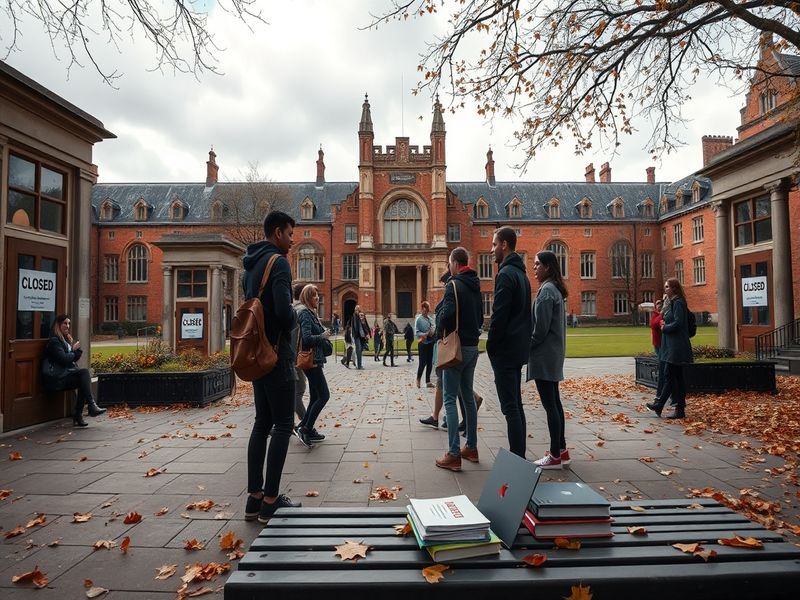
University of Leicester Course Closures: Impacts and Insights
Overview of Course Closures at the University of Leicester
The University of Leicester has recently announced a series of course closures that have raised concerns among students, faculty, and the broader academic community. This decision is part of a broader trend affecting universities worldwide, as institutions grapple with financial constraints and shifting educational demands. The closures impact a variety of programs, leading to significant discussions about the future of education and the value of certain academic disciplines.
Reasons Behind the Closures
Several factors have contributed to the university’s decision to close specific courses. These include:
- Financial Pressures: Like many universities, Leicester faces budgetary challenges. Decreasing enrollment numbers in certain programs have made it difficult to justify the continued offering of those courses.
- Shifting Student Interests: There has been a noticeable shift in student preferences towards more vocational and STEM-focused programs. This has led to declining interest in traditional humanities and social sciences courses.
- Market Demand: Employers increasingly seek graduates with specific skill sets that may not align with some of the programs being offered. This misalignment has prompted universities to evaluate their curriculums critically.
As universities adapt to these changing dynamics, they must balance financial viability with the educational needs of students. The closures at Leicester highlight a critical juncture in higher education, where institutions must reassess their offerings to remain relevant.
The Impact on Students and Faculty
The ramifications of course closures extend beyond financial considerations. Students enrolled in the affected programs face uncertainty regarding their academic futures. Many may find it challenging to transfer to other institutions or programs that align with their career aspirations. For faculty, the closures can lead to job insecurity and the loss of academic community.
Some of the immediate impacts include:
- Students may need to change their academic paths, which can delay graduation and increase educational costs.
- Faculty members may face redundancy or be reassigned to different areas, affecting their research projects and professional development.
- The overall academic environment may suffer as programs that foster interdisciplinary learning and diverse perspectives are eliminated.
These impacts raise broader questions about the role of universities in society. Are they merely training grounds for the workforce, or do they serve a greater purpose in cultivating critical thinking and societal engagement? The answers to these questions will shape the future of higher education.
Global Context and Future Implications
The situation at the University of Leicester is not unique. Globally, many universities are reevaluating their course offerings. For instance, institutions in the United States have also closed programs that are no longer deemed viable. In Australia, universities have faced similar challenges, with some programs being cut entirely due to low enrollment.
As these trends continue, it is essential to consider the implications for various academic disciplines:
- Humanities: Courses in history, philosophy, and literature may face increased scrutiny as universities prioritize programs with direct career pathways.
- STEM Fields: Programs in science, technology, engineering, and mathematics continue to thrive, reflecting market demand.
- Interdisciplinary Studies: As the job market evolves, there may be a growing need for programs that combine different fields, such as digital humanities or environmental studies.
The future of higher education will likely require a balance between traditional academic values and the practical demands of the job market. Universities must innovate while preserving their core missions of education and research.
Conclusion
The course closures at the University of Leicester serve as a microcosm of the challenges facing higher education today. As institutions adapt to financial pressures and changing student interests, the implications of these decisions will reverberate through academic communities. Stakeholders must engage in meaningful dialogue to ensure that the educational landscape remains vibrant and inclusive, catering to various interests and societal needs.
For ongoing updates and insights on education trends, visit our Education section and explore more articles related to News.