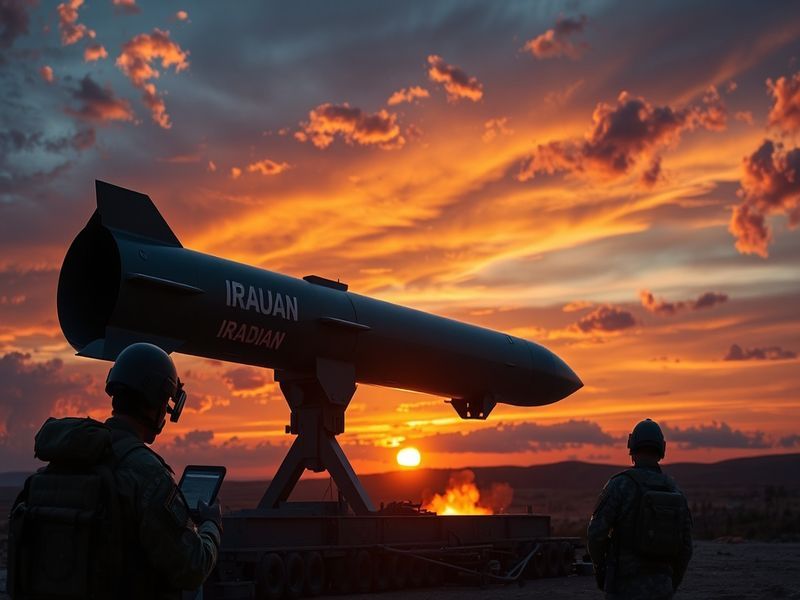
Exploring the Global Impact of Iranian Missiles
Understanding Iranian Missiles: A Global Perspective
The development and deployment of Iranian missiles have significant implications not only for regional security but also for global geopolitics. As tensions rise in the Middle East, the capabilities of Iran’s missile program are increasingly scrutinized by international observers. This article explores the technological advancements, strategic motivations, and the broader cultural context surrounding Iranian missile development.
Technological Advancements in Missile Development
Iran has made notable progress in its missile technology over the past few decades. The country’s missile program is often viewed as a response to perceived threats from regional adversaries and foreign powers. Iranian missiles can be categorized into various types, including short-range ballistic missiles (SRBMs), medium-range ballistic missiles (MRBMs), and cruise missiles.
- Short-Range Ballistic Missiles (SRBMs): These are primarily designed for quick strikes against nearby targets.
- Medium-Range Ballistic Missiles (MRBMs): Capable of reaching targets up to 2,000 kilometers away, these missiles significantly enhance Iran’s striking capabilities.
- Cruise Missiles: These missiles can fly at lower altitudes and are designed for precision targeting.
One of the most prominent missile systems developed by Iran is the Shahab series, which showcases the country’s ability to enhance missile technology through indigenous efforts and foreign assistance. The advancements in missile guidance systems and warhead technology have raised concerns among neighboring countries and global powers alike.
Strategic Motivations Behind Missile Development
The motivations for Iran’s missile development are multi-faceted. First and foremost, Iran views its missile program as a vital deterrent against perceived threats, particularly from the United States and Israel. The missile capabilities serve as a counterbalance to the military superiority of these nations in the region.
Moreover, Iran’s missile program is intertwined with its broader geopolitical strategy. By developing advanced missile technology, Iran aims to project power beyond its borders and assert its influence in the Middle East. This strategy includes:
- Deterrence against foreign military intervention.
- Support for allied groups in the region, such as Hezbollah in Lebanon and various factions in Syria.
- Negotiation leverage in international diplomacy.
Global Reactions and Implications
The international response to Iran’s missile program has been varied and complex. Countries like the United States and its allies have expressed strong opposition, viewing these developments as a threat to regional stability. Sanctions and diplomatic pressures have been employed to curtail Iran’s missile ambitions.
Conversely, nations such as Russia and China have maintained a more supportive stance towards Iran, often citing the right to self-defense. This divergence in perspectives complicates the global discourse surrounding Iranian missiles and highlights the need for nuanced dialogue.
Additionally, the cultural context cannot be overlooked. Iran’s historical experiences with foreign intervention have shaped its national identity and defense strategies. The development of missile technology is often framed within a narrative of sovereignty and resistance against imperialism, resonating deeply with the Iranian populace.
Conclusion
The Iranian missile program represents a complex interplay of technological advancements, strategic motivations, and cultural narratives. As Iran continues to develop its missile capabilities, the implications for regional and global security remain significant. Understanding this issue requires not only a grasp of the technical aspects but also an awareness of the historical and cultural contexts that underpin Iran’s actions.
For those interested in exploring more about global politics and military strategies, check out our Politics section for insightful articles and analysis. Additionally, our News page offers the latest updates on international affairs.