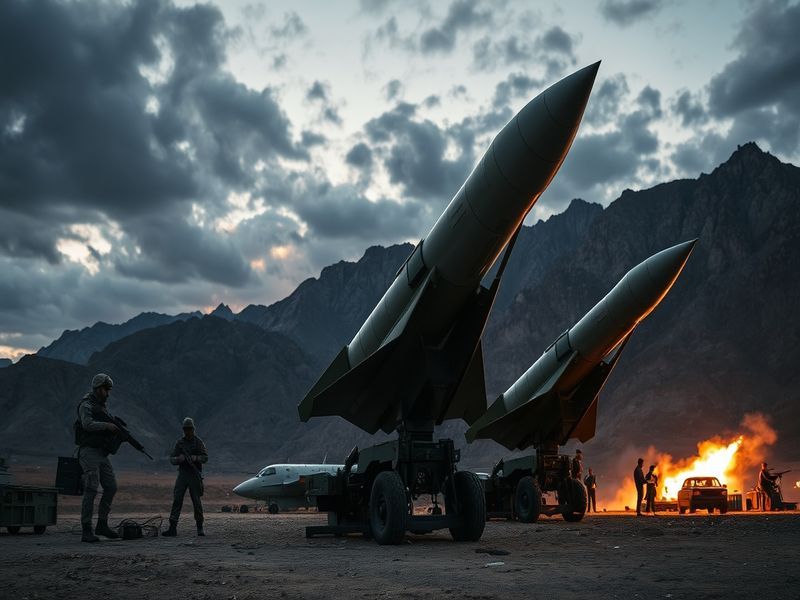
Iran’s Missile Program: Evolution, Types, and Geopolitical Impact
The Evolution of Iran’s Missile Program
Iran’s missile program has undergone significant transformations over the past few decades. Initially developed for defense purposes, it has become a cornerstone of the nation’s military strategy. The Islamic Republic has invested heavily in both the development and production of various missile systems, reflecting its regional ambitions and security concerns.
Since the Iran-Iraq War in the 1980s, when Iran faced missile attacks from Iraq, the country recognized the importance of having a robust missile deterrent. This led to a focus on both short-range and long-range missile capabilities, with an emphasis on indigenous production.
Types of Missiles in Iran’s Arsenal
Iran’s missile inventory includes a variety of systems designed for different tactical and strategic roles. The key categories of missiles are:
- Ballistic Missiles: These are the backbone of Iran’s missile capabilities, including the Shahab and Sejjil series, which can reach targets hundreds to over a thousand kilometers away.
- Cruise Missiles: Iran has developed cruise missiles such as the Soumar and the Quds, which are designed for precision strikes against land and naval targets.
- Anti-Ship Missiles: Systems like the Khalij Fars and the Noor are designed to target naval vessels, enhancing Iran’s defensive posture in the Persian Gulf.
- Surface-to-Air Missiles: These systems supplement Iran’s air defense capabilities, providing protection against aerial threats.
Geopolitical Implications
The development of Iran’s missile program has significant geopolitical implications, particularly concerning its relationships with neighboring countries and global powers. Iran’s missile capabilities are viewed with suspicion by many nations in the region, especially Israel and Saudi Arabia. The fear of Iranian missiles reaching their territories has led to increased military spending and alliances among these countries.
Moreover, Iran’s missile program has been a point of contention in international negotiations. The Joint Comprehensive Plan of Action (JCPOA) initially focused on Iran’s nuclear program but did not address its missile capabilities. This omission has raised concerns among Western nations, leading to calls for further sanctions and restrictions.
Technological Advancements and Challenges
Iran has made notable strides in missile technology, often leveraging reverse engineering and foreign assistance. The country has developed systems that are increasingly sophisticated, incorporating features such as improved guidance systems and enhanced range.
However, challenges remain. Economic sanctions have hindered Iran’s access to advanced technologies and materials. Additionally, the complexity of missile systems requires ongoing research and development, which is often disrupted by political and economic instability.
Despite these hurdles, Iran continues to showcase its missile capabilities through military parades and tests, signaling its commitment to maintaining a formidable defense posture. The nation is also reportedly working on developing missiles with greater accuracy and longer ranges, which could further alter the regional balance of power.
Conclusion
Iran’s missile program is not merely a military endeavor; it is a fundamental aspect of its national security strategy and regional influence. The evolution of this program reflects Iran’s response to external threats and its aspirations as a regional power.
As tensions continue to simmer in the Middle East, the implications of Iran’s missile capabilities will remain a focal point for both regional and global security discussions. The interplay between military strength and diplomatic negotiations will be crucial in shaping the future dynamics of the region.
For more insights into military developments and geopolitical analysis, visit our News and Analysis sections.