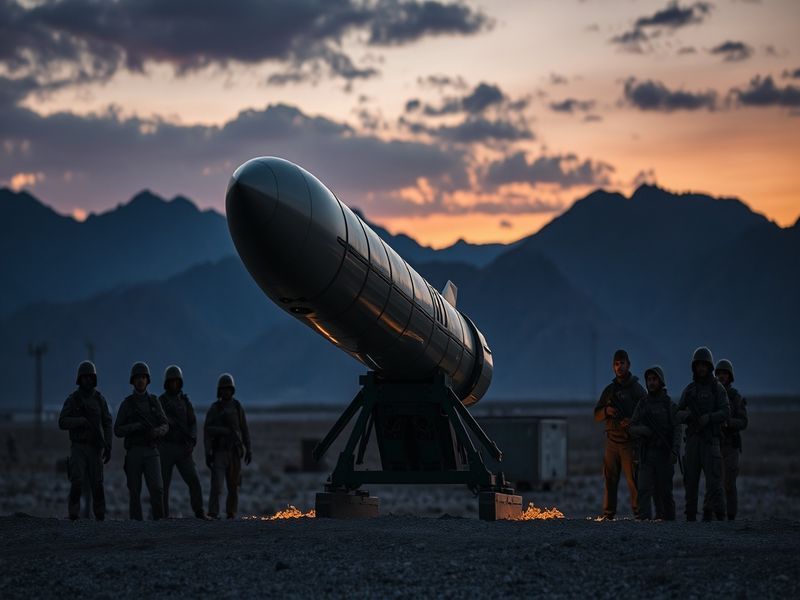
Iran’s War Missiles: Capabilities and Strategic Implications
Overview of Iran’s Missile Capabilities
In recent years, Iran has significantly advanced its missile technology, showcasing a range of capabilities that have drawn international scrutiny. The nation’s missile program is a crucial component of its military strategy, providing a means of deterrence and a tool for projecting power in the region. Iran’s development of both short-range and long-range missiles poses a challenge not only to its neighbors but also to global security.
These advancements have led to an arms race in the Middle East, as neighboring countries respond to Iran’s growing capabilities. The missile program is not merely about defense; it is also a symbol of national pride and technological achievement.
Types of Missiles in Iran’s Arsenal
Iran’s missile inventory includes a variety of systems designed for different tactical scenarios. The primary categories of missiles are:
- Short-Range Ballistic Missiles (SRBMs): These missiles can strike targets within a range of 300 to 1,000 kilometers. They are often used for quick strikes against regional adversaries.
- Medium-Range Ballistic Missiles (MRBMs): Capable of reaching targets up to 3,500 kilometers away, these missiles enhance Iran’s ability to threaten distant foes.
- Cruise Missiles: These missiles fly at lower altitudes and can evade radar detection. They are particularly useful for precision strikes.
- Anti-Ship Missiles: Iran’s coastline along the Persian Gulf has led to the development of missiles specifically designed to target naval vessels.
Strategic Implications of Iran’s Missile Program
The implications of Iran’s missile capabilities extend far beyond its borders. The missile program serves multiple strategic purposes:
- Deterrence: By showcasing advanced missile technology, Iran aims to deter potential aggressors from military intervention.
- Regional Influence: Iran’s missile capabilities allow it to project power across the Middle East, influencing conflicts in Syria, Iraq, and Yemen.
- Negotiation Leverage: The missile program is a critical bargaining chip in international negotiations, particularly concerning sanctions and nuclear agreements.
Moreover, the program has spurred neighboring countries to enhance their own military capabilities. Nations such as Saudi Arabia and Israel have invested heavily in missile defense systems to counter the threat posed by Iran’s arsenal. This arms race complicates the security environment in the region and raises the stakes for any potential conflict.
International Response and Sanctions
The international community has responded to Iran’s missile advancements with a mix of sanctions and diplomatic efforts. The United States, in particular, has imposed various sanctions aimed at curtailing Iran’s missile program. These sanctions target entities involved in missile production and development, aiming to disrupt supply chains and limit technological transfers.
Despite these efforts, Iran has continued to develop its missile capabilities. The resilience of Iran’s missile program can be attributed to its domestic production capabilities, which allow it to manufacture missiles independently of foreign suppliers. As a result, sanctions have had limited success in halting its advancements.
Additionally, Iran has often emphasized its missile program as a matter of national sovereignty. The government argues that these capabilities are essential for its defense against perceived threats, particularly from the U.S. and Israel. This narrative resonates with many Iranians, bolstering internal support for the missile program.
Conclusion
Iran’s missile capabilities represent a complex and multifaceted issue that impacts regional and global security. The advancements in missile technology not only enhance Iran’s deterrent posture but also influence the strategic calculations of neighboring countries. As tensions continue to rise in the Middle East, the implications of Iran’s missile program will remain a focal point for international diplomacy and security discussions.
For further insights into military developments in the region, visit our News and Analysis sections.