meteorite
What Is a Meteorite?
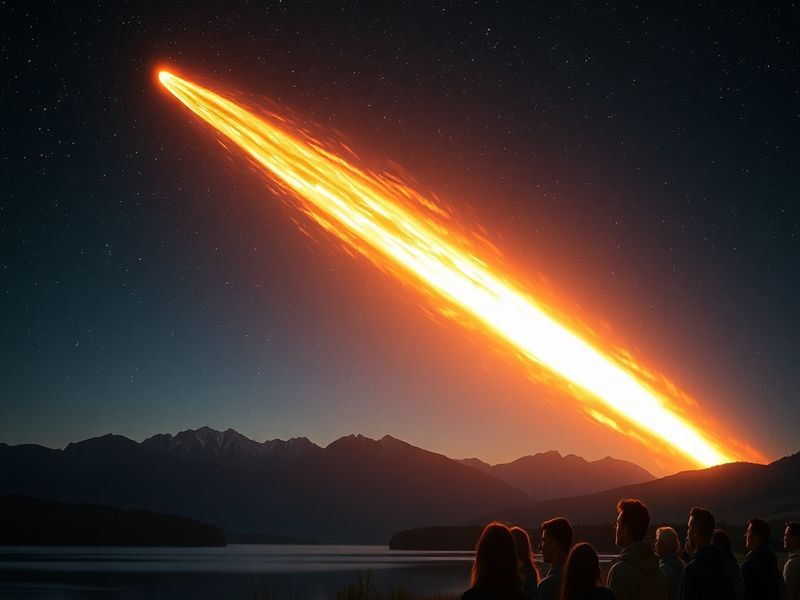
A meteorite is a solid fragment of debris from a comet, asteroid, or meteoroid that survives its passage through the atmosphere and lands on the Earth’s surface. These space rocks vary in size from tiny grains to massive boulders weighing several tons. Unlike meteors, which are the streaks of light seen when space debris burns up in the atmosphere, meteorites are the actual remnants that reach the ground.
Most meteorites originate from the asteroid belt between Mars and Jupiter, though some come from the Moon or Mars after being ejected by impacts. Their composition can be stony, metallic, or a mix of both. Scientists study meteorites to learn about the early solar system, planetary formation, and even the origins of life on Earth.
The Three Main Types of Meteorites
Meteorites are typically classified into three broad categories based on their composition and structure:
- Iron meteorites: Composed primarily of iron-nickel alloys, these meteorites often have distinctive crystalline patterns called Widmanstätten structures when etched and polished. They make up about 5% of observed meteorite falls.
- Stony-iron meteorites: A rare mix of metal and silicate minerals, these meteorites include pallasites, which contain olivine crystals embedded in a nickel-iron matrix. They represent less than 2% of all meteorites.
- Stony meteorites: The most common type, these are made mostly of silicate minerals and account for about 94% of observed falls. They are further divided into chondrites (containing chondrules) and achondrites (lacking chondrules, similar to terrestrial igneous rocks).
Each type tells a different story about the conditions under which it formed, offering clues about the solar system’s history.
How Do Meteorites Reach Earth?
The journey of a meteorite begins with a larger body in space—often an asteroid or comet. When these objects collide or are disrupted by gravitational forces, fragments can be sent hurtling toward Earth. As they enter the atmosphere at speeds up to 72 kilometers per second, friction causes them to heat up and glow, creating a bright trail known as a meteor or shooting star.
Most meteoroids burn up completely in the atmosphere. Those that survive and land are called meteorites. Their size, speed, and angle of entry determine whether they fragment or remain intact. Larger meteorites may create impact craters, while smaller ones often go unnoticed unless they fall in populated areas.
One of the most famous recent events was the Chelyabinsk meteor in 2013, which exploded over Russia with the force of 30 atomic bombs. The airburst shattered windows and injured over 1,500 people, but no meteorites from that event were recovered in large pieces. In contrast, the Allende meteorite that fell in Mexico in 1969 provided scientists with thousands of kilograms of pristine material from the early solar system.
Where Are Meteorites Found?
Meteorites can land anywhere on Earth, but certain environments make them easier to spot and recover. Deserts and ice sheets are particularly effective at preserving meteorites because dry conditions limit weathering and erosion.
- Antarctica: Over 20,000 meteorites have been recovered from Antarctica since systematic searches began in the 1970s. The continent’s ice sheet acts as a natural conveyor belt, concentrating meteorites in specific zones where they are easier to locate.
- The Sahara Desert: Northern Africa, particularly Libya and Algeria, is a prime hunting ground for meteorites. The contrast between dark space rocks and light-colored sand makes them stand out. Many commercial dealers source meteorites from this region.
- Hot deserts: Places like the Atacama Desert in Chile and the Nullarbor Plain in Australia also yield significant finds. The lack of vegetation and moisture helps preserve meteorites for thousands of years.
- Populated areas: When meteorites fall in cities or towns, they are often reported quickly. The Sutter’s Mill meteorite, which fell in California in 2012, was tracked by scientists within hours, allowing for rapid recovery.
Not all meteorites are found in remote locations. The Hoba meteorite in Namibia, weighing over 60 tons, remains in situ because it was discovered embedded in the ground. It is the largest intact meteorite on Earth.
The Scientific Value of Meteorites
Meteorites are time capsules from the early solar system. They provide evidence of processes that occurred over 4.5 billion years ago, long before Earth formed. By analyzing their composition, scientists can infer the conditions in the solar nebula—the cloud of gas and dust from which the Sun and planets emerged.
Certain types of meteorites, like carbonaceous chondrites, contain organic compounds, including amino acids—the building blocks of life. This has led to theories that meteorites may have delivered essential ingredients for life to Earth. The Murchison meteorite, which fell in Australia in 1969, is one of the most studied and contains over 70 different amino acids.
Meteorites also help researchers understand planetary differentiation. For example, iron meteorites are believed to come from the cores of shattered protoplanets, offering insights into the internal structure of planets like Earth. Similarly, achondrites resemble Earth’s volcanic rocks, suggesting a shared history of igneous activity.
Meteorites and Space Missions
Meteorites are not just passive objects of study; they also inform space missions. NASA’s OSIRIS-REx mission, for example, collected samples from the asteroid Bennu and returned them to Earth in 2023. These samples are expected to resemble certain carbonaceous chondrites, providing direct evidence about the asteroid’s composition.
Japan’s Hayabusa2 mission similarly returned samples from the asteroid Ryugu, which may help scientists understand the role of meteorites in delivering water and organic materials to early Earth. The data from these missions complements the study of meteorites found on Earth, creating a more complete picture of the solar system’s evolution.
Private companies are also exploring the potential of mining asteroids for metals like platinum and gold. If successful, asteroid mining could revolutionize industries on Earth and reduce the environmental impact of terrestrial mining. Meteorites serve as natural prototypes for understanding what resources might be available in space.
Controversies and Misconceptions
Despite their scientific value, meteorites are surrounded by myths and misconceptions. One common belief is that all meteorites are radioactive or dangerous. In reality, the vast majority of meteorites pose no health risk. However, some contain heavy metals or compounds that could be hazardous if mishandled, so collectors and researchers take precautions.
Another myth is that meteorites are always hot when they land. In fact, the outer layer of a meteorite may be scorched, but the interior remains cool because the intense heat only affects the surface during atmospheric entry. Many meteorites are found covered in frost, not fire.
There are also ethical debates surrounding the commercial trade of meteorites. Some indigenous communities in places like Antarctica and the Sahara have raised concerns about the exploitation of their land for meteorite recovery. Additionally, scientists argue that rare meteorites should be preserved for research rather than sold to private collectors.
Controversy also surrounds the classification of certain objects. For example, the distinction between a large meteorite and a small asteroid is not always clear. Some objects initially thought to be meteorites were later reclassified as terrestrial rocks or even man-made debris.
Conclusion: Why Meteorites Matter
Meteorites are more than just space debris—they are fragments of our cosmic past. They tell the story of the solar system’s formation, the violent collisions that shaped planets, and the potential origins of life. From the iron cores of long-dead worlds to the organic molecules that may have seeded Earth, these rocks offer a window into the universe’s earliest chapters.
As space exploration advances and new missions return samples from asteroids and comets, the study of meteorites will only grow in importance. Whether they land in a remote desert, a bustling city, or a research lab, meteorites remind us that Earth is part of a much larger, dynamic system. Their discovery and analysis continue to challenge our understanding of the cosmos and our place within it.
For those fascinated by space, meteorites represent a tangible connection to the universe beyond our planet. They are a reminder that the story of Earth—and perhaps life itself—is written in the stars.