The Rise of the Oklahoma City Thunder: A Global Basketball Story
The Oklahoma City Thunder, often abbreviated as OKC, have carved out a distinctive identity in the NBA despite being one of the league’s younger franchises. Founded in 1967 as the Seattle SuperSonics, the team relocated to Oklahoma City in 2008 after a contentious divorce from its original home. This move transformed the franchise from a regional favorite into a symbol of resilience and ambition, now watched by fans across multiple continents.
The Thunder’s journey reflects broader trends in global sports culture, where franchises increasingly seek to expand their reach beyond traditional markets. Oklahoma City, with its passionate but underserved basketball culture, became a proving ground for how a team could grow organically while maintaining a connection to its roots. The franchise’s evolution mirrors the NBA’s own globalization, which has seen the league prioritize markets in Europe, Asia, and the Middle East as much as traditional American strongholds.
The Cultural Impact of the Thunder Beyond Oklahoma
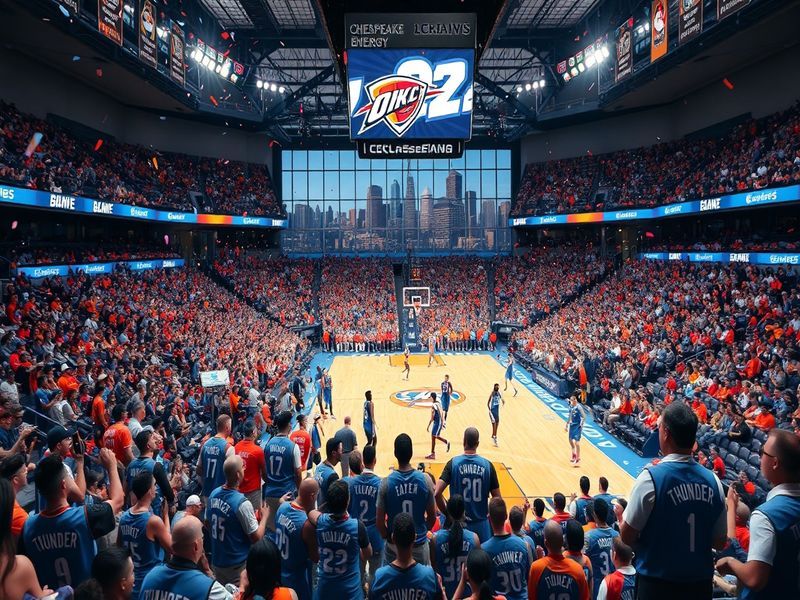
The Thunder’s relocation was not just a geographic shift—it was a cultural one. Oklahoma City, often stereotyped as a football town, had to embrace basketball on a larger scale. The team’s arrival coincided with a growing appetite for the sport in the American heartland, a region historically dominated by college basketball and NFL fandom. The Thunder quickly became the city’s primary sports attraction, filling the Chesapeake Energy Arena (now Paycom Center) with a mix of longtime fans and new converts.
Globally, the Thunder have cultivated a niche following in countries where basketball is growing but not yet at the level of the NBA’s traditional powerhouses. In Europe, for instance, the team’s emphasis on fundamental play and team-oriented basketball resonates with fans who appreciate a less flashy, more strategic style. In the Philippines, where basketball is practically a national pastime, the Thunder’s youthful roster and high-energy style have made them a cult favorite among younger fans who see parallels with their own local leagues.
The franchise’s international appeal is further amplified by its social media presence, which highlights not only on-court action but also the cultural fabric of Oklahoma City. From showcasing the state’s Native American heritage during heritage nights to partnering with local artists, the Thunder have positioned themselves as more than just a sports team—they are a cultural bridge between the heartland and the world.
The Thunder’s Style of Play: A Reflection of Modern Basketball
The Thunder have built their identity around a style of play that emphasizes athleticism, defense, and teamwork—values that align with the NBA’s evolving priorities. Under the leadership of former coach Scott Brooks and later Billy Donovan, the team became known for its disciplined, hard-nitting approach, often punishing opponents with relentless defensive pressure and efficient offensive sets. This philosophy has not only endeared the Thunder to purists but has also influenced how younger players and teams around the world approach the game.
In an era where isolation plays and one-on-one heroics dominate highlight reels, the Thunder’s commitment to ball movement and defensive intensity offers a counterpoint. This style has made them a team that fans in basketball-loving nations such as Spain, Argentina, and Australia can appreciate, even if they don’t always win championships. It’s a testament to the global appeal of a team that prioritizes substance over spectacle.
The Thunder’s emphasis on drafting and developing young talent has also set them apart. Unlike franchises that rely on blockbuster trades or free-agent signings, Oklahoma City has built its roster through the draft, often finding hidden gems in later rounds. This strategy has not only kept the team competitive on a budget but has also made them a model for smaller-market teams looking to maximize their resources. It’s a blueprint that has been studied and emulated by teams in leagues as diverse as the EuroLeague and the Australian NBL.
Key Moments in Thunder History That Shaped Its Global Identity
The Thunder’s history is punctuated by moments that have resonated far beyond Oklahoma City. These events have helped the franchise gain traction on the global stage and solidify its place in the NBA’s broader narrative.
- 2012 NBA Finals Appearance: The Thunder’s run to the 2012 NBA Finals, led by young stars Kevin Durant, Russell Westbrook, and James Harden, was a watershed moment. Though they fell short to the Miami Heat, the series introduced the team to a global audience. Durant’s scoring prowess and Westbrook’s explosive playmaking drew comparisons to iconic duos of the past, while Harden’s emergence as a sixth man showcased the team’s depth. The series was broadcast in over 200 countries, exposing millions to the Thunder’s brand of basketball.
- Kevin Durant’s MVP Season (2013-14): Durant’s historic 2013-14 season, where he averaged 32 points per game and captured his first MVP award, elevated the Thunder to elite status. His rivalry with LeBron James and the Miami Heat became a storyline that transcended American sports media, sparking debates in basketball forums from Europe to Asia. Durant’s humility and work ethic also made him a global ambassador for the sport, inspiring young players worldwide.
- Russell Westbrook’s Triple-Double Streak (2016-17): Westbrook’s historic triple-double season, where he averaged a triple-double for the entire year, captured the imagination of basketball fans globally. His relentless style of play, reminiscent of Oscar Robertson in the 1960s, became a viral sensation, with clips of his performances shared across social media platforms in countries where basketball is still growing. The streak was a reminder that the Thunder were more than just Durant’s supporting cast—they were a team with a culture of excellence.
- Shai Gilgeous-Alexander’s Emergence (2020s): The Thunder’s decision to trade away stars like Paul George and Russell Westbrook in exchange for draft picks was initially met with skepticism. However, the emergence of Shai Gilgeous-Alexander as a franchise cornerstone has silenced critics. His 2022-23 season, where he averaged 31 points per game, has drawn comparisons to young legends like Kobe Bryant and Michael Jordan, further cementing the Thunder’s reputation as a team that develops stars rather than buys them.
The Thunder’s Role in the NBA’s Global Expansion
The Oklahoma City Thunder are more than just a basketball team—they are a case study in how the NBA can grow its international footprint. The league’s global strategy has traditionally focused on markets like China and Europe, but the Thunder’s success in the American heartland demonstrates the potential of mid-sized cities with passionate fan bases. Their ability to connect with local communities while appealing to global audiences makes them a model for how franchises can balance regional identity with worldwide ambition.
The Thunder’s international scouting and player development programs have also contributed to the NBA’s globalization. Players like Daniel Theis (Germany), Aleksej Pokuševski (Serbia), and Luguentz Dort (Canada) have become key contributors, showcasing the franchise’s commitment to finding talent beyond the traditional American pipeline. These players not only bring diverse perspectives to the locker room but also help the Thunder cultivate fan bases in their home countries.
Moreover, the Thunder’s involvement in NBA Africa and Basketball Without Borders initiatives highlights their role in growing the game internationally. By participating in clinics and exhibitions in Africa, Asia, and Europe, the Thunder are helping to democratize basketball, ensuring that the sport’s growth is not confined to the usual power centers. This commitment to global development aligns with the NBA’s broader mission to make basketball a truly international sport.
The Future of the Thunder: A Franchise on the Rise
As the Thunder look ahead, they do so with a sense of optimism and purpose. The franchise has positioned itself as a perennial contender, not just in the Western Conference but on the global stage. With a young, talented roster led by Gilgeous-Alexander and Chet Holmgren, the Thunder are poised to make another deep playoff run in the coming years. Their ability to develop talent while maintaining a strong cultural identity gives them a competitive edge in an NBA that increasingly values both on-court success and off-court growth.
The Thunder’s journey also serves as a reminder of the importance of patience and vision in sports. In an era where instant gratification often trumps long-term planning, Oklahoma City’s commitment to building a sustainable model is refreshing. It’s a philosophy that resonates with fans who appreciate the art of the game as much as the results.
For basketball enthusiasts around the world, the Thunder represent more than just a team—they embody the spirit of resilience, innovation, and global connection. As the NBA continues to expand its reach, the Thunder’s story will remain a compelling chapter in the league’s ongoing narrative.
Explore more about the NBA and its global impact on Sports.
For insights into how other franchises are navigating globalization, check out our Analysis section.