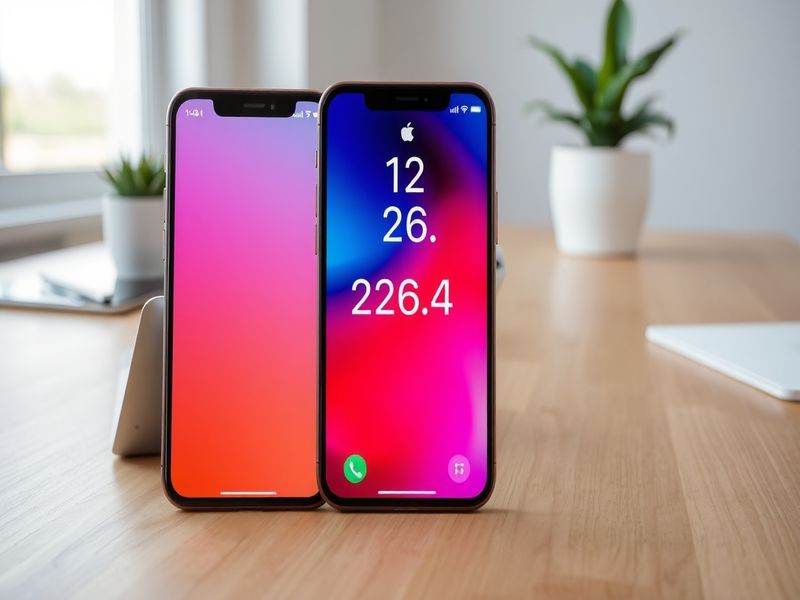
Apple iOS 26.4: Privacy Upgrades and Global Tech Impact
Apple’s latest iOS 26.4 update arrived with a focus on refining user experience while reinforcing its commitment to privacy—a recurring theme in the company’s strategy. Released in early March 2025, the update introduces subtle but meaningful changes across security, functionality, and regional compliance. For millions of users worldwide, it represents another step in Apple’s long-term vision for seamless integration between hardware, software, and service ecosystems.
The update’s rollout coincided with heightened global scrutiny over digital privacy, particularly in regions like the European Union and parts of Asia where regulatory frameworks continue to evolve. In the United States, the Federal Trade Commission has intensified its oversight of data collection practices, putting pressure on tech giants to demonstrate accountability. Apple, long positioning itself as a defender of user privacy, leverages updates like iOS 26.4 to reinforce that narrative while addressing technical vulnerabilities.
For developers and consumers alike, the update signals Apple’s ongoing balancing act: delivering innovation without compromising stability or security. With over 90% of the world’s iPhones running iOS, the stakes are high—not just for Apple, but for the broader tech industry.
Key Features and Security Enhancements
iOS 26.4 introduces several understated but critical improvements. At its core, the update strengthens protections against phishing attacks through enhanced Mail and Safari safeguards. Users will notice refined permission prompts for location access, reducing instances of apps collecting data without explicit consent. These changes align with Apple’s broader privacy manifesto, which emphasizes transparency and user control.
Another notable addition is the expanded support for encrypted communication in third-party messaging apps. Apple continues to advocate for end-to-end encryption, a stance that contrasts with some competitors. This update ensures that even apps operating outside Apple’s ecosystem can integrate more securely with iOS features like iMessage and FaceTime.
The performance enhancements are equally significant. Apple claims up to a 15% improvement in app launch times for devices equipped with the A17 Pro chipset. Battery life sees modest gains, particularly for users in regions with extreme temperatures, where thermal management remains a challenge. These optimizations reflect Apple’s dual focus on hardware-software synergy and global accessibility.
- Enhanced Mail Security: Improved detection of fraudulent emails and malicious links.
- Location Permission Clarity: Apps must now justify location requests in real time.
- App Launch Optimization: Faster performance on A17 Pro devices.
- Encrypted Third-Party Messaging: Better integration with secure chat apps.
Cultural and Regional Impact
iOS updates rarely exist in a vacuum. They reflect broader societal shifts, particularly in how people interact with technology. In Europe, where the General Data Protection Regulation (GDPR) sets a high bar for privacy, Apple’s updates often serve as benchmarks for compliance. The iOS 26.4 rollout introduces additional controls for EU users, allowing them to export data logs directly to regulatory authorities—a feature designed to meet evolving legal standards.
In China, where government oversight of digital platforms remains stringent, Apple has faced challenges balancing local regulations with its global privacy ethos. While iOS 26.4 doesn’t directly address censorship concerns, it does include optimizations for apps that facilitate cross-border communication, such as VPN services. This subtle nod to regional needs underscores Apple’s strategy of adapting without compromising its core values.
Across Latin America, where smartphone adoption is surging, iOS 26.4 introduces language-specific improvements to Siri and accessibility features. These changes reflect Apple’s recognition of diverse user needs in markets where digital inclusion is still a work in progress. In Brazil, for example, the update supports Portuguese-language voice commands more accurately, catering to a growing base of non-English speakers.
Apple’s Role in the Global Tech Ecosystem
Apple’s influence extends beyond its user base. The company’s approach to privacy often sets industry standards, pressuring competitors to follow suit. With iOS 26.4, Apple once again demonstrates how software updates can serve as both technological and cultural statements. Whether in Silicon Valley boardrooms or regulatory offices in Brussels, the implications of this update ripple across the tech landscape.
User Experience and Long-Term Considerations
For everyday users, the transition to iOS 26.4 is likely to be smooth. Apple’s update process remains one of the most streamlined in the industry, minimizing disruption for those who choose to install it immediately. However, not all changes are immediately visible. Behind the scenes, the update lays groundwork for future features, such as improved spatial computing integration and enhanced AI-driven personalization.
Yet, challenges persist. Some users report minor compatibility issues with older apps, a reminder of the trade-offs between innovation and accessibility. Apple’s decision to drop support for devices older than the iPhone 12 series means that millions of users will remain on older versions, potentially widening the digital divide in regions where upgrading isn’t feasible.
For developers, the update introduces new APIs for augmented reality and machine learning, opening doors for more immersive applications. However, adapting to these changes requires resources that smaller studios may lack. This dynamic highlights Apple’s role as both a facilitator and gatekeeper in the app economy—a duality that shapes the future of digital innovation.
As always, the true test of iOS 26.4 will be measured in user adoption and real-world impact. Early indicators suggest positive reception, particularly among privacy-conscious consumers. Yet, the long-term success of any update depends on more than just technical merits. It hinges on Apple’s ability to maintain trust in an era of growing skepticism toward big tech.
Conclusion: A Step Forward, But Not Without Questions
iOS 26.4 may not be the most flashy update in Apple’s history, but it reinforces the company’s commitment to security, performance, and global relevance. In a world where digital trust is increasingly fragile, Apple’s consistency in this area sets it apart from competitors who prioritize speed over safeguards. The update’s subtle refinements—from encrypted messaging to regional compliance—demonstrate how software evolution can mirror societal priorities.
Looking ahead, the question isn’t whether Apple will continue to innovate, but how it will balance that innovation with the diverse needs of its global audience. As governments, users, and developers all weigh in, iOS 26.4 serves as a reminder that technology is never just about code. It’s about culture, policy, and the ever-shifting expectations of a connected world.
For those interested in exploring Apple’s broader ecosystem, our technology section offers deeper insights into how hardware, software, and services intersect. Whether you’re a developer, a consumer, or simply curious about the future of digital life, staying informed means recognizing that every update tells a story—one that extends far beyond the screen.