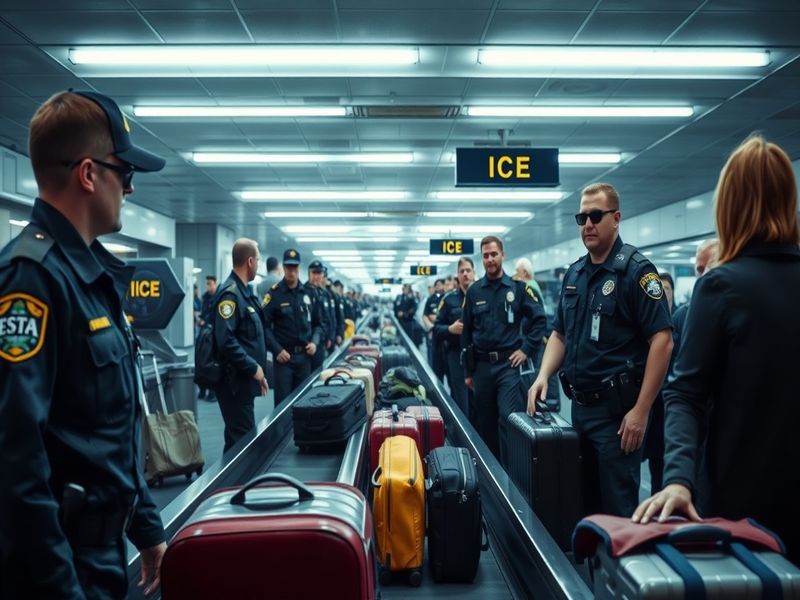
ICE vs TSA: What Travelers Need to Know at Airports
The presence of federal agents at international airports often sparks questions among travelers. Two key agencies—U.S. Immigration and Customs Enforcement (ICE) and the Transportation Security Administration (TSA)—operate in these high-security environments, each with distinct roles. While both contribute to aviation safety and border protection, their functions, authorities, and public perception differ significantly.
Their operations reflect broader immigration policies and security priorities, which have evolved over decades. These agencies don’t just enforce rules—they shape global travel norms and influence how nations manage migration and terrorism threats. To understand their impact, it helps to examine their origins, responsibilities, and the cultural narratives surrounding them.
The Role of ICE Agents in Global Airports
ICE, part of the U.S. Department of Homeland Security, is primarily responsible for enforcing immigration and customs laws. Unlike traditional law enforcement, ICE agents focus on identifying and removing individuals who are in the country unlawfully, including those involved in criminal activity or posing national security risks.
At airports, ICE agents are often deployed in areas where international travelers disembark. Their presence is especially noticeable during high-profile arrivals or when a traveler’s documentation raises red flags. While they don’t screen passengers before boarding, they may conduct interviews, review travel records, or coordinate with airlines to identify high-risk individuals.
Globally, the role of ICE agents extends beyond U.S. borders through partnerships with foreign governments. In countries like Canada, Mexico, and several European nations, ICE collaborates with local authorities to track fugitives and prevent human trafficking. These international relationships highlight how immigration enforcement has become a transnational effort.
However, ICE’s presence at airports has also sparked controversy. Critics argue that its enforcement practices disproportionately target certain immigrant communities, creating fear and distrust among travelers from specific regions. This perception has led to protests and legal challenges in multiple countries, particularly when agents operate near terminals or baggage claim areas.
Key Functions of ICE at Airports
- Coordination with airlines to identify passengers with outstanding warrants or immigration violations
- Interviews and document verification for travelers flagged by customs systems
- Collaboration with foreign law enforcement to track international fugitives
- Response to alerts from the U.S. National Targeting Center regarding high-risk individuals
- Enforcement of customs laws, including seizure of undeclared goods and counterfeit items
The TSA’s Approach to Airport Security
In contrast, the TSA operates strictly within U.S. borders and focuses solely on aviation security. Established in 2001 in response to the 9/11 attacks, the TSA replaced private security contractors with federal agents trained in screening passengers, baggage, and cargo. Its mission is clear: prevent weapons, explosives, and other threats from boarding aircraft.
TSA agents are the ones travelers encounter at checkpoints, scanning boarding passes, patting down passengers, and operating advanced imaging technology. Their work is highly procedural, governed by standardized protocols that prioritize consistency and efficiency. Unlike ICE, the TSA does not enforce immigration laws—its authority is limited to airport security.
Internationally, the TSA’s influence is felt through its partnerships with foreign aviation authorities. Under programs like the TSA’s Foreign Airport Assessment Program, U.S. agents help train security personnel in airports across Europe, the Middle East, and Asia. These efforts aim to harmonize global security standards and reduce vulnerabilities in international travel.
Culturally, the TSA has become a symbol of post-9/11 security culture. Its practices—from shoe removal to full-body scans—have been both parodied and criticized, reflecting broader debates about privacy, efficiency, and the balance between safety and convenience. In many ways, the TSA embodies the tension between security and individual rights in modern travel.
Core Responsibilities of TSA Agents
- Operating advanced screening equipment, including X-ray machines and body scanners
- Conducting pat-downs and physical searches when anomalies are detected
- Enforcing the 3-1-1 rule for carry-on liquids and restrictions on prohibited items
- Training airport staff in security protocols and emergency response
- Coordinating with air marshals and international agencies on threat assessments
Cultural and Political Context: How ICE and TSA Shape Travel
The presence of ICE and TSA agents at airports is not just a logistical reality—it’s a cultural one. In the United States, the TSA has become a fixture of the travel experience, often featured in films, news reports, and viral videos. Its agents are seen as guardians of public safety, even when their methods are questioned.
ICE, on the other hand, occupies a more contested space. Its agents are frequently depicted in political debates, with critics portraying them as enforcers of harsh immigration policies and supporters viewing them as protectors of national security. This divide is especially pronounced in cities with large immigrant populations, where airport encounters can spark protests or legal challenges.
Globally, the perception of these agencies varies widely. In countries with strong bilateral ties to the U.S., such as Japan or Germany, ICE and TSA operations are often viewed as necessary precautions. In nations with strained relations, such as Iran or Venezuela, their presence can be seen as a form of political pressure.
The cultural narratives surrounding these agencies also influence travel behavior. Some passengers alter their routes to avoid airports with a heavy ICE presence, while others prioritize destinations with streamlined TSA processes. These choices reflect broader attitudes toward safety, freedom of movement, and government authority.
Looking Ahead: The Future of Airport Security and Immigration Enforcement
The roles of ICE and TSA are likely to evolve as global travel patterns shift and technology advances. The rise of biometric screening, such as facial recognition and fingerprint scanning, is already transforming how passengers are processed. These innovations could reduce reliance on manual checks and improve both security and efficiency.
However, they also raise concerns about privacy and data collection. As airports become more automated, the human element—represented by ICE and TSA agents—may diminish. This could alter the public’s relationship with these agencies, especially if travelers feel less connected to the enforcement process.
Politically, the future of ICE and TSA will depend on immigration reform and security legislation. Changes in U.S. policy could expand or restrict the agencies’ authority, while international agreements may redefine their global reach. For travelers, these shifts could mean shorter wait times—or heightened scrutiny.
One thing is certain: airports will remain a critical stage for these agencies. Whether enforcing immigration laws or securing flights, ICE and TSA agents will continue to shape the experience of modern travel, for better or for worse.
For those interested in how airport policies intersect with broader security trends, exploring travel security and immigration news can provide deeper insights into these evolving systems.