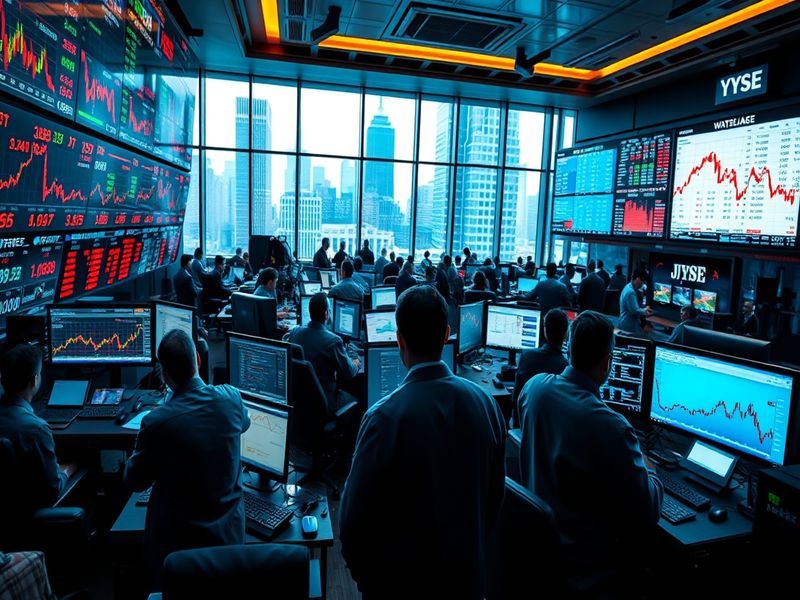
At any given moment, the financial world hums with anticipation about what comes next. While most investors focus on today’s stock prices or last quarter’s earnings, a parallel universe of market futures operates in the background. These futures contracts—legally binding agreements to buy or sell assets at a predetermined price on a future date—serve as a crystal ball for economists, corporations, and policymakers. They reveal collective expectations, hedge against uncertainty, and sometimes even steer the direction of entire industries.
Their influence extends far beyond Wall Street. Market futures quietly shape decisions in agriculture, energy, technology, and beyond. When futures on oil surge, airlines adjust ticket prices months in advance. When tech stock futures wobble, Silicon Valley startups recalibrate their hiring plans. Understanding how these instruments work—and what they’re signaling—can mean the difference between capitalizing on trends and getting blindsided by volatility.
The Mechanics Behind Market Futures
Market futures are standardized contracts traded on regulated exchanges like the Chicago Mercantile Exchange (CME) or Intercontinental Exchange (ICE). Unlike spot trading, where assets change hands immediately, futures allow participants to lock in prices today for delivery at a later date. This mechanism provides stability for producers and consumers alike.
Consider a wheat farmer in Kansas. In March, she might sell a futures contract for September delivery at $6.50 per bushel. By doing so, she guarantees a minimum price for her harvest, shielding herself from a potential price drop caused by an unexpected bumper crop. Conversely, a cereal manufacturer in Chicago might buy the same contract to secure its flour supply, avoiding the risk of a sudden price spike during a drought.
This hedging function is only part of the story. Speculators—traders who don’t produce or consume the underlying asset—also play a critical role. Their bets on price direction provide liquidity, ensuring that hedgers can always find a counterparty. This dual role explains why futures markets often move faster than the physical markets they represent, offering early signals of supply chain stress, geopolitical tension, or shifting consumer demand.
Key Players in the Futures Arena
Several distinct groups interact within futures markets, each with its own motivations and strategies:
- Hedgers: Companies or individuals who use futures to reduce risk exposure. For example, a gold mining firm might sell futures to lock in revenue despite fluctuating gold prices.
- Speculators: Traders betting on price movements without intending to take delivery. Hedge funds and algorithmic trading firms dominate this category.
- Arbitrageurs: Market participants who exploit price discrepancies between futures and spot markets to earn risk-free profits.
- Retail Traders: Individual investors accessing futures through brokerage platforms, often focusing on highly liquid contracts like the E-mini S&P 500.
The interplay between these groups creates a dynamic ecosystem where information—from weather reports to Federal Reserve policy signals—gets priced in almost instantaneously. The result is a living, breathing forecast of where the real economy might be heading.
Reading the Tea Leaves: What Futures Tell Us
Futures markets are often described as leading indicators, offering insights that lagging economic data cannot. While GDP reports or unemployment figures arrive weeks or months after the fact, futures prices reflect real-time expectations about inflation, interest rates, and corporate earnings. This forward-looking nature makes them invaluable for policymakers and strategists.
For instance, the Finance section of Dave’s Locker frequently highlights how Treasury futures move in anticipation of Federal Reserve decisions. If traders price in three quarter-point rate hikes over the next six months, it suggests they expect inflation to remain stubbornly high or the labor market to stay overheated. Conversely, if rate-hike expectations fade, it might signal growing concerns about an economic slowdown.
Commodity futures offer another window into global trends. Oil futures, for example, don’t just reflect supply and demand; they embed geopolitical risk. A sudden spike in Brent crude futures could indicate tensions in the Middle East or a potential disruption in OPEC+ production. Similarly, agricultural futures like soybeans or corn futures can hint at climate patterns, trade policy shifts, or dietary trends.
Beyond the Numbers: The Psychological Factor
Futures markets are not purely mechanical. They are deeply human, influenced by fear, greed, and herd behavior. The infamous “taper tantrum” of 2013 demonstrated this vividly. When then-Fed Chair Ben Bernanke suggested the central bank might slow its bond-buying program, Treasury futures plunged as traders panicked over higher interest rates. The reaction was disproportionate to the actual policy change, illustrating how sentiment can amplify even modest shifts in fundamentals.
Today, the rise of algorithmic trading has further complicated the landscape. High-frequency trading firms now execute millions of futures contracts per second, often based on statistical models rather than human intuition. While this increases efficiency, it also amplifies flash crashes and sudden reversals in sentiment. The May 2010 “Flash Crash,” though originating in equities, sent ripples through futures markets as automated systems triggered stop-loss orders across asset classes.
The Broader Implications of Futures Markets
The influence of futures extends far beyond individual trades or corporate strategies. Their signals ripple through entire economies, shaping everything from monetary policy to social behavior. One of the most underappreciated aspects is their role in resource allocation. When futures prices for lithium surge, mining companies accelerate exploration projects and governments tout “critical mineral” initiatives. This, in turn, affects everything from electric vehicle adoption to renewable energy timelines.
Environmental policy is another area where futures markets intersect with broader societal trends. Carbon credit futures, for example, allow companies to hedge against the cost of emissions regulations. As climate policies tighten, these contracts become a proxy for corporate sustainability commitments. The European Union’s Emissions Trading System (EU ETS) has seen futures prices climb steadily, reflecting both regulatory pressure and investor expectations of a greener future.
Technology futures, too, are reshaping industries in ways few anticipated a decade ago. The rise of Bitcoin futures in 2017 introduced cryptocurrency volatility to traditional finance, forcing banks and regulators to rethink digital asset strategies. More recently, futures tied to artificial intelligence—such as those tracking semiconductor demand—have become a bellwether for tech investment cycles.
Navigating the Risks
While futures offer powerful tools for risk management, they are not without pitfalls. Leverage amplifies gains—and losses. A trader with a $10,000 account can control a $100,000 position in E-mini S&P 500 futures, meaning a 1% adverse move wipes out 10% of the account. This inherent risk is why regulators impose strict margin requirements and why retail traders are often advised to tread carefully.
Regulatory oversight also plays a critical role. The Dodd-Frank Act of 2010 introduced transparency requirements for over-the-counter derivatives, including many commodity futures. These rules aim to prevent the kind of hidden leverage buildup that contributed to the 2008 financial crisis. Yet, regulatory arbitrage remains a concern, with some traders seeking out less-regulated venues to avoid compliance costs.
For the average investor, the key takeaway is that futures markets are best understood as a tool—not a gamble. They provide clarity in uncertain times but require discipline to use effectively. Whether hedging a portfolio against inflation or speculating on the next big tech trend, success depends on separating signal from noise.
Looking Ahead: The Future of Futures
The next chapter for market futures will likely be written at the intersection of technology and regulation. Decentralized finance (DeFi) platforms are experimenting with synthetic futures that eliminate traditional intermediaries, while central banks explore digital currencies that could streamline cross-border settlement. These innovations promise greater accessibility but also introduce new risks, from smart contract vulnerabilities to regulatory uncertainty.
Climate change will further reshape futures markets as extreme weather events become more frequent. Insurers and reinsurers are already using catastrophe bonds and weather derivatives to hedge against hurricanes, wildfires, and droughts. Expect these instruments to grow in sophistication, incorporating satellite data and AI-driven risk models.
For policymakers, the challenge will be balancing innovation with stability. Too much regulation stifles growth; too little invites abuse. The collapse of Archegos Capital in 2021—a family office that lost $10 billion in a matter of days due to reckless futures trading—served as a stark reminder of what happens when oversight lags behind complexity.
Ultimately, market futures will continue to evolve as reflections of human ingenuity and folly. They will capture our hopes for technological progress and our anxieties about economic instability. For those willing to look beyond the noise, they remain one of the clearest windows into the future we’re building—one contract at a time.
As always, the smartest investors don’t just watch the futures markets; they listen to what they’re saying.
Explore More on Dave’s Locker
Interested in diving deeper into financial trends and market analysis? Check out these related categories:
- Finance: For the latest on markets, trading strategies, and economic insights.
- Technology: Where AI, blockchain, and innovation collide with traditional finance.