South Africa vs New Zealand: Rugby’s Greatest Rivalry Explained
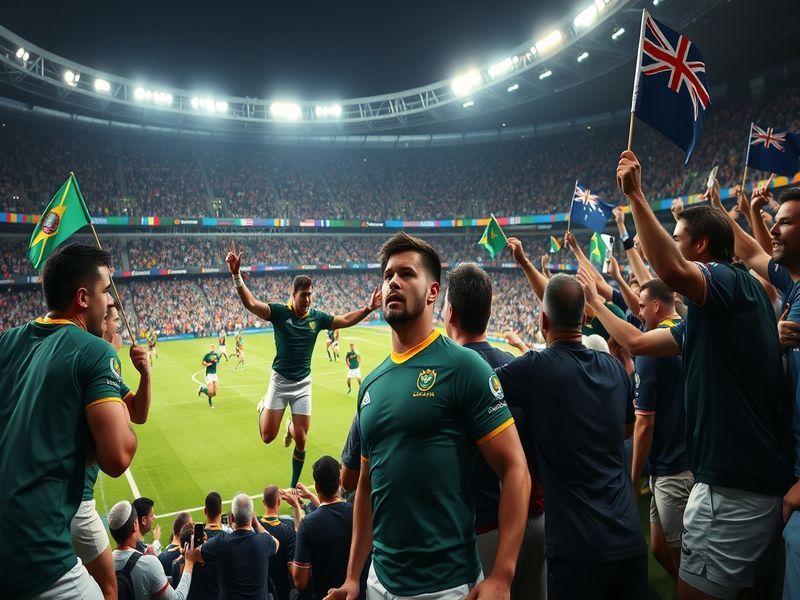
The rivalry between South Africa and New Zealand on the rugby field is one of the most storied in sports history. Both nations have shaped the game in their own ways, producing legendary players, unforgettable matches, and a level of intensity that transcends mere competition. While they share a common love for rugby, their paths to dominance—and the philosophies that guide them—could not be more different.
South Africa’s journey has been defined by resilience, transformation, and a playing style built on physicality and tactical innovation. The All Blacks, meanwhile, are synonymous with fluidity, creativity, and an almost mythical consistency. When these two teams meet, the world watches not just for a game, but for a clash of identities.
Historical Context: From Apartheid to All Blacks
South Africa’s rugby history is deeply intertwined with its social and political evolution. During the apartheid era, rugby became a symbol of division, with the Springboks representing white minority rule. The team’s exclusion from international competition in the 1970s and 1980s was a point of global contention, reflecting broader struggles against oppression.
Everything changed in 1995 when Nelson Mandela famously donned a Springbok jersey to present the World Cup trophy to Francois Pienaar. That moment wasn’t just a sporting triumph; it was a national reconciliation. Since then, South Africa has used rugby as a tool for unity, though the scars of the past still linger in selection debates and cultural discussions.
New Zealand’s rugby story, by contrast, has always been one of privilege and pride. The All Blacks emerged from a colonial past with a sense of destiny, their dominance built on a system that prioritized grassroots development and Māori cultural influence. The haka, performed before every match, is more than a war dance—it’s a declaration of identity, heritage, and intent.
The contrast between the two nations’ rugby narratives is striking. South Africa’s rise was forged in adversity; New Zealand’s was nurtured in a supportive, if competitive, environment. Yet both have produced teams that command global respect.
Playing Styles: Power vs Precision
When these two teams face off, fans are treated to a collision of contrasting philosophies. South Africa’s approach is often brutal in its efficiency. The Springboks are masters of the forward battle, using set-piece dominance and defensive organization to wear down opponents. Their backline may lack the flair of some rivals, but their tactical discipline is second to none.
New Zealand, on the other hand, plays with a blend of elegance and aggression. The All Blacks prioritize quick ball, fluid movement, and offloading to create mismatches. Their backline—featuring players like Beauden Barrett and Damian McKenzie—is designed to exploit space with speed and creativity. Where South Africa suffocates, New Zealand enchants.
This difference in style extends beyond tactics. South Africa’s players are often described as “machine-like” in their preparation and execution. Every ruck, maul, and lineout is drilled to perfection. New Zealand, while equally professional, places a greater emphasis on individual expression within the team structure. The result is a game that feels like a chess match played at sprint speed.
In recent years, South Africa has added more flair to its game, with players like Cheslin Kolbe and Kurt-Lee Arendse injecting creativity into the backline. But even with these changes, the Springboks remain rooted in their forward-driven identity. The All Blacks, meanwhile, have had to adapt to a more physical, attritional style as modern rugby evolves.
Key Matchups and Memorable Clashes
The history between these two teams is rich with drama. Some of rugby’s most iconic moments have come in South Africa vs New Zealand encounters. The 1995 World Cup final, where Jonah Lomu’s power contrasted with Joel Stransky’s precision, remains a defining moment in the sport. Lomu’s try, a blend of brute force and unmatched speed, announced New Zealand’s arrival as a global force.
In 2009, the teams met in a brutal Tri-Nations match in Hamilton. The All Blacks won 29-10, but the physicality was so intense that Springbok prop Tendai “Beast” Mtawarira later called it “the hardest game I’ve ever played.” The game was a microcosm of their rivalry: relentless, unforgiving, and unpredictable.
More recently, the 2023 Rugby Championship saw South Africa claim a 35-22 victory in Johannesburg. The Springboks’ forward pack, led by Siya Kolisi and Eben Etzebeth, dominated the set pieces, while Handré Pollard’s tactical kicking exposed New Zealand’s defensive frailties. It was a reminder that in modern rugby, brute force still has a place.
These matches are more than just games—they are cultural touchpoints. For South Africans, beating the All Blacks is validation of their progress. For New Zealanders, it’s a test of their legacy. The stakes are always high, the emotions even higher.
The Global Impact and Future Outlook
The South Africa vs New Zealand rivalry extends far beyond the pitch. It influences how rugby is perceived globally, shaping everything from coaching philosophies to fan engagement. Both nations have played pivotal roles in growing the sport, whether through South Africa’s post-apartheid influence or New Zealand’s relentless pursuit of excellence.
For fans, these matches are a celebration of rugby’s diversity. South Africa’s story is one of redemption and transformation. New Zealand’s is one of continuity and innovation. Together, they represent what makes rugby unique: a blend of history, culture, and raw athleticism.
Looking ahead, the rivalry shows no signs of fading. South Africa’s next generation—players like Marvin Orie and Manie Libbok—are hungry to build on their predecessors’ success. The All Blacks, though in a transitional phase, remain a powerhouse, with young stars like Ardie Savea and Richie Mo’unga ready to carry the torch.
Both teams will continue to push each other, ensuring that every clash is a masterclass in rugby. For supporters, that’s the real prize: not just victory, but the chance to witness greatness.
As rugby evolves, one thing remains constant: when South Africa and New Zealand step onto the field, the world stops to watch. Their rivalry is a testament to the game’s power to inspire, challenge, and unite.
For more insights into rugby’s biggest stories, explore our Sports and News sections.