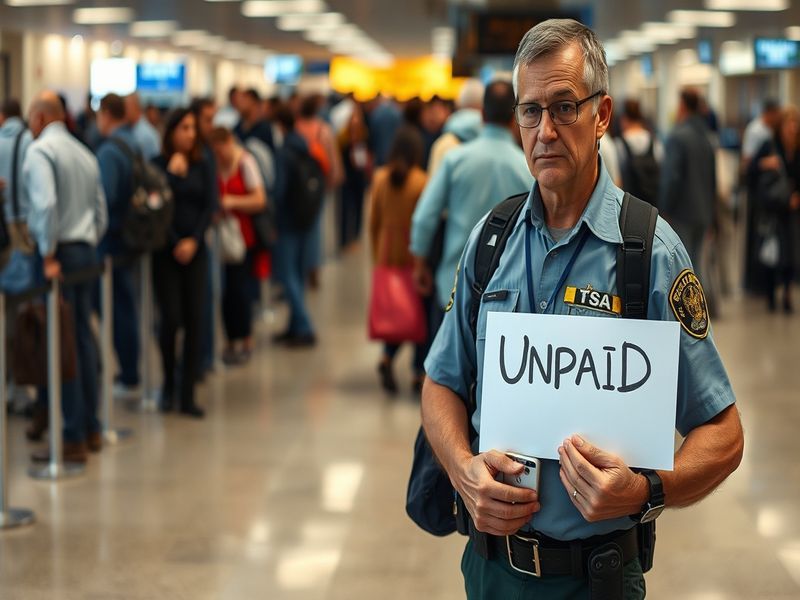
The Transportation Security Administration, or TSA, is a familiar presence for millions of travelers. Its officers stand between passengers and checked baggage, maintaining security standards at airports across the United States. Yet during government shutdowns, these essential workers often face an uncomfortable reality: they continue to work, but they don’t get paid on time—or sometimes at all.
The issue gained renewed attention during recent budget standoffs in Washington. While Congress and the White House debate funding bills, federal agencies like the TSA operate under stopgap measures. Many employees, classified as essential personnel, remain on the job without paychecks until funding is restored. This creates financial uncertainty for thousands of families who rely on consistent income to cover rent, groceries, and school tuition.
The Legal Framework Behind Unpaid TSA Work
Under federal law, certain government operations continue during a shutdown to protect public health, safety, and national security. The TSA falls into this category. Its officers are deemed “excepted” employees, meaning they are required to report to work even when Congress fails to pass a budget. Unlike furloughed workers who stay home, excepted employees perform their duties without immediate compensation.
This system traces back to the 1980s, when President Ronald Reagan signed Executive Order 12346. It established the framework for essential services during funding gaps. Since then, similar protocols have been applied during every major shutdown, including those in 2013, 2018, and 2019. During the 35-day shutdown of 2018–2019, over 80% of TSA personnel reported for duty without pay. Many later received back pay once the government reopened, but the delay created real hardship.
The inconsistency lies in the promise of reimbursement. While the government eventually compensates affected workers, the delay can last weeks or months. For TSA officers earning an average of $40,000 to $50,000 annually, missing even one paycheck can trigger financial stress. Some turn to side jobs, community support, or short-term loans to cover expenses.
How Shutdowns Disrupt Global Travel Flows
TSA delays don’t just affect individual paychecks—they reverberate through the global travel ecosystem. Airports like Los Angeles International (LAX) and Chicago O’Hare handle thousands of international connections daily. A slowdown in U.S. security screening can trigger cascading delays across airlines and destinations.
Consider a passenger flying from London to Sydney via Chicago. If TSA staffing drops due to a shutdown, security lines in Chicago may grow longer. Airlines then face mounting pressure to adjust schedules, potentially stranding travelers or forcing costly rebookings. These ripple effects are felt from Frankfurt to Tokyo, underscoring how a domestic funding crisis can become an international travel headache.
- Airport delays: Longer wait times at U.S. checkpoints can cascade into missed connections worldwide.
- Flight cancellations: Airlines may reduce service to avoid disruptions at understaffed airports.
- Economic impact: U.S. tourism and business travel account for billions in global revenue; shutdowns threaten this flow.
- Diplomatic friction: Foreign governments question the reliability of U.S. travel infrastructure during crises.
In 2019, European airlines reported a 5% increase in flight delays attributed to U.S. airport inefficiencies during the shutdown. While not solely the TSA’s fault, the agency’s reduced capacity amplified the problem.
Cultural and Political Responses to Unpaid Work
The sight of TSA officers working without pay has sparked public debate about fairness, public service, and the ethics of government operations. In 2018, viral videos showed officers holding second jobs as Uber drivers or tutors to make ends meet. These images challenged the narrative that federal employment guarantees financial stability.
Culturally, the TSA occupies a unique space. Unlike police or firefighters—roles often celebrated in media—the TSA is frequently portrayed as bureaucratic or inefficient. Yet during a shutdown, the public sees its officers as frontline workers in a national crisis. This dual perception fuels both sympathy and skepticism.
Politically, the issue has become a bargaining chip. Lawmakers sympathetic to federal workers often cite TSA pay delays as evidence of dysfunction in Congress. Meanwhile, opponents argue that shutdowns are an overused tool in budget battles, disproportionately harming middle-class employees.
In some communities, local churches and nonprofits organize food drives and financial aid for TSA families. These grassroots efforts highlight how shutdowns expose gaps in social safety nets, even in wealthy nations.
Could This Problem Be Solved? Policy Options on the Table
Several proposals aim to prevent TSA officers from working without pay. One approach is “automatic continuing resolutions,” which temporarily extend current funding levels while budget negotiations continue. This prevents abrupt shutdowns and ensures employees receive regular paychecks.
Another solution involves reclassifying TSA officers as non-essential during funding gaps. While this would reduce airport security levels, it would also prevent unpaid work. Critics argue this could compromise safety, especially during peak travel seasons.
A third option is prioritizing back pay funding in emergency legislation. Bills like the “Government Employee Fair Treatment Act” have been introduced to guarantee retroactive compensation within days of a shutdown ending. However, passage remains uncertain in a deeply divided Congress.
Internationally, other countries handle funding gaps differently. Canada’s federal workers continue receiving pay during shutdowns due to pre-authorized budgets. In Germany, essential services are funded through contingency reserves. These models suggest alternatives to the U.S. system of unpredictable funding lapses.
For now, TSA officers remain in a legal and financial gray zone. They serve the public, protect national security, and often pay the price when politics fail.
What Travelers Can Do
While the fate of TSA funding lies with lawmakers, travelers can take steps to minimize disruption. Checking the TSA website or app for real-time updates on wait times helps avoid last-minute surprises. During shutdowns, airports like Atlanta and Dallas often extend operating hours to reduce congestion.
Passengers can also support TSA officers directly. Bringing snacks, water, or kind words doesn’t replace fair pay, but it acknowledges their dedication. Some travelers organize donation drives for affected families, turning frustration into community action.
For frequent flyers, considering travel insurance that covers trip interruptions due to government delays may offer peace of mind. While policies vary, some plans reimburse costs if a shutdown causes flight cancellations or extended waits.
Ultimately, the TSA paycheck gap reflects deeper issues in governance: delayed budgets, partisan gridlock, and a safety net that’s full of holes. Until these are addressed, millions of travelers—and the officers who greet them at security—will continue to navigate the uncertainty together.
For more on how government policies affect daily life, explore our coverage of current events and public service trends.