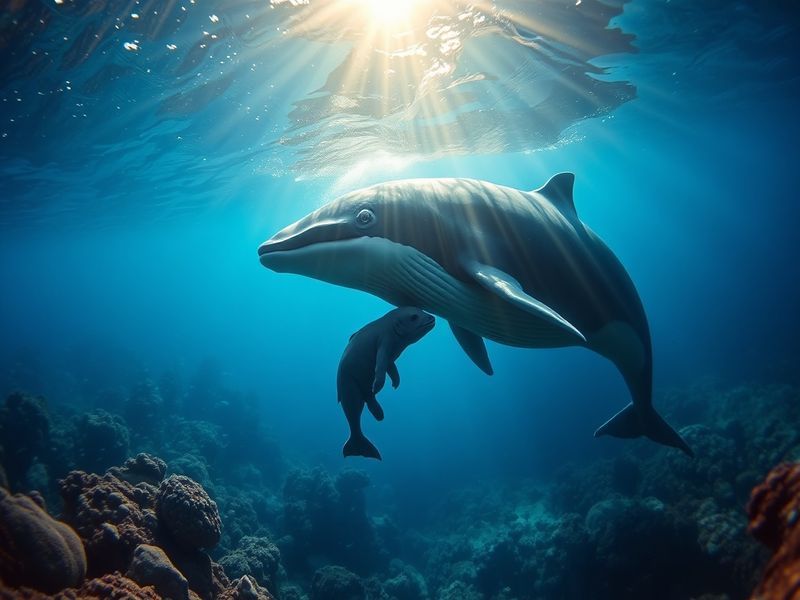
The Remarkable Journey of Sperm Whale Birth
Sperm whales are among the largest marine mammals, known for their impressive size and complex social structures. The process of giving birth is a significant event in the life of these creatures, steeped in both biological importance and emotional depth. Understanding how sperm whales bring new life into the ocean reveals much about their behavior and social dynamics.
Gestation and Birth Process
The gestation period for sperm whales lasts about 11 to 14 months, one of the longest among marine mammals. This lengthy development allows the fetus to grow sufficiently large and strong to survive in the vast ocean. A typical calf measures around 10 to 14 feet at birth and can weigh up to 3,000 pounds.
When the time for birth approaches, a female sperm whale will often seek out shallow waters or areas with calm conditions. This choice provides a safer environment for the vulnerable newborn. The actual birthing process can take several hours, during which the mother will exhibit specific behaviors to facilitate delivery.
- The mother may swim slowly in circles.
- She will occasionally dive deep to help with contractions.
- After the calf is born, she will push it to the surface for its first breath.
Mother-Infant Bonding
The bond formed between a mother sperm whale and her calf is profound. After birth, the mother will assist her calf to the surface, ensuring it takes its first breath. This initial moment sets the stage for a strong maternal bond, which is crucial for the calf’s survival. The mother will care for her young for several years, teaching it essential survival skills such as hunting and social interaction.
During this period, the mother and calf often stay close to each other, swimming together and communicating through a series of clicks and whistles. These vocalizations not only strengthen their bond but also help the calf learn the complex social cues of sperm whale communication.
Social Structure and Support Systems
Sperm whales are social animals, often forming pods that can consist of a few individuals to over twenty. This social structure plays a critical role during the birthing process. Other females in the pod may assist the mother, providing protection and support. They will often swim alongside her, creating a barrier to shield the newborn from potential threats.
These supportive relationships highlight the importance of social bonds within sperm whale communities. The presence of other females can significantly impact the survival rate of the calf, as they contribute to a nurturing environment. This cooperative behavior is observed in several aspects of sperm whale life, from hunting strategies to raising calves.
Challenges Faced by Newborns
Despite the strong support system, newborn sperm whales face numerous challenges. The ocean is a complex ecosystem filled with predators and environmental hazards. Calves are particularly vulnerable to attacks from orcas and other large marine animals. Additionally, they must quickly learn to navigate their surroundings and develop hunting skills.
Some of the challenges faced by newborn sperm whales include:
- Predation from larger marine animals.
- Learning to swim and dive effectively.
- Finding food and developing hunting techniques.
- Adapting to changing ocean conditions and environments.
The survival of the calf largely depends on the mother’s ability to teach and protect it during these formative years. The supportive pod structure can significantly improve the odds of survival for the young sperm whale.
Conclusion
The birth of a sperm whale is a remarkable event that encapsulates the intricate dynamics of marine life. From the lengthy gestation period to the immediate bonding between mother and calf, every aspect of this process is vital for the continuation of the species. Understanding these elements not only highlights the challenges faced by these magnificent creatures but also underscores the importance of conservation efforts aimed at protecting their habitats and social structures.
As we continue to learn more about sperm whales and their behaviors, it becomes increasingly clear that protecting these animals and their environments is essential. For more insights into marine life and conservation, visit our Science and Culture sections.