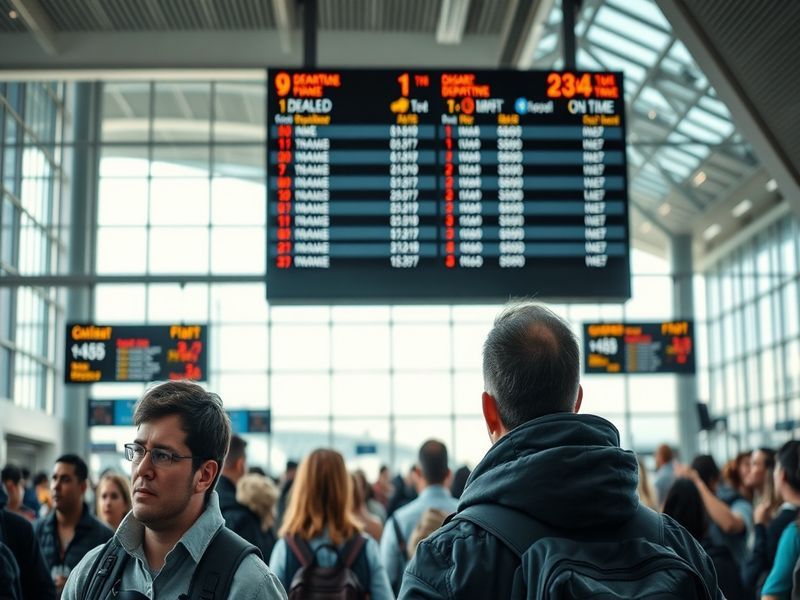
Flight Status: How Real-Time Updates Are Changing Air Travel
The Evolution of Flight Tracking
Flight status tracking has transformed from a luxury to a necessity in modern air travel. Gone are the days when passengers relied solely on airport displays or phone calls to check their departure times. Today’s systems integrate satellite data, airline databases, and weather forecasts to provide minute-by-minute updates. This evolution reflects broader trends in consumer technology, where immediacy and accuracy have become baseline expectations.
The shift began in the 1990s with the introduction of online flight tracking websites. These early platforms scraped data from public sources, offering limited but revolutionary transparency. Airlines soon adopted proprietary systems, allowing passengers to check their flight status directly through airline apps. The real breakthrough came with the integration of GPS and radar data, which enabled real-time tracking of aircraft positions worldwide.
Key Milestones in Flight Tracking Technology
- 1990s: Emergence of first online flight tracking websites using public data.
- 2000s: Airlines launch dedicated apps with basic status updates.
- 2010s: Integration of GPS and weather data for real-time tracking.
- 2020s: AI-driven predictive analytics for delay forecasting and alternative routing.
The Technology Behind Modern Flight Status Systems
Modern flight status systems rely on a complex web of technologies. At their core, they aggregate data from multiple sources: radar systems, airline reservation databases, and air traffic control networks. This data is then processed through algorithms that account for variables like weather, air traffic congestion, and mechanical issues.
One of the most significant advancements has been the use of Automatic Dependent Surveillance-Broadcast (ADS-B) technology. ADS-B allows aircraft to broadcast their position, altitude, and velocity to ground stations and other aircraft. This system, which became widely adopted in the 2010s, provides more accurate and frequent updates than traditional radar.
Another critical component is machine learning. Airlines and third-party services now use AI to predict delays by analyzing historical data alongside real-time inputs. These systems can identify patterns that human analysts might miss, such as the ripple effects of a single delayed flight across an entire network.
The Impact on Passengers and Airlines
For passengers, real-time flight status updates have dramatically reduced uncertainty. Travelers can adjust their plans on the fly, whether it’s catching an earlier flight or knowing exactly how long they’ll need to wait at the airport. This transparency has also reduced stress levels, as passengers no longer feel powerless when facing delays.
Airlines benefit from these systems as well. By identifying potential issues before they escalate, carriers can proactively rebook passengers, reroute aircraft, or adjust crew schedules. This efficiency not only improves customer satisfaction but also reduces operational costs. For example, Delta Air Lines reported a 10% reduction in customer complaints after implementing its real-time tracking system.
However, the reliance on technology is not without challenges. System outages or data inaccuracies can lead to confusion and frustration. In 2021, a glitch in a major airline’s tracking system caused widespread delays, highlighting the vulnerabilities of over-reliance on automated systems.
The Future of Flight Status Tracking
The next frontier in flight status tracking lies in predictive personalization. Imagine a system that not only tells you your flight is delayed but also suggests the best nearby hotel with available rooms or the fastest route to your destination. This level of integration is already being tested by companies like Dave’s Locker Travel.
Another promising development is blockchain technology. Airlines are exploring blockchain to create tamper-proof records of flight data, which could streamline compensation claims for delayed passengers. The European Union’s 2020 Flight Compensation Regulation has already shown how transparent data can empower travelers to claim their rights more effectively.
Sustainability is also becoming a factor. As airlines commit to carbon-neutral goals, flight status systems may incorporate environmental impact data. Passengers could soon see not just delays but also the carbon footprint of their flight, along with options to choose more eco-friendly routes.
What to Expect in the Next Decade
- Hyper-Personalization: AI-driven itinerary adjustments based on real-time data.
- Blockchain Integration: Secure, unalterable records for compensation and refunds.
- Sustainability Metrics: Carbon footprint tracking and alternative route suggestions.
- Augmented Reality: AR overlays in airports showing flight status and gate changes.
Conclusion: A New Era of Transparency and Control
Flight status tracking has evolved from a simple convenience to a cornerstone of modern air travel. The technology behind it continues to advance, driven by demand for transparency, efficiency, and personalization. As these systems become more sophisticated, they will not only enhance the passenger experience but also reshape the economics of the airline industry.
For travelers, the message is clear: the days of uncertainty at the airport are numbered. With real-time updates, predictive analytics, and seamless integration into broader travel ecosystems, passengers now have unprecedented control over their journeys. Airlines, in turn, must continue investing in these technologies to stay competitive and meet the rising expectations of their customers.
As we look to the future, the intersection of flight status tracking with sustainability and blockchain could redefine what it means to travel. One thing is certain: the journey is just beginning.