Notre Dame vs Vanderbilt: College Football’s Historic Academic Rivalry
Few college football rivalries carry the weight of tradition, prestige, and cultural significance quite like the matchups between the University of Notre Dame and Vanderbilt University. While Vanderbilt competes in the Southeastern Conference and Notre Dame as an independent, their occasional gridiron battles have transcended mere athletic competition. These games represent a collision of institutional philosophies, geographic contrasts, and global perspectives that resonate far beyond the borders of the United States.
The Origins of an Unlikely Rivalry
The first meeting between Notre Dame and Vanderbilt took place in 1910, a time when college football was rapidly evolving from a regional pastime into a national spectacle. Notre Dame, founded by French priests in 1842, brought with it a legacy of academic rigor and Catholic tradition. Vanderbilt, established in 1873 under the auspices of the Methodist Episcopal Church South, represented Southern intellectualism and the elite private university model that defined the region’s educational landscape.
Their early encounters were marked by Vanderbilt’s dominance, as the Commodores won five of the first six meetings. This period established a power dynamic that would shift dramatically in the decades to come. By the 1940s, Notre Dame’s football program had ascended to national prominence under the leadership of coaches like Frank Leahy, while Vanderbilt maintained its reputation as an academic powerhouse that prioritized excellence in both scholarship and athletics.
Cultural Contrasts That Define the Matchup
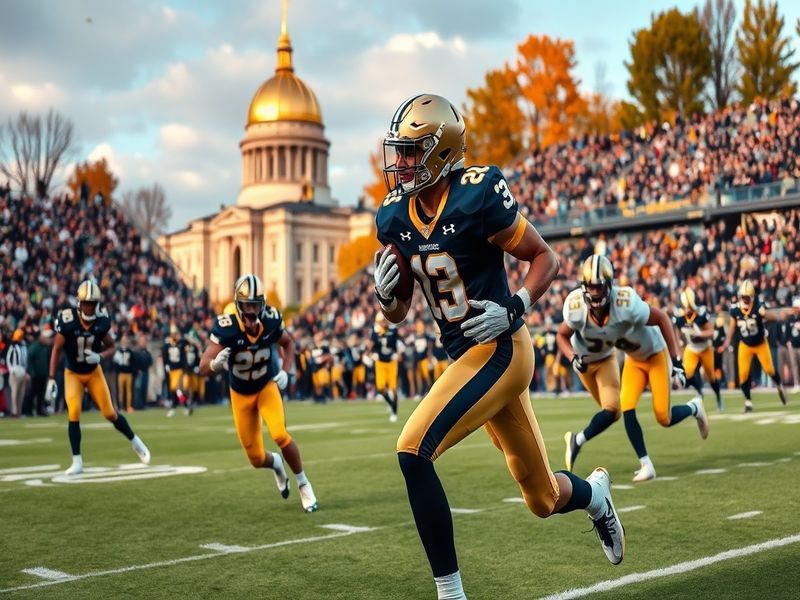
The Notre Dame-Vanderbilt rivalry exists at the intersection of two distinct American cultural narratives. Notre Dame’s identity is inextricably linked to its Catholic heritage and the iconic Golden Dome that overlooks campus. The Fighting Irish have become a global brand, their name and traditions recognized well beyond American shores. Vanderbilt, conversely, embodies the New South’s educational elite—urban, progressive, and cosmopolitan in its approach to both academics and athletics.
This cultural duality plays out in fascinating ways during their occasional matchups. Notre Dame’s fanbase includes millions of Catholic families across the country who view the Fighting Irish as more than just a football team. Vanderbilt, while attracting a more regional following, has cultivated a reputation for producing graduates who excel in both traditional professions and emerging fields like technology and finance. Their student bodies reflect this diversity, with Vanderbilt drawing heavily from the professional classes of the American South and Midwest, while Notre Dame maintains a more nationally diverse enrollment.
The Global Impact of Notre Dame Football
Notre Dame’s football program has long operated on a global stage, a phenomenon that began in the 1920s when legendary coach Knute Rockne pioneered the concept of barnstorming international games. The Fighting Irish have played in venues from Tokyo to Dublin, establishing a brand recognition that few college programs can match. This global footprint has created a unique phenomenon where Notre Dame football serves as an ambassador for American higher education and Catholic values worldwide.
Vanderbilt’s international presence, while less pronounced in athletics, is equally significant in academic circles. The university maintains exchange programs with institutions across Europe, Asia, and Latin America, attracting students from over 90 countries. When these two institutions meet on the football field, they bring these global perspectives with them, creating a microcosm of international education and cultural exchange.
- Notre Dame’s global brand: Recognized in over 100 countries, with alumni networks spanning every continent
- Vanderbilt’s international reach: Over 20% of undergraduate students participate in study abroad programs
- Cultural exchange: The matchup serves as a bridge between American regional identities and global perspectives
Beyond the Gridiron: Academic and Institutional Rivalries
The Notre Dame-Vanderbilt relationship extends far beyond the football field, encompassing a long-standing academic rivalry that has shaped both institutions. Both universities consistently rank among the top 20 national universities in the United States, with Vanderbilt often edging out Notre Dame in recent years according to U.S. News & World Report rankings.
Their academic strengths tell a compelling story of American higher education’s evolution. Notre Dame excels in fields like theology, philosophy, and business, while maintaining its historic strength in undergraduate education. Vanderbilt has emerged as a leader in interdisciplinary research, particularly in medicine, engineering, and the social sciences. Their occasional athletic meetings serve as a reminder of how these institutions compete in the broader marketplace of ideas.
The Role of Football in Institutional Identity
For Notre Dame, football is inextricably linked to its institutional identity. The Fighting Irish have won 11 national championships and produced more NFL players than any other college program. The university’s decision to remain independent in football has allowed it to maintain control over scheduling and television contracts, preserving its unique position in the college sports landscape.
Vanderbilt, by contrast, has taken a more measured approach to athletics. The Commodores compete in the rigorous SEC but have historically prioritized academic excellence over athletic achievement. Their football program has produced notable figures like alumna and tennis legend Margaret Osborne duPont, though the team has struggled to maintain consistent success in recent decades. This difference in approach reflects broader institutional philosophies about the role of sports in university life.
The occasional matchups between these institutions have become something of a litmus test for their respective approaches to athletics. When Notre Dame visits Vanderbilt, it brings the full weight of its football tradition and national following. When Vanderbilt travels to South Bend, it presents an opportunity to showcase the university’s commitment to excellence in all areas of endeavor.
Looking Ahead: The Future of an Enduring Rivalry
As college football continues to evolve, the future of the Notre Dame-Vanderbilt rivalry remains uncertain. Conference realignment, scheduling challenges, and the increasing commercialization of college sports have made traditional matchups increasingly rare. However, the cultural and institutional significance of these games ensures their continued importance.
For Notre Dame, games against Vanderbilt represent an opportunity to showcase its global brand to new audiences. For Vanderbilt, these matchups provide a chance to demonstrate that excellence in athletics can coexist with excellence in scholarship. In an era where college sports are often criticized for losing sight of their educational mission, the Notre Dame-Vanderbilt rivalry serves as a reminder of what intercollegiate athletics can represent.
The next time these institutions meet on the football field, they will bring with them centuries of tradition, cultural significance, and institutional pride. Whether viewed through the lens of American higher education, global sports culture, or the evolution of college athletics, these matchups remain among the most fascinating narratives in college football.
For fans of both institutions, these games offer more than just athletic competition. They represent a celebration of institutional values, a meeting of different American traditions, and a reminder of how sports can bridge divides between regions, cultures, and educational philosophies. In an era where college football often feels increasingly commercialized and removed from its educational roots, the Notre Dame-Vanderbilt rivalry stands as a testament to what intercollegiate athletics can aspire to be.