space exploration
For millennia, humans have gazed upward at the night sky, wondering what lies beyond the boundaries of our planet. The 20th century marked the beginning of our journey into space, transforming those ancient dreams into tangible reality. From the first artificial satellite to the farthest reaches of the solar system, space exploration has reshaped our understanding of the universe and our place within it.
The motivations behind space exploration extend far beyond scientific curiosity. Political rivalries during the Cold War accelerated early missions, while today’s efforts combine international collaboration with private sector innovation. Economic opportunities, national security concerns, and the long-term survival of humanity all play roles in driving this relentless pursuit of the cosmos.
As we stand on the precipice of new discoveries, space exploration continues to captivate both scientists and the public alike. The challenges remain immense, but the potential rewards—both tangible and philosophical—are equally vast.
The Evolution of Space Exploration
The modern era of space exploration began on October 4, 1957, when the Soviet Union launched Sputnik 1, the first artificial satellite to orbit Earth. This 83-kilogram sphere, equipped with four external radio antennas, transmitted simple radio pulses that could be picked up by amateur radio operators worldwide. The launch sparked the Space Race between the United States and Soviet Union, leading to rapid technological advancements.
The early years focused primarily on proving technological capabilities. In 1961, Soviet cosmonaut Yuri Gagarin became the first human in space aboard Vostok 1, completing a single orbit of Earth in 108 minutes. The United States responded with the Mercury program, culminating in 1962 when John Glenn became the first American to orbit the planet. These early missions established the foundation for more ambitious programs.
The Apollo program represents one of humanity’s greatest technological achievements. Between 1969 and 1972, NASA landed twelve astronauts on the Moon through six successful missions. Apollo 11’s Neil Armstrong and Buzz Aldrin became the first humans to walk on another celestial body, fulfilling President Kennedy’s 1961 promise to reach the Moon before the end of the decade. The scientific samples returned from these missions fundamentally altered our understanding of the solar system’s formation.
Key Milestones in Space Exploration
- 1977: Launch of the Voyager 1 and Voyager 2 spacecraft, which have since traveled beyond our solar system, carrying the Golden Record containing sounds and images representing Earth’s cultures
- 1981: First flight of the Space Shuttle Columbia, introducing reusable spacecraft technology
- 1990: Deployment of the Hubble Space Telescope, which has provided unprecedented views of distant galaxies and fundamentally changed our understanding of the universe’s age and expansion
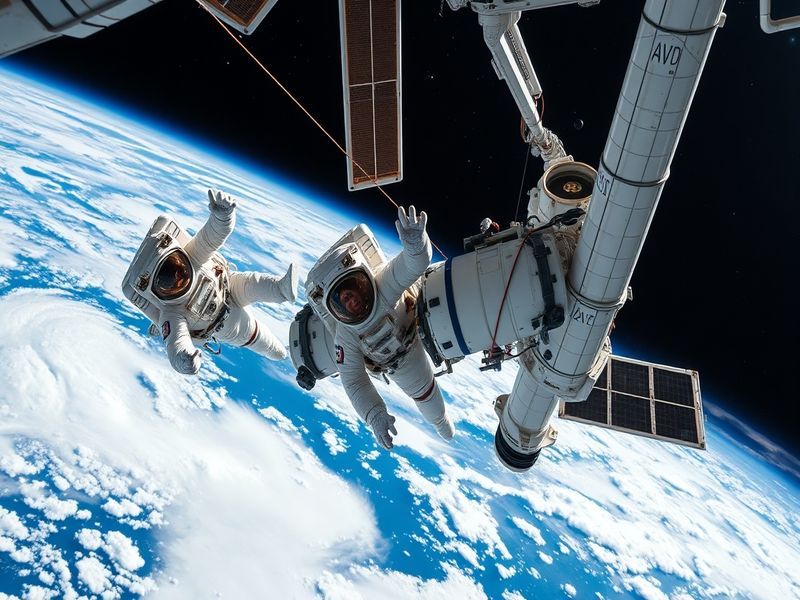
- 1998: Assembly begins on the International Space Station (ISS), representing humanity’s most ambitious international scientific collaboration
- 2012: NASA’s Curiosity rover lands on Mars, discovering evidence of past water activity and laying groundwork for future human missions
- 2022: Successful launch of NASA’s Artemis I mission, marking the first step toward returning humans to the Moon and establishing a sustainable lunar presence
The Scientific and Technological Impact
Space exploration has driven innovations that permeate daily life. Technologies developed for space missions have led to advancements in medical imaging, memory foam, freeze-dried food, and improved water filtration systems. The miniaturization of electronics for spacecraft has directly contributed to the development of modern computers and smartphones.
Satellite technology represents one of the most immediate benefits of space exploration. There are currently more than 4,800 operational satellites orbiting Earth, providing critical services including global communications, GPS navigation, weather monitoring, and environmental tracking. These systems have revolutionized everything from agriculture to disaster response.
Space telescopes like Hubble and the James Webb Space Telescope have transformed our understanding of the cosmos. Hubble’s observations have confirmed the existence of dark energy, measured the rate of the universe’s expansion, and provided evidence for supermassive black holes at the centers of galaxies. The James Webb telescope, launched in 2021, has already revealed unprecedented details about the formation of the first galaxies and the atmospheres of exoplanets.
Research conducted on the International Space Station has yielded breakthroughs in multiple scientific disciplines. Studies on protein crystal growth have led to improved treatments for muscular dystrophy and cancer. Experiments with plant growth in microgravity have advanced agricultural techniques that could support long-duration space missions and address food security on Earth. The unique microgravity environment has also provided insights into fundamental physics that cannot be obtained on Earth.
Challenges and Future Directions
Despite remarkable progress, space exploration faces significant challenges. The cost of missions remains prohibitive, with NASA’s Artemis program estimated to cost $93 billion through 2025. Developing new propulsion technologies could reduce travel time to Mars from seven months to as little as two months, but such innovations require substantial investment and testing.
Radiation exposure poses one of the greatest risks to astronauts on long-duration missions. Beyond Earth’s protective magnetosphere, cosmic rays and solar particle events can increase cancer risks and cause damage to the central nervous system. Current shielding technologies are inadequate for multi-year missions, prompting research into magnetic shielding and pharmaceutical countermeasures.
Psychological challenges also demand attention. The isolation and confinement of long-duration spaceflight can lead to depression, interpersonal conflicts, and cognitive decline. Studies conducted on the ISS and during Antarctic winter-over missions are helping scientists develop strategies to maintain crew mental health during extended missions.
Looking ahead, several ambitious missions are on the horizon. NASA’s Artemis program aims to return humans to the Moon by 2025 and establish a sustainable presence there by the end of the decade. This lunar outpost will serve as a testing ground for technologies needed for Mars missions. SpaceX’s Starship spacecraft is being developed specifically for human missions to Mars, with the company’s CEO Elon Musk stating his goal of establishing a permanent city on the Red Planet.
China has emerged as a major player in space exploration, with its Tiangong space station and ambitious plans for crewed lunar missions. The European Space Agency is developing the ExoMars rover to search for signs of past or present life on Mars, while private companies like Blue Origin and Sierra Space are developing commercial space stations to succeed the ISS.
Commercial Spaceflight and Its Implications
The emergence of commercial spaceflight has dramatically altered the landscape of space exploration. Companies like SpaceX, Blue Origin, and Virgin Galactic have reduced launch costs through reusable rocket technology and innovative business models. SpaceX’s Falcon 9 rocket has achieved a 98% success rate across more than 250 launches, with each launch costing approximately $62 million compared to the Space Shuttle’s estimated $1.6 billion per mission.
This commercialization has opened new opportunities for scientific research, manufacturing, and even tourism. The ISS now hosts commercial experiments through NASA’s Commercial LEO Development program. Private companies are developing capabilities for in-space manufacturing of high-purity fiber optics, pharmaceuticals, and advanced materials that cannot be produced on Earth.
Space tourism, while controversial, has begun to make space accessible to private individuals. In 2021, Blue Origin and Virgin Galactic conducted suborbital flights carrying paying customers. SpaceX’s Inspiration4 mission in 2021 sent four private citizens on a three-day orbital mission, while Axiom Space has contracted with NASA to send private astronauts to the ISS. These developments raise important questions about equitable access to space and the ethical implications of commercial exploitation of celestial bodies.
Ethical and Environmental Considerations
As humanity ventures further into space, ethical questions have come to the forefront. The Outer Space Treaty of 1967 established that space should be used for peaceful purposes and that no nation can claim sovereignty over celestial bodies. However, the Artemis Accords, signed by 43 countries as of 2024, have sparked debate about resource extraction and the militarization of space.
The potential for mining asteroids and the Moon raises questions about property rights and environmental impact. Companies like Planetary Resources and AstroForge have proposed extracting water, platinum, and rare earth metals from asteroids, which could revolutionize industries on Earth but might also deplete resources that future generations could use in space.
Space debris has become an increasingly serious concern. There are currently more than 27,000 pieces of orbital debris tracked by the U.S. Space Surveillance Network, with estimates suggesting there could be millions of smaller pieces. These objects travel at speeds up to 15,700 mph, posing significant risks to operational satellites and future missions. Various solutions are being explored, from active debris removal missions to satellite designs that facilitate safe deorbiting.
The search for extraterrestrial life presents another ethical dimension. If microbial life is discovered on Mars or Europa, protocols exist to prevent forward contamination from Earth organisms. But what if intelligent life is detected? The discovery would have profound implications for philosophy, religion, and our understanding of humanity’s place in the universe.
Conclusion: Why Space Exploration Matters
Space exploration represents more than technological achievement or scientific discovery—it embodies humanity’s fundamental drive to explore, understand, and expand our horizons. The challenges we face in space mirror the challenges we face on Earth, from environmental sustainability to international cooperation. Each mission teaches us not only about the cosmos but about ourselves and our planet.
The knowledge gained from space exploration has practical applications that improve lives on Earth. From life-saving medical technologies to more efficient energy systems, the benefits of space research extend far beyond the boundaries of our planet. As we develop new technologies for surviving in harsh extraterrestrial environments, we often discover solutions to terrestrial problems we didn’t even know existed.
Perhaps most importantly, space exploration fosters a sense of global unity and perspective. The famous “Pale Blue Dot” image from Voyager 1 shows Earth as a tiny speck in the vastness of space, highlighting both our fragility and our interconnectedness. In an era of increasing division, the shared endeavor of space exploration