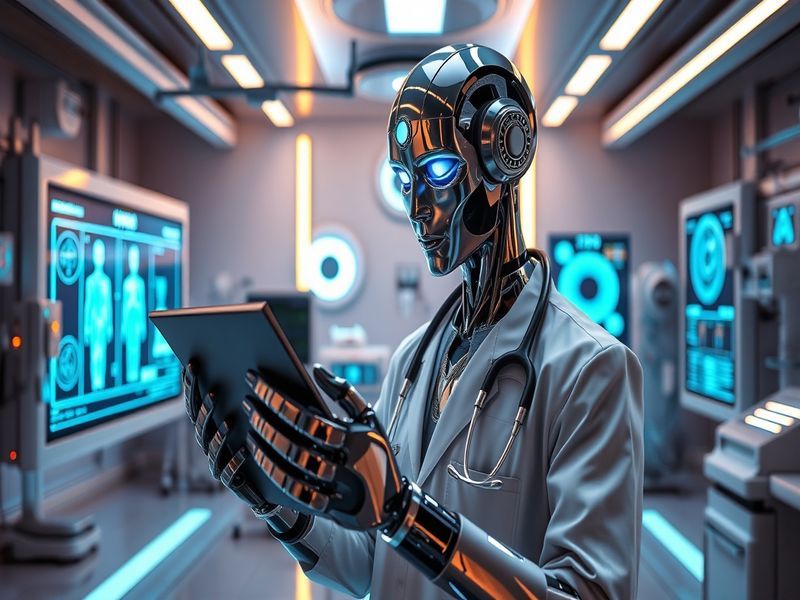
The Rise of AI in Healthcare: The AI Doc Phenomenon
The integration of artificial intelligence in healthcare has ushered in a new era of medical practice. Known as “The AI Doc,” this technology is transforming how patients receive care, how physicians diagnose illnesses, and even how medical records are managed. The impact of AI is not confined to a single country; it spans across continents, providing solutions tailored to the unique challenges of various healthcare systems.
Understanding The AI Doc
The AI Doc refers to a suite of artificial intelligence applications that assist in medical diagnosis, treatment planning, and patient management. These systems utilize vast amounts of data to learn and predict health outcomes, making them invaluable in clinical settings. For instance, algorithms can analyze diagnostic images, identify patterns in patient data, and even suggest treatment options based on the latest research.
As healthcare providers grapple with increasing patient loads and limited resources, AI systems offer a way to enhance efficiency. By handling routine tasks, such as scheduling and initial patient assessments, these systems free up healthcare professionals to focus on more complex cases. The technology has proven particularly useful in areas where medical expertise is scarce, such as rural communities.
Cultural Context and Global Perspectives
The adoption of AI in healthcare is not uniform across the globe. Different regions experience varying levels of access to technology, regulatory environments, and cultural acceptance. In developed countries, AI is often integrated into existing healthcare systems, enhancing the capabilities of seasoned professionals. Conversely, in developing nations, AI can serve as a bridge to healthcare access, providing critical services where human resources are limited.
- Developed Countries: In nations like the United States and Germany, AI tools are often seen as complements to human expertise. Hospitals invest in advanced technologies to improve patient outcomes and reduce costs.
- Developing Countries: Countries such as India and Nigeria utilize AI to address gaps in healthcare access. Mobile applications and telemedicine powered by AI provide consultations and diagnoses to underserved populations.
- Cultural Acceptance: In some cultures, there is skepticism towards AI, particularly in areas like mental health, where human empathy is crucial. Understanding local attitudes toward technology is essential for successful implementation.
The Benefits and Challenges of AI in Healthcare
While the benefits of The AI Doc are numerous, challenges remain. On one hand, AI can significantly improve diagnostic accuracy and efficiency, leading to better patient outcomes. On the other hand, ethical concerns arise regarding data privacy, algorithm bias, and the potential for job displacement in the medical field.
Here are some key benefits:
- Enhanced Diagnostics: AI systems can analyze vast amounts of data quickly, identifying conditions that might be missed by human practitioners.
- Cost Efficiency: Automating routine tasks reduces operational costs and allows healthcare providers to allocate resources more effectively.
- Personalized Medicine: AI can analyze individual patient data to tailor treatments, resulting in more effective healthcare solutions.
Conversely, practitioners must consider the following challenges:
- Data Privacy: The handling of sensitive patient data raises significant privacy concerns that must be addressed through strict regulations.
- Algorithm Bias: If AI systems are trained on non-diverse datasets, they may produce biased outcomes, potentially leading to health disparities.
- Job Displacement: As AI takes on more tasks traditionally performed by humans, there is a fear of job loss within the healthcare sector.
Looking Ahead: The Future of AI in Healthcare
The future of The AI Doc in healthcare appears bright, yet it will require ongoing collaboration among technologists, healthcare providers, and policymakers. As AI continues to evolve, it is essential to prioritize ethical considerations and ensure equitable access to these technologies.
Investment in education and training will also be critical. Healthcare professionals must be equipped with the skills to work alongside AI, understanding its capabilities and limitations. This integration will foster a partnership that maximizes the strengths of both human intuition and AI efficiency.
Ultimately, The AI Doc represents a significant shift in how healthcare is delivered. By embracing this technology responsibly, societies can improve health outcomes and create a more inclusive healthcare system. The journey of AI in healthcare is just beginning, and its potential is only beginning to be realized.