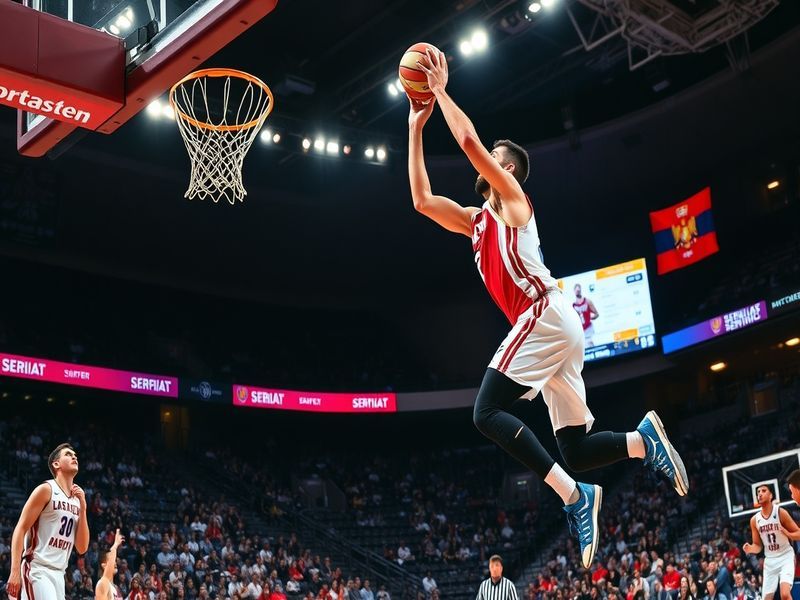
Predrag “Peja” Stojaković remains one of the most influential European basketball players to ever step onto an NBA court. Born on June 9, 1977, in Požega, Croatia, he emerged from a continent not traditionally known for producing elite NBA talent during the late 1990s and early 2000s. Yet, through sheer skill, persistence, and an unmistakable shooting touch, Stojaković carved out a legacy that transcended borders and inspired generations of international players.
His journey from the small courts of Croatia to the bright lights of the NBA is a testament to ambition, adaptability, and the globalizing nature of professional sports. Stojaković played a pivotal role in normalizing the presence of European players in the league, paving the way for stars like Dirk Nowitzki, Giannis Antetokounmpo, and Luka Dončić. His story is not just about basketball—it’s about cultural exchange, perseverance, and the evolution of the game itself.
The Rise of a Shooting Star in Europe
Stojaković began playing basketball at a young age in his hometown, where his father, a former professional player, introduced him to the game. By his teens, he was already drawing attention for his smooth left-handed stroke and high basketball IQ. At 16, he joined the youth system of KK Crvena zvezda (Red Star Belgrade) in Serbia, a move that would shape his early career.
Despite limited playing time initially, Stojaković’s dedication was evident. His breakout came during the 1997–98 season with PAOK Thessaloniki in Greece, where he averaged nearly 20 points per game. There, he showcased the three-point shooting and footwork that would become his trademarks. Scouts took notice, and in the 1996 NBA Draft, the Sacramento Kings selected him with the 14th overall pick—a gamble on a European player that would soon pay off.
The Kings, under the leadership of coach Rick Adelman, were building a team around speed and spacing, a system tailor-made for Stojaković’s skills. His rookie season was modest, but by his third year, he had become a reliable scorer off the bench. The turning point came during the 1999–2000 season when he emerged as a starter and began to display the offensive firepower that would define his career.
From Bench Player to All-Star
Stojaković’s breakthrough was gradual but undeniable. By the 2000–01 season, he was averaging over 20 points per game, becoming the first European player to lead the NBA in three-point field goals made. His ability to shoot off the dribble, combined with his clutch performances, made him a fan favorite in Sacramento. The Kings, led by Chris Webber and Vlade Divac, became one of the league’s most exciting teams, and Stojaković was a key reason why.
His most memorable season came in 2003–04 when he averaged 24.2 points per game, earned his first All-Star selection, and finished second in the Three-Point Shootout at All-Star Weekend. That year, the Kings pushed deep into the playoffs, reaching the Western Conference semifinals, where they fell to the Minnesota Timberwolves in a hard-fought seven-game series. Stojaković’s shooting and leadership were instrumental in their success, cementing his reputation as a big-game player.
Off the court, Stojaković was known for his humility and professionalism. He embraced his role as a bridge between American and European basketball, often speaking about the importance of cultural exchange in sports. His success helped shift perceptions about international players, proving that talent and work ethic mattered more than nationality.
The Global Impact of a European Pioneer
Stojaković’s impact extended far beyond the NBA. He became a cultural icon in Europe, inspiring young players across the continent to pursue basketball dreams. Before stars like Nowitzki and Tony Parker, Stojaković was one of the few Europeans with a prominent NBA profile, and his success helped legitimize the path for future generations.
His influence was particularly strong in the Balkans, where basketball has deep roots. In Serbia, Croatia, and beyond, he was celebrated not just as a player, but as a symbol of what could be achieved with talent and determination. His humility and accessibility made him relatable, and he often returned to Europe during the offseason to host camps and mentor young players.
Stojaković’s international career also flourished. He represented the Yugoslav national team in multiple EuroBasket and FIBA World Championship tournaments, winning gold at the 2001 EuroBasket and the 2002 FIBA World Championship. His ability to perform under pressure in high-stakes games further solidified his reputation as one of Europe’s all-time greats.
Legacy and Influence on the Modern Game
When Stojaković retired in 2011 after a brief stint with the Dallas Mavericks and a final season with the Toronto Raptors, he left behind a career that had redefined the role of international players in the NBA. His career averages of 17.0 points per game and 40.1% three-point shooting remain impressive even by today’s standards, and his style of play—characterized by movement, shooting, and IQ—has become a blueprint for modern wing players.
Stojaković’s legacy is also tied to the evolution of the three-point shot. During his prime, the league was still adapting to the long-range revolution. His success helped popularize the idea that shooting wasn’t just a secondary skill—it was a primary weapon. Today, teams prioritize shooting like never before, and players from around the world benefit from the path he helped clear.
His post-retirement life has been equally impactful. Stojaković has remained involved in basketball, serving as a consultant and ambassador for the game. He has also been active in philanthropy, supporting youth sports programs in Europe and the United States. His story is a reminder that sports can be a force for unity and opportunity across cultures.
Lessons from Peja’s Journey
Stojaković’s career offers several key lessons for athletes, fans, and observers of the game. First, it underscores the importance of adaptability. Moving from Yugoslavia to Greece to the NBA required resilience and openness to new cultures and systems. Second, his story highlights the value of specialization. While many players focus on multiple skills, Stojaković perfected his shooting to the point where it became a defining trait.
Another lesson lies in his team-first mentality. Despite being a scorer, he never let ego overshadow the goal of winning. His chemistry with teammates, particularly in Sacramento, was a critical factor in the Kings’ success during the early 2000s. Finally, Stojaković’s journey is a testament to the power of representation. By excelling in the NBA, he showed European players that the league was not just an American preserve—and that belief has opened doors for countless athletes since.
For those interested in the broader context of international players in the NBA, Sports at Dave’s Locker offers deeper insights into how global talent has transformed the league. His story is part of a larger narrative about the globalization of basketball, a trend that continues to shape the sport today.
A Career Defined by Moments
Some of Stojaković’s most memorable moments came in clutch situations. His 2002 playoff run with the Kings, where he averaged 20.5 points per game, was a masterclass in playoff shooting. In the 2004 playoffs, his 42-point outburst against the Dallas Mavericks in the first round remains one of the most dominant individual performances in Kings playoff history.
He was also a key figure in the 2011 Mavericks’ championship run, though his role was more complementary than in his Sacramento days. Still, his experience and shooting provided a steadying influence as Dallas navigated a deep playoff run. It was a fitting end to a career that had spanned over a decade at the highest level.
Today, Stojaković is often mentioned alongside other European pioneers like Divac, Nowitzki, and Parker. But his journey is unique in that he was among the first to truly break through in the modern NBA era. His impact can still be felt in the way the league values international players, and in the growing number of European stars who now dominate the conversation.
As basketball continues to evolve, Stojaković’s legacy serves as a reminder of what it takes to succeed on a global stage. Talent, hard work, and humility—those were the ingredients of his success. And for that, he remains an inspiration to players and fans around the world.