Slick Rick: How One MC Defined Hip-Hop’s Golden Era
By John Mercer
Hip-hop’s founding fathers didn’t just build an art form—they constructed a legacy. Among them, Slick Rick stands out as one of the most visually arresting, lyrically precise, and culturally influential figures to ever step into a recording booth. With a signature eye patch, velvet-lined rhymes, and a storytelling prowess that bridged Jamaican patois and Bronx bravado, Rick didn’t just rap—he narrated a new chapter in Black American music.
Born Richard Walters in 1965 in the Bronx, Slick Rick rose from humble beginnings to become one of the first true stars of hip-hop. His 1988 debut, The Great Adventures of Slick Rick, remains a landmark album, not just for its technical innovation but for its narrative depth. Decades later, his influence echoes through generations of MCs, from Nas to Kendrick Lamar, proving that great artistry transcends time.
The Genesis of a Legend: From the Bronx to the Charts
Slick Rick’s journey began in the housing projects of the Bronx, where block parties and park jams birthed a new sound. Discovered by Doug E. Fresh in the early 1980s, Rick quickly became a fixture in the growing hip-hop scene. His partnership with Fresh yielded iconic tracks like “The Show” and “La Di Da Di,” the latter becoming one of the most sampled songs in history.
But Rick’s solo career catapulted him to legendary status. The Great Adventures of Slick Rick didn’t just debut at number one on the Top R&B/Hip-Hop Albums chart—it redefined what a rap album could be. Tracks like “Children’s Story” and “Teenage Love” combined cinematic storytelling with street-level authenticity. Rick’s use of Jamaican patois, British inflection, and vivid character sketches made his music instantly recognizable.
“Slick Rick didn’t rap—he directed. Every rhyme was a scene, every bar a character study.”
His flow was deliberate, his delivery hypnotic. Unlike the rapid-fire punchlines of his peers, Rick favored a measured cadence, letting each syllable land with precision. This approach wasn’t just stylistic—it was revolutionary. It proved that rap could be both rhythmic and literary, both streetwise and sophisticated.
The Visual Icon: How Slick Rick Became a Cultural Symbol
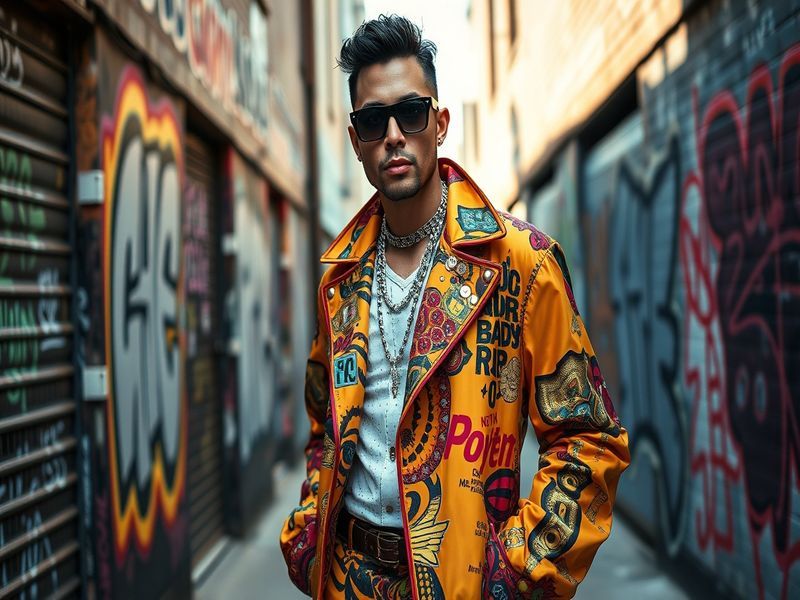
Slick Rick’s aesthetic was as integral to his identity as his lyrics. The eye patch—worn due to a childhood accident—became more than a medical necessity. It was a fashion statement, a symbol of resilience, and a brand unto itself. Paired with his velvet jackets, gold chains, and aristocratic demeanor, Rick crafted an image that was regal yet grounded, regal yet dangerous.
This visual identity extended beyond music. Rick’s presence in music videos, magazine covers, and even comic book-style album art helped cement hip-hop’s place in mainstream culture. He wasn’t just a rapper—he was a lifestyle. His influence can be seen in the fashion choices of artists like A$AP Rocky and Tyler, The Creator, who have cited Rick as a sartorial inspiration.
But Rick’s image wasn’t just about looks. It was about defiance. In an era when Black youth were often portrayed as threats or caricatures, Rick presented himself as a gentleman—elegant, intelligent, and unapologetically Black. This duality—street poet and aristocrat—allowed him to navigate both the underground and the mainstream with ease.
Legacy and Influence: The Slick Rick Blueprint
Slick Rick’s impact on hip-hop is immeasurable. His storytelling techniques laid the groundwork for narrative rap, influencing everyone from Nas on Illmatic to Kendrick Lamar on good kid, m.A.A.d city. His flow and delivery have been sampled, interpolated, and homaged by artists across generations, from Jay-Z to Drake.
But Rick’s influence extends beyond music. His visual aesthetic has shaped hip-hop fashion, from the velvet jackets he popularized to the gold chains he wore with pride. His unapologetic embrace of his identity—both as a storyteller and as a man with a disability—has made him a symbol of perseverance and authenticity.
Here’s a look at some of the key elements of Slick Rick’s legacy:
- Narrative Rap Pioneer: Rick’s ability to weave complex stories into his music set the standard for lyrical storytelling in hip-hop.
- Visual Icon: His eye patch and velvet style became synonymous with hip-hop’s golden era, influencing fashion and aesthetics.
- Cultural Ambassador: Rick bridged gaps between Jamaican patois and Bronx hip-hop, creating a sound that was both global and deeply local.
- Influence on Generations: From Nas to Kendrick Lamar, countless rappers have cited Rick as a major inspiration.
Why Slick Rick Still Matters in 2023
In an era dominated by streaming, viral moments, and fleeting trends, Slick Rick’s music remains timeless. His albums are still studied in music theory classes, his lyrics quoted in academic papers, and his influence acknowledged by modern artists. This longevity speaks to the universality of his themes—love, loss, struggle, and triumph—topics that resonate across generations.
But Rick’s relevance isn’t just historical. His recent collaborations with younger artists, like his feature on A$AP Rocky’s “Praise the Lord (Sick Remix),” prove that his voice still carries weight. In a genre that often prioritizes youth and novelty, Rick’s ability to stay relevant for over four decades is nothing short of extraordinary.
Moreover, Rick’s story is one of resilience. Despite facing legal challenges and personal setbacks, he has remained a respected figure in hip-hop. His 2023 induction into the Rock & Roll Hall of Fame as part of the first class of hip-hop artists underscores his place in music history.
Slick Rick didn’t just shape hip-hop—he helped define what it means to be an artist. He proved that rap could be both art and entertainment, both street and sophisticated. His legacy is a reminder that greatness isn’t measured in hits or streams, but in influence and integrity.
For more on hip-hop’s golden era and its enduring impact, explore our Music and Culture sections.