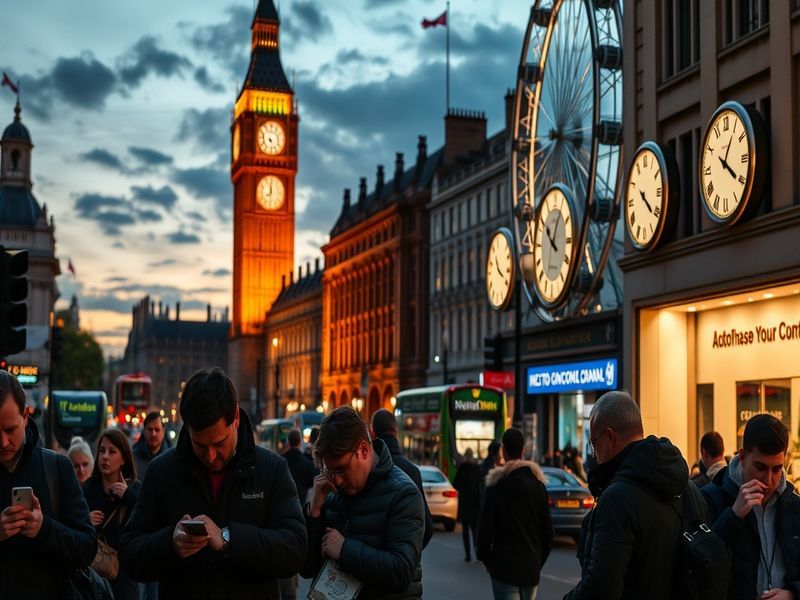
UK Time Change: Why Clocks Move and Its Impact on Daily Life
Understanding the UK’s Timekeeping Ritual
The United Kingdom, like many countries, adjusts its clocks twice a year. This practice, known as Daylight Saving Time (DST), involves moving the clock forward by one hour in spring and back by one hour in autumn. The change is designed to make better use of daylight during the longer days of summer, but its impact extends beyond just the ticking of a clock.
The tradition traces its roots to the early 20th century, when Germany first implemented DST in 1916 as a wartime energy-saving measure. The UK followed suit later that year, and the practice has since become a global norm, though not without controversy. While the original intent was to conserve energy, modern studies question whether the benefits still outweigh the drawbacks, particularly in today’s interconnected world.
The Science Behind the Clock Change
The UK’s time change occurs at 1 AM Greenwich Mean Time (GMT), shifting to British Summer Time (BST) in March and reverting to GMT in October. This shift is calculated to align with the Earth’s axial tilt and its orbit around the Sun, ensuring that the sun rises and sets at more socially convenient times. For example, in summer, moving the clock forward extends evening daylight, which historically helped reduce energy consumption by decreasing the need for artificial lighting.
However, the science behind DST is not without its critics. Research has shown that the abrupt change can disrupt circadian rhythms, leading to sleep disturbances and increased stress levels. A study published in the Journal of Sleep Research found that the spring transition can cause a temporary spike in heart attacks and workplace accidents due to sleep deprivation. The autumn change, while less impactful, still poses challenges for those adjusting to earlier sunsets.
Cultural and Historical Context
The UK’s relationship with time is deeply intertwined with its history and culture. The country’s adoption of DST reflects its pragmatic approach to balancing tradition with modernity. Unlike some European nations that have experimented with abolishing DST, the UK has largely maintained the practice, though debates continue about its relevance.
The concept of “summer time” was first proposed by British builder William Willett in 1907. Willett campaigned for the idea, arguing that people wasted daylight hours in summer by sleeping through them. His efforts culminated in the Summer Time Act of 1916, which was enacted during World War I to save fuel for the war effort. The act was so successful that it became a permanent fixture, even after the war ended.
Today, the UK’s time change is a cultural touchstone, marked by public discussions and media coverage. While some regions, like Scotland, have debated whether to abandon DST due to its impact on shorter winter days, the practice remains a staple of British life. The clock change is also a reminder of how timekeeping shapes societal routines, from school schedules to sports events.
Global Perspectives on Time Adjustments
The UK is not alone in its biannual clock changes. Over 40 percent of countries worldwide observe DST, though the practice is increasingly controversial. The European Union has considered abolishing DST, with a 2018 survey showing that 84 percent of respondents favored ending the practice. However, the EU has yet to reach a consensus, leaving individual member states to decide their own policies.
In contrast, some regions have permanently abandoned DST. Russia, for instance, scrapped the practice in 2014, opting to stay on permanent “summer time.” Similarly, Turkey ended DST in 2016, though it later reintroduced the practice in 2022. These shifts highlight the ongoing debate about whether DST is a relic of the past or a necessary adaptation to modern life.
The UK’s approach to time change also contrasts with that of the United States, where the dates for DST were extended in 2007 under the Energy Policy Act. This change aimed to reduce energy consumption, though critics argue it has had little impact. Meanwhile, countries near the equator, where daylight hours remain relatively constant year-round, do not observe DST at all.
Practical Implications for Daily Life
The UK’s clock change affects more than just sleep patterns. It influences everything from transportation schedules to agricultural activities. For example, farmers often rely on natural daylight to plan their work, and sudden changes can disrupt routines. Similarly, airlines and train companies must adjust timetables to accommodate the shift, which can lead to temporary disruptions.
Businesses also feel the impact. Retailers, particularly those in tourism and hospitality, often see increased foot traffic during longer summer evenings. However, the transition can also lead to short-term declines in productivity as workers adjust to the change. Schools, too, face challenges, with some districts delaying start times in the weeks following the clock change to help students adapt.
For individuals, the most immediate effect is the disruption to sleep. The loss of an hour in spring can lead to fatigue, irritability, and difficulty concentrating. To mitigate these effects, experts recommend gradually adjusting sleep schedules in the days leading up to the change. Exposure to natural light in the morning can also help reset the body’s internal clock.
Should the UK Abandon Daylight Saving Time?
The debate over DST is far from settled. Proponents argue that the practice saves energy and reduces traffic accidents by providing more daylight in the evening. A 2020 study by the University of Colorado Boulder found that DST reduces pedestrian fatalities by 8 percent during evening hours. However, opponents point to the health risks and the inconvenience of twice-yearly adjustments.
Some countries have experimented with permanent time zones to avoid the disruptions of DST. For example, the European Union proposed allowing member states to choose between permanent summer or winter time. While this would eliminate the need for clock changes, it could lead to fragmented timekeeping across the continent, complicating travel and commerce.
In the UK, the discussion often centers on the impact on Scotland and Northern Ireland, where shorter winter days are already a challenge. A 2019 petition to abolish DST in Scotland gained significant traction, reflecting broader concerns about the practice’s relevance. However, any change would require coordination with neighboring countries to avoid creating timekeeping inconsistencies.
Looking Ahead: The Future of Timekeeping
As technology advances, the need for DST may diminish. Smart lighting systems and energy-efficient appliances reduce the reliance on natural daylight for energy savings. Meanwhile, digital calendars and smart devices can automatically adjust to time changes, lessening the burden on individuals.
Yet, the tradition of clock changes persists, rooted in a century of habit. For now, the UK will continue to move its clocks forward and backward, even as the world around it evolves. Whether this practice will endure in the long term remains an open question, but for now, it remains a defining feature of the British calendar.
The UK’s time change is more than a quirk of the calendar—it’s a reflection of how societies adapt to their environments. While the debate over DST continues, one thing is certain: the ticking of the clock will remain a constant, even as the world around it changes.