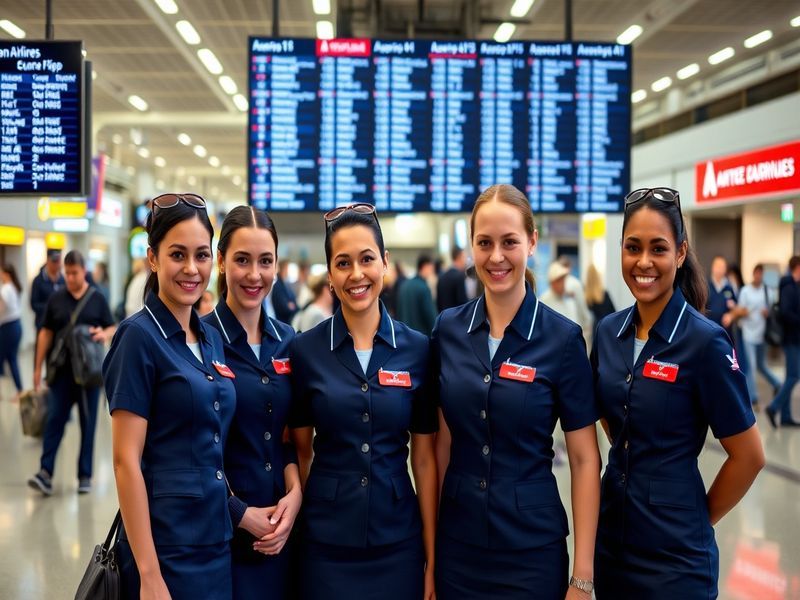
What American Airlines Flight Attendants Really Do (Beyond Serving Drinks)
American Airlines operates one of the largest flight networks in the world, connecting passengers across six continents. While pilots often receive the most attention, the airline’s 21,000 flight attendants form the backbone of its customer experience. These professionals handle everything from safety demonstrations to meal service, ensuring smooth operations during flights that can last anywhere from 30 minutes to nearly 17 hours.
The role has evolved significantly since the 1930s, when flight attendants were primarily registered nurses who performed medical duties and maintained cabin cleanliness. Today’s flight attendants undergo rigorous training to manage everything from emergency medical situations to de-escalating passenger conflicts. Their work combines hospitality, safety enforcement, and public relations—often all within the same flight.
The Training Pipeline: From Applicants to Certified Crew Members
Becoming an American Airlines flight attendant is more competitive than many realize. The airline receives over 100,000 applications annually for approximately 2,000 open positions. Candidates must meet several requirements before even being considered: they need at least two years of customer service experience, the legal ability to work in the U.S., and the ability to relocate to one of American’s crew bases in cities like Dallas, Miami, or New York.
Once selected, recruits enter a six-week training program at the airline’s Flight Academy in Fort Worth, Texas. The curriculum covers an exhaustive range of topics. Trainees study Federal Aviation Administration (FAA) regulations, practice emergency evacuations, learn CPR and first aid techniques, and receive instruction in handling hazardous materials. They also complete extensive role-playing exercises to prepare for difficult passenger scenarios, from medical emergencies to intoxicated travelers.
- Safety Training (30% of curriculum): Evacuation procedures, fire suppression, emergency equipment operation
- Customer Service (25%): Conflict resolution, cultural sensitivity, service recovery techniques
- Regulatory Compliance (20%): FAA rules, American Airlines policies, alcohol service laws
- Medical Training (15%): Basic life support, defibrillator operation, emergency childbirth protocols
- Cultural Training (10%): Language basics, international travel norms, religious accommodation practices
Graduation rates hover around 85%, with the most common reasons for attrition being the physical demands of training or failing to meet performance benchmarks during simulations. Those who complete the program receive their wings and are assigned to a base, where they begin flying actual routes while under supervision.
A Day in the Life: The Reality of Life 35,000 Feet Up
Flight attendant schedules operate on a seniority-based system that determines both routes and days off. Senior crew members typically choose the most desirable trips—short-haul flights to vacation destinations or overnight stays in premium hotels—while newer attendants often get assigned to less desirable routes with early departures or overnight layovers in less comfortable cities.
Contrary to popular belief, flight attendants don’t get paid for the hours they spend in the air. Their compensation covers only the time from when the aircraft door closes at departure until it opens at arrival. Time spent waiting for delayed flights, overnight stays between flights, and pre-flight preparations are considered “deadhead” time and are unpaid. This has led to ongoing labor disputes about fair compensation for the extensive time crews spend working.
On a typical transcontinental flight from New York to Los Angeles, a flight attendant’s day might begin three hours before departure. They arrive at the airport to check in, receive their flight assignments, and review any special passenger needs or crew communications. After a briefing with the purser (lead flight attendant), they board the aircraft to prepare the cabin, stock supplies, and perform safety checks.
During the flight, attendants must balance efficiency with hospitality. They complete safety demonstrations, serve meals and beverages, assist passengers with special needs, and monitor cabin conditions. The physical demands are considerable—standing for hours, lifting heavy beverage carts, and maintaining composure during turbulent weather or medical emergencies. Between flights, they often need to rest quickly to prepare for their next departure.
The Unseen Challenges: Mental Health and Workplace Pressures
While the job appears glamorous from the outside, flight attendants face unique mental health challenges. The irregular schedule disrupts circadian rhythms, leading to sleep disorders and fatigue. Jet lag isn’t just an inconvenience—it can impair cognitive function and increase accident risk. Many attendants report using sleep aids or relying on caffeine to function during layovers that don’t align with normal sleep patterns.
Customer interactions present another layer of stress. Flight attendants encounter everything from intoxicated passengers to those experiencing medical emergencies mid-flight. The FAA reports that flight attendant injuries from passenger altercations increased by 61% between 2010 and 2020. While attendants are trained in de-escalation techniques, they often have limited backup when dealing with aggressive travelers. American Airlines has implemented training programs to help crew members recognize and respond to mental health crises among passengers.
The COVID-19 pandemic introduced additional stressors. Flight attendants became frontline workers, enforcing mask mandates while dealing with passenger hostility over changing health protocols. Many reported increased anxiety about contracting the virus, especially during the early months when protective equipment was scarce. The pandemic also led to significant staffing shortages, with many attendants choosing early retirement or leaving the industry entirely due to health concerns.
The Future of Flight Attendants: Automation and Changing Passenger Expectations
As airlines explore automation to reduce costs, flight attendant roles face potential evolution rather than elimination. American Airlines has tested robotic drink carts on some routes, though attendants remain essential for complex passenger needs and safety enforcement. The more immediate threat comes from changing passenger expectations. With the rise of budget airlines, customers increasingly expect minimal service, putting pressure on attendants to maintain quality while airlines cut costs.
Technology is transforming how attendants work. Tablets replace paper manuals, apps streamline passenger communication, and wearable devices help monitor cabin conditions. However, these tools also create new training requirements and can add to the mental load of managing multiple systems simultaneously. American Airlines has invested in updating its fleet with features like mood lighting and quieter cabins, which require attendants to adapt their service techniques accordingly.
The industry is also responding to calls for better work-life balance. American Airlines recently announced schedule changes that give crew members more predictable time off. The airline has also increased its mental health resources, including partnerships with counseling services and peer support programs. These changes come as flight attendants’ unions push for better working conditions and compensation that reflects the true demands of the job.
For those considering a career as a flight attendant, the role offers unparalleled opportunities to travel the world and meet diverse people. It provides a unique blend of adventure, public service, and hospitality that few other jobs can match. Yet the physical, emotional, and mental demands require resilience and adaptability. As American Airlines continues to navigate industry challenges, its flight attendants remain the constant presence that turns thousands of miles in the air into safe, comfortable journeys for millions of passengers each year.
Those interested in learning more about airline careers can explore opportunities at Dave’s Locker Travel section, which offers resources for aspiring aviation professionals. For current flight attendants seeking networking opportunities, the News section regularly covers industry developments that impact crew members.