Palm Sunday 2026: Dates, Traditions, and Global Observances
Palm Sunday, the Christian holiday marking the triumphal entry of Jesus into Jerusalem, falls on March 29, 2026. This date places it near the end of Lent and the beginning of Holy Week, a period of deep reflection for millions of believers worldwide. While the religious significance remains constant, the ways communities observe Palm Sunday continue to evolve, shaped by cultural, technological, and social shifts.
The tradition dates back centuries, with roots in the New Testament. According to the Gospels, Jesus entered Jerusalem riding a donkey while crowds spread palm branches and cloaks before him, shouting “Hosanna!” The act symbolizes both celebration and the impending solemnity of the crucifixion. Today, Palm Sunday serves as a bridge between the joy of Easter’s anticipation and the gravity of the Passion narrative.
The Timing and Significance of Palm Sunday in 2026
In 2026, Palm Sunday aligns with a late Lent, creating a unique rhythm for religious observances. The date is determined by the lunar calendar, as it falls on the Sunday before Easter. For Western Christian denominations, Easter in 2026 is on April 5, while Orthodox churches will observe it on April 12 due to differences in calculating the date.
The proximity to spring in the Northern Hemisphere adds another layer to the observance. In many cultures, palm branches—often substituted with olive or willow branches in colder regions—are blessed and distributed during services. These palms are sometimes woven into crosses or other symbols, which are later burned to create ashes for the following year’s Ash Wednesday.
Key Observances Across Denominations
While the core narrative remains consistent, traditions vary widely:
- Western Christianity (Catholic, Protestant): Masses feature processions with palm branches, readings of the Passion narrative, and hymns celebrating Jesus’ arrival.
- Eastern Orthodoxy: Services include the blessing of palm or olive branches, often accompanied by processions that reenact the biblical scene.
- Anglican/Episcopal traditions: A blend of Catholic and Protestant elements, with choral music and dramatic readings of the Passion narrative.
- Non-denominational churches: May focus on symbolic acts, such as distributing palm crosses or hosting community meals to reflect on the week ahead.
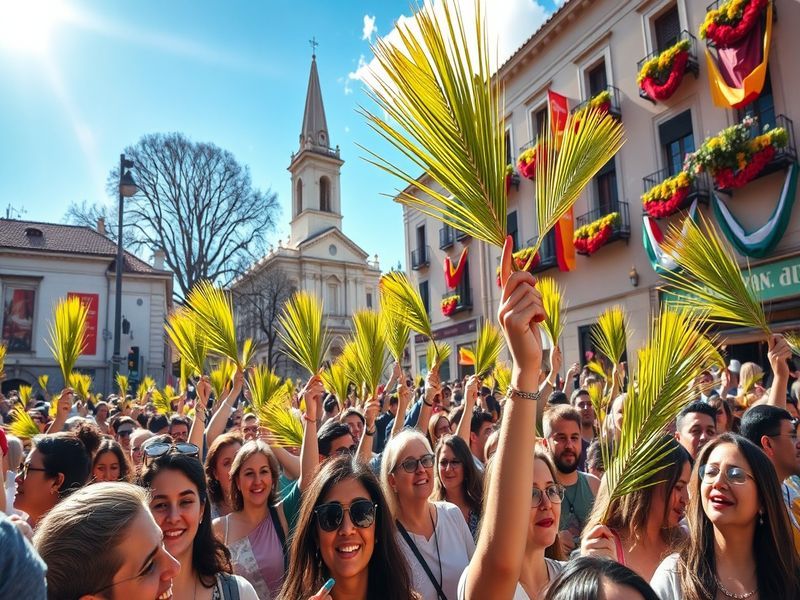
The diversity in observance reflects both theological emphasis and cultural adaptation. In some Latin American countries, Palm Sunday is a vibrant public event with street processions and live music. In colder climates, like Scandinavia or Canada, churches often use evergreen branches as substitutes for palms, integrating local flora into the ritual.
Palm Sunday in a Changing World: Modern Adaptations and Challenges
The way communities celebrate Palm Sunday has adapted to contemporary realities. One of the most notable shifts is the rise of digital worship, accelerated by the pandemic. In 2026, many churches may continue offering hybrid services, blending in-person and online participation. This allows believers to engage with the tradition regardless of physical location.
Environmental concerns have also influenced observances. Some churches now use potted palms that can be replanted after services, reducing waste from discarded branches. Others opt for digital palm leaves distributed via apps or social media, a nod to sustainability without sacrificing symbolism.
Another layer is the global migration of traditions. In cities like London, New York, or Toronto, Palm Sunday processions have become multicultural events, reflecting the diversity of local Christian communities. Immigrant congregations often bring their own liturgical styles, enriching the broader tapestry of observance.
The Broader Cultural and Social Impact
Beyond its religious roots, Palm Sunday intersects with art, literature, and public life. The imagery of the donkey and the crowd has inspired countless works, from medieval frescoes to modern films. In 2026, artists and creators may revisit this theme, using Palm Sunday as a lens to explore contemporary issues like leadership, sacrifice, and collective hope.
For interfaith dialogue, Palm Sunday offers a point of connection. Jewish communities preparing for Passover, which often overlaps with Holy Week, may engage in joint reflections on themes of liberation and redemption. Similarly, Muslim communities might highlight shared values of hospitality and remembrance during Ramadan, which could coincide with Palm Sunday in 2026.
On a societal level, Palm Sunday serves as a reminder of the power of symbols. In an era marked by political polarization and social fragmentation, the act of gathering—whether in a church, a park, or a virtual space—to reflect on a shared narrative takes on new significance. It underscores the role of tradition in fostering continuity and meaning.
How to Participate in Palm Sunday 2026
For those looking to engage with Palm Sunday, there are numerous ways to participate, whether in a traditional or innovative manner:
- Attend a local service: Check with nearby churches for Palm Sunday masses, processions, or family-friendly events. Many congregations welcome visitors, regardless of denomination.
- Create your own palm craft: Use palm branches or alternative materials to make crosses, wreaths, or decorative items. This can be a meaningful activity for families or individuals.
- Read the Passion narrative: Spend time reflecting on the biblical accounts of Jesus’ entry into Jerusalem and the events of Holy Week. Consider journaling or discussing these passages with others.
- Support a global initiative: Some organizations, like Dave’s Locker Culture, highlight charitable efforts tied to Holy Week. Donating to a cause or volunteering can align with the spirit of service inherent in the holiday.
- Explore cultural traditions: If you’re traveling or have access to diverse communities, seek out unique Palm Sunday observances. From the olive branches of Greece to the willow catkins of Russia, each tradition offers a distinct perspective.
For those unable to attend in person, many churches will livestream services or provide pre-recorded reflections. Digital platforms have made it easier than ever to connect with the global Christian community during this sacred time.
A Reflection on Palm Sunday’s Enduring Relevance
As Palm Sunday 2026 approaches, it invites a pause in the relentless pace of modern life. Whether through ancient rituals or contemporary adaptations, the holiday challenges individuals to reflect on themes of hope, sacrifice, and renewal. In a world often divided by differences, the shared act of remembering a moment of collective celebration—however fleeting—offers a counterbalance to cynicism.
The story of Palm Sunday is, at its core, a story of expectation. The crowds that greeted Jesus did so with enthusiasm, yet few understood the full weight of what was to come. In a similar vein, Palm Sunday 2026 may serve as a reminder to hold space for both joy and uncertainty, for tradition and innovation, for the sacred and the secular.
For communities of faith, the holiday reinforces the cyclical nature of spiritual life—a reminder that endings are often beginnings in disguise. For others, it may simply serve as an opportunity to reconnect with cultural heritage or to find moments of quiet reflection in a noisy world.
As March 29, 2026, draws nearer, the question isn’t just about how Palm Sunday will be observed, but why it continues to matter. The answer lies in the stories we choose to tell, the symbols we pass down, and the ways we gather to make meaning together.