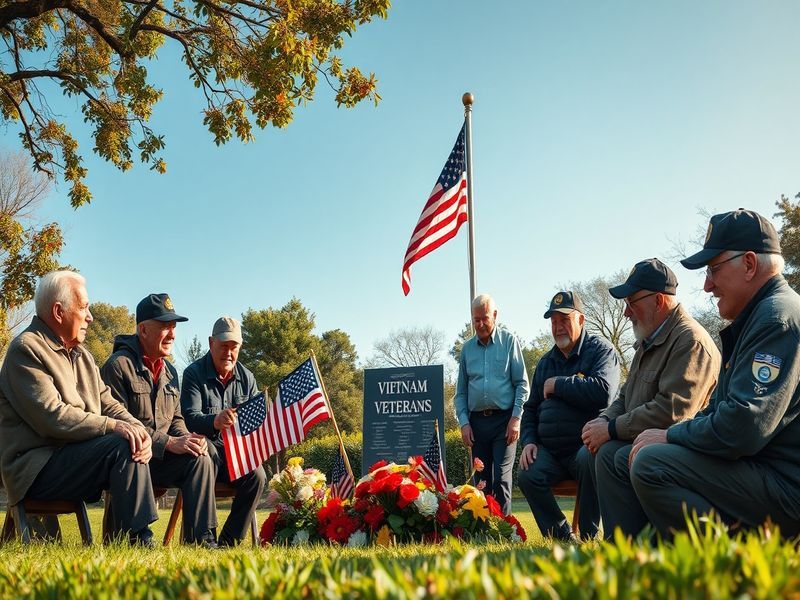
Vietnam Veterans Day: Honoring Service and Sacrifice Across Continents
Each year on March 29, nations pause to recognize the men and women who served in the Vietnam War. Known in the United States as Vietnam Veterans Day, this observance carries global resonance, reflecting how a conflict half a world away shaped military traditions, cultural narratives, and diplomatic relations in diverse corners of the planet. From the jungles of Southeast Asia to the memorials of Australia, Canada, and Europe, the legacy of Vietnam veterans transcends borders, offering a moment to reflect on the cost of war and the enduring bonds of service.
Vietnam Veterans Day originated in the United States in 2017, when Congress designated March 29 as a day of national commemoration. The date marks the day in 1973 when the last U.S. combat troops withdrew from Vietnam, following the Paris Peace Accords. Yet its significance extends far beyond American soil. In nations like South Korea and the Philippines—both of which contributed troops to the allied effort—the day is quietly observed as a reminder of shared sacrifice. Meanwhile, in countries like New Zealand and Australia, where veterans’ groups hold marches and ceremonies, the date has become part of a broader tradition of remembrance for all who served in the Vietnam era.
The Global Footprint of the Vietnam War
The Vietnam War was not just an American conflict; it was a chapter in a wider Cold War narrative that drew in nations from across Asia, Europe, and the Pacific. Over 40 countries provided military, medical, or logistical support, creating a patchwork of involvement that spanned continents. South Korea sent more than 300,000 troops—the largest foreign contingent after the U.S.—while Thailand and the Philippines contributed combat units and medical teams. Australia and New Zealand deployed troops under the ANZUS alliance, embedding the war in the collective memory of the Pacific.
In Europe, the war influenced political discourse and military strategy. The Netherlands, for instance, saw protests and debates that mirrored those in the U.S., while France—with its colonial history in Indochina—faced complex reflections on its role in the region. Even in neutral nations like Sweden, the war became a symbol of anti-imperialism and a catalyst for humanitarian aid efforts, including the establishment of refugee resettlement programs for Vietnamese “boat people” fleeing postwar persecution.
The Human Experience: From Battlefield to Homecoming
Veterans’ experiences varied dramatically depending on their country of origin, unit, and role. American troops faced guerrilla warfare, dense jungles, and a lack of clear front lines, while Australian soldiers operated in small, highly mobile units in Phuoc Tuy Province. South Korean veterans, many of whom were conscripts, endured brutal conditions in the Central Highlands. Their stories—of courage, loss, and resilience—form a shared global tapestry of service.
Yet for many, the war did not end on the battlefield. Returning home was often fraught with challenges. In the U.S., veterans faced indifference or hostility, a phenomenon now recognized as part of the post-traumatic stress and cultural divide of the 1970s. Australian vets, too, struggled with delayed recognition and health issues linked to Agent Orange exposure. In South Korea, veterans were initially marginalized, only gaining official status decades later. These delayed acknowledgments have led to grassroots movements calling for better healthcare, education, and memorialization.
One powerful example is the Vietnam Veterans Memorial in Canberra, Australia, dedicated in 2019. It stands not only as a tribute to the 521 Australians who died but as a symbol of national reconciliation. Similar memorials in Seoul, Wellington, and Manila serve as focal points for healing, connecting generations through shared memory.
Cultural Memory and the Arts: How the War Lives On
The Vietnam War has left an indelible mark on global culture, from literature and film to music and visual art. American films like Platoon and The Deer Hunter redefined the war movie genre, while Vietnamese director Anh Hung Tran’s The Scent of Green Papaya offered a poetic counterpoint, focusing on civilian life. In Australia, The Odd Angry Shot became a cult classic, capturing the absurdity and horror of jungle warfare with dark humor.
Music also played a role in shaping international perceptions. American protest songs by artists like Joan Baez and Country Joe and the Fish resonated globally, while Vietnamese musicians like Trịnh Công Sơn used folk and pop to express loss and hope. In Europe, bands like Germany’s Ton Steine Scherben incorporated anti-war themes into their lyrics, linking the conflict to broader movements for peace and social justice.
Literature has been equally transformative. Tim O’Brien’s The Things They Carried remains a cornerstone of American war fiction, while Vietnamese authors like Bao Ninh and Duong Thu Huong have redefined the narrative from within Vietnam, blending personal trauma with national history. These works remind us that memory is not monolithic—it is shaped by geography, politics, and identity.
Lessons and Legacies: Why Vietnam Veterans Day Matters Today
Vietnam Veterans Day is more than a date on the calendar. It is a global reminder of the human cost of war and the importance of acknowledging those who serve. As nations face new conflicts and veterans return from recent engagements in Iraq, Afghanistan, and Ukraine, the lessons of Vietnam—about trauma, recognition, and reconciliation—remain urgent.
Across continents, veterans’ organizations continue to push for better mental health care, access to benefits, and public education. Initiatives like the U.S. Department of Veterans Affairs’ Vietnam Veterans Outreach Program have expanded internationally, with partners in Australia and Europe sharing best practices in veteran support. These efforts reflect a growing recognition that healing does not happen in isolation.
Moreover, the war’s geopolitical ripple effects continue to shape international relations. The fall of Saigon in 1975 led to a refugee crisis that reshaped diaspora communities in the U.S., Canada, and Australia. It also influenced U.S. foreign policy, contributing to the so-called “Vietnam Syndrome”—a reluctance to intervene militarily without clear objectives or public support. Today, as nations reassess their roles in global conflicts, the legacy of Vietnam offers both caution and clarity.
A Call to Remember and Reflect
On March 29, communities worldwide gather to honor Vietnam veterans through wreath-laying ceremonies, educational programs, and storytelling events. These observances are not just about the past; they are about the future. They challenge us to ask: How do we treat those who serve? How do we remember the lessons of history? And how do we build a world where war is not the first resort?
For veterans, the day is a chance to be seen—to share their stories without judgment or erasure. For younger generations, it is an invitation to learn, to empathize, and to recognize that war’s echoes are felt far beyond the battlefield.
In the quiet moments of reflection, whether at the Vietnam Veterans Memorial in Washington, D.C., the Australian Vietnam Forces National Memorial in Canberra, or a small community gathering in Seoul, one truth becomes clear: the service of these veterans transcends borders. Their sacrifice is universal. Their memory is a bridge between nations and generations.
As we mark Vietnam Veterans Day, let us do more than remember. Let us listen. Let us act. And let us honor their legacy not just with words, but with deeds—today and every day.
For those interested in exploring how military service intersects with global culture, visit our Culture archives, where we examine art, literature, and social movements tied to wartime experiences. Or explore our News section for updates on veteran advocacy and international remembrance initiatives.