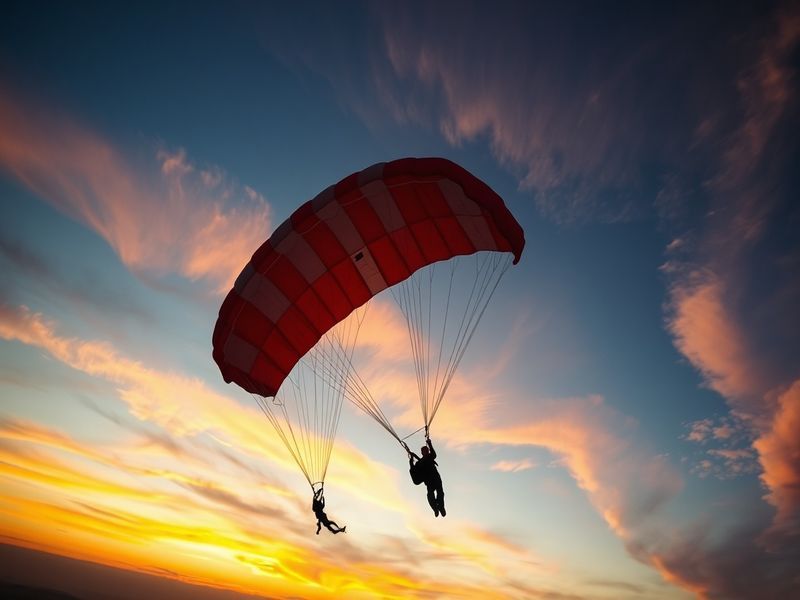
The Evolution of Parachutes
The parachute, a device designed to slow down a falling object by creating drag, has a rich history that dates back centuries. The concept of using a fabric canopy to counteract gravity can be traced back to ancient China, where bamboo and silk were used in early designs. Over the years, advancements in materials and engineering have transformed parachutes into sophisticated devices used in various fields.
Leonardo da Vinci sketched a design for a parachute in the late 15th century, but it wasn’t until the 18th century that the first successful parachute jump was made. André-Jacques Garnerin, a French balloonist, made history in 1797 by jumping from a hot air balloon with a parachute he designed himself. This marked the beginning of a new era in aerial safety and exploration.
Types of Parachutes
Parachutes come in various forms, each designed for specific applications. Understanding these types can enhance appreciation for their functionality and versatility. Here are some common types:
- Round Parachutes: These are traditional parachutes that open in a circular shape, widely used in military and recreational jumps.
- Square Parachutes: Known for their maneuverability, square parachutes are often used in skydiving and canopies.
- Ram-air Parachutes: These have an airfoil shape and provide greater control and lift, making them ideal for precision landings.
- Stabilized Parachutes: Used in military applications, these parachutes help stabilize the descent of heavy equipment and personnel.
The Science Behind Parachuting
The physics of parachuting involves understanding the forces acting on a falling object. As a parachute opens, it creates drag, which counteracts the force of gravity. This drag force is influenced by several factors:
- Surface Area: A larger surface area results in greater drag, slowing down the descent.
- Material: The type of fabric used can affect the parachute’s performance, with lighter materials often providing better results.
- Shape: The design impacts airflow and stability during descent.
These principles are crucial not only for recreational skydiving but also for military operations, where precision and safety are paramount. The development of modern parachutes involves rigorous testing and innovation, ensuring they meet the demanding requirements of various missions.
Parachutes in Modern Applications
Today, parachutes are not only used for recreational skydiving but also play critical roles in several fields. Their applications include:
- Military Operations: Parachutes are essential for airborne troops, providing safe deployment from aircraft.
- Aerospace Missions: Spacecraft utilize parachutes for safe landings after re-entry into the Earth’s atmosphere.
- Emergency Services: Parachutes can be used for rapid response in search and rescue missions.
Furthermore, advancements in technology have led to the development of newer materials and designs that enhance safety and performance. Innovations like automatic activation devices (AADs) ensure that parachutes deploy automatically in case of a freefall emergency, adding an additional layer of safety for jumpers.
Conclusion
The parachute remains a remarkable invention that has evolved significantly since its inception. From early designs to modern applications, its journey reflects human ingenuity and the desire for exploration. Whether used in military operations, emergency services, or recreational activities, parachutes continue to save lives and offer thrilling experiences. As technology advances, the future of parachuting promises even greater innovations, ensuring this essential device remains relevant for years to come.
For more insights into the world of adventure sports and technology, check out our Sports and Technology sections.